Rosie is a thirty-seven inch, thirty-four month bundle of energy and muscle. She turns somersaults, jumps effortlessly to the ground from the fifth step, scales the fronts of cupboards, and throws and kicks with amazing accuracy. When she goes into the back yard, the first thing she wants to do is play basketball, much to the delight of her father. Ed was an All-State basketball player in high school, and although has half a dozen kids, Rose is the first one who has shown much interest or proficiency in throwing a basketball.
"She gets her athleticism from me," he says, deadpan, waiting for someone to come in and correct him.
We've also been known to joke that the only way Ed was going to get kids with dark hair and eyes like he has was to adopt them from China.
Parents seem quick to attribute their children's good qualities to their own genetic contributions; I've also been known to attribute some of the kids' less-than-stellar qualities to their dad. The boys' lack of interest in leaving the house once they've come home for the day, even for something fun, is so frequently seen among members of Ed's family that it even has a name-- Minertia.
Ten years ago, I was still finding my footing as the mom of my first child, Bryce. We'd spent the first three years of his life delighting over all of his superior qualities. As a baby, he had enormous blue eyes and a cue-ball bald head. When he walked at nine months and started talking shortly thereafter, I patted myself on the back, because I must have been doing something right, or at least contributed my superior genetics. We loved the way that he learned entire movie scripts verbatim and repeated them whenever he watched the films-- he'd grow up to have a mastery of standardized tests, just like his dad. We praised and praised and praised him, and saw ourselves reflected in that praise. The things that raised red flags for his preschool teachers (no interest in playing with other kids, having a hard time sitting during circle time, not making eye contact) were things that to us just showed a strong will that would serve him well later in life.
So when the teachers referred us to Early Intervention and he was diagnosed with an Autism Spectrum Disorder, I was crushed. Yes, part of it was solely worry on Bryce's behalf-- would he ever go to mainstream school? Would he be smart? Would he be able to live on his own? Make friends? Have a fulfilling life? Whenever I asked these questions, the specialists were evasive. "It's too soon to tell," they said. But a large part of my anxiety at that time was also self-directed. Was there something I could have done to prevent this? Was it because he was so small when he was born? I'd followed What to Expect When You're Expecting to the letter, and the doctor had assured me that babies are sometimes small, but what if I did something wrong during my pregnancy that I didn't know about? Had I been too indulgent during his babyhood? Should I have forced a greater variety of foods on him? Were my genes bad? In some ways, I feel like the diagnosis tarnished how I saw him-- it took away my innocence and my joy-- the things that had made him special now just made him abberant. It took me a long time to get the joy back.
Bryce was almost eleven when Rose was born, half a world away in China. We did not contribute her genetic makeup, I did not grow her in my womb, but she has been our daughter in our hearts ever since she was five months old, and has been with us now for nearly two years. We brought her back to the hotel on the day she was placed in our arms, and looked her over from head to toe. Unlike with our biological kids, we didn't try to figure out, "your toes, my hair, your long body, my gentle personality." She was completely herself. And over the last few years, as the force of her personality has become evident (a force that likely kept her alive during the first few months living as a cleft baby in an orphanage), it's been freeing to attribute those personality traits only to herself. Her sense of fun, her determined will, her propensity to throw and hit and kick at everything in sight when she gets angry.
And while I've learned lots of lessons over the last several years of being an adoptive parent, one of the most surprising has been the way it has changed the way I see all of my children. I do my best to raise them, individually, according to their needs, but ultimately, they are all their own people, and not reflections of me. By divorcing my genetic contribution from the equation with Rose, I could see that the important factors in parenting all of my children were my actions as a parent and my children's actions, and not all of the complications of the mirror. I couldn't see that with my older kids, and in some ways it makes me wish that I'd adopted Rose and Eli first, because it would have taken some of the pressure off everyone else.
Last weekend, when Annie and I were out of town together, we were stopped several times on the street by people who said, "Wow, you must be mother and daughter, you look exactly alike." It was kind of fun (at least for me, Annie may have been mortified), and I know that Rose and I will never have that experience. People are more likely to say, "You're her mother?" with incredulity in their voices, or just to assume that I'm the nanny. But we both know that we're mother and daughter, and I think that in becoming her mother, I freed myself of some of the pressure that so many of us feel with parenthood, that our children will reflect us in a positive light. I will push this girl to be the best Rose she can be every day of her life, but it's for her, and not for me.
Wednesday, February 26, 2014


Sunday, February 23, 2014
Book Review: Notes from a Blue Bike by Tsh Oxenreider
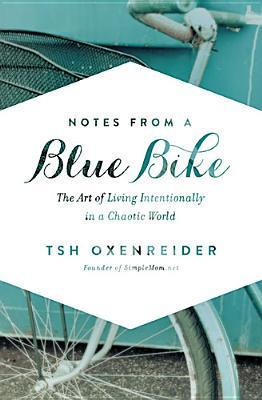
Author: Tsh Oxenreider
Enjoyment Rating: ***
Source: Audible
This book would be rated: PG
Tsh Oxenreider began blogging as an assignment. She was living with her family in Turkey, pregnant with her second child, trying to adapt to life in a new culture, when she found herself struggling with crushing depression. Her therapist told her to write, and her blog took off. These days, in addition to writing books (this is her third), she and her husband are the creative geniuses behind The Art of Simple, a blog dedicated to (guess what?) living simply.
Oxenreider's format here is pretty simple (ha, ha, get it?). She picks half a dozen things in her family's life that are priorities, and writes both about how they have managed to be intentional in those area of their lives, and how they plan to continue to live meaningful lives. She talks about food, travel, work and several other things I'm too lazy to go back and look up, and manages to weave in practical how-to with a memoir of sorts that spotlights everything from how she and her husband met (in the former Yugoslavia-- she was teaching English and he was building houses with a non-profit), to their time in Turkey, to their current life in Bend, Oregon.
There were times when I had to resist being annoyed with Notes from a Blue Bike (btw, the blue bike makes an appearance only in the intro and conclusion-- I would have liked to see it emerge more often as a unifying theme). For example, when she talks about food, I found myself getting my dander up because my kids, unlike hers, do know what the inside of a McDonald's looks like. But when I resisted the urge to feel judged and simply chalked it up to one person's simple and meaningful life not needing to look like someone else's, I realized that the judgey one was me, not Tsh. And while I enjoyed the book as a whole, there were times when I felt like her advice couldn't be applied practically in my life. For example, she goes on and on about how she and her husband work at home, together, and how this has led them to live meaningful lives. She then describes several other families who have achieved work/life balance, mostly in situations that sound amazing and fanciful to me, who does all of my blogging with at least one kid on my lap (two right now, watching The Incredibles), while my husband works 60+ hours a week. But I think what I really need is a primer on how to achieve work/life balance as a couple when one partner is in a job with high rewards but very little flexibility, and the other partner does the bulk of the "life" stuff at home with six kids. All in all, an interesting read, but I was left feeling that my life isn't in balance, and the book didn't give me any practical guidelines on how to dig myself out of that situation. My favorite takeaway is the lesson that she and her husband didn't stop traveling just because they had kids. Their kids have gone on overnight flights and to Europe. They've driven thousands of miles in the car. Sometimes I think that we take an easy out because we have a big family, but I try my best not to use my kids as an excuse for staying home and staring at each other. This summer I'm taking all six of them for a week in New England and New York. Ed is staying home, and I'll be staying with my best friend, Leslie, and her family, which is probably the only way that it's manageable. And after reading this book, instead of being scared, I'm really excited. About the whole thing. Yes, even about flying across the country with all of my babies.
Saturday, February 22, 2014
How to potty train your toddler in ten easy steps
1) Wait until she is staring down her third birthday, stays dry most nights, asks for underpants, and can pee on demand whenever you put her on the potty before a bath.
2) Buy a package of Pull Ups, and then decide you don't want to use them yet because your other two-year-old can't even say "potty" much less use it, and you really just want to endure this potty training misery one more time. Toddler is undeterred. She will insist on using them in the following order: all of the Mike and Sulley Pull Ups, followed by all of the Minnie Mouse Pull Ups. When she gets to the Ariel Pull Ups, she will turn up her nose and ask for underwear again. Agree with her-- Ariel is a brat.
3) Take her to Target with the intention of buying underwear. On the way to the toddler underwear, ask her what kind she wants. "Frozen," she says. There are no Frozen underwear. She does not want Tangled underwear. She does not want Disney Princess underwear. She does not want Monsters, Inc underwear from the boys section.
4) Get on eBay and pay $25, plus shipping, for seven pairs of Frozen underwear.
5) When the underwear arrive, hide them. You still aren't in the mental place to do this potty training thing again.
6) Older sister finds the underwear and wants them for herself. Tell her they are for your toddler, and you are not, under any circumstances, ordering more from eBay. Older sister throws them at your toddler in a huff.
7) Tell your toddler that she can wear the underwear under one condition: she cannot pee in them. If she pees on Olaf, he will melt. If she pees on Elsa, she might get her booty frozen. Start saving money for eventual therapy.
8) Toddler chooses to wear the Anna underpants.
9) Proceed with normal life. Occasionally remind toddler to go sit on the potty. After three days, she has had two accidents. On the third day, she tells you when she needs to poop.
10) Gloat over your child's genius and precocity. Pat yourself on the back-- this time it worked just like all of those "potty train your child in one day" books said it would. Or, rather, shake your head in amazement that this has been so easy. This is your fifth time on the potty train, and the first time it was relatively pain-free. She may sleep like a newborn and have the left hook of a prizefighter, but she's a dream to toilet train.
2) Buy a package of Pull Ups, and then decide you don't want to use them yet because your other two-year-old can't even say "potty" much less use it, and you really just want to endure this potty training misery one more time. Toddler is undeterred. She will insist on using them in the following order: all of the Mike and Sulley Pull Ups, followed by all of the Minnie Mouse Pull Ups. When she gets to the Ariel Pull Ups, she will turn up her nose and ask for underwear again. Agree with her-- Ariel is a brat.
3) Take her to Target with the intention of buying underwear. On the way to the toddler underwear, ask her what kind she wants. "Frozen," she says. There are no Frozen underwear. She does not want Tangled underwear. She does not want Disney Princess underwear. She does not want Monsters, Inc underwear from the boys section.
4) Get on eBay and pay $25, plus shipping, for seven pairs of Frozen underwear.
5) When the underwear arrive, hide them. You still aren't in the mental place to do this potty training thing again.
6) Older sister finds the underwear and wants them for herself. Tell her they are for your toddler, and you are not, under any circumstances, ordering more from eBay. Older sister throws them at your toddler in a huff.
7) Tell your toddler that she can wear the underwear under one condition: she cannot pee in them. If she pees on Olaf, he will melt. If she pees on Elsa, she might get her booty frozen. Start saving money for eventual therapy.
8) Toddler chooses to wear the Anna underpants.
9) Proceed with normal life. Occasionally remind toddler to go sit on the potty. After three days, she has had two accidents. On the third day, she tells you when she needs to poop.
10) Gloat over your child's genius and precocity. Pat yourself on the back-- this time it worked just like all of those "potty train your child in one day" books said it would. Or, rather, shake your head in amazement that this has been so easy. This is your fifth time on the potty train, and the first time it was relatively pain-free. She may sleep like a newborn and have the left hook of a prizefighter, but she's a dream to toilet train.
Friday, February 21, 2014
Book Review: The Son by Philipp Meyer

Author: Phillip Meyer
Enjoyment Rating: ****
Source: Kindle
This book would be rated: R, for language, sex, violence
The McCulloughs consider themselves an old Texas family. Eli McCullough was the first child born in the republic in 1836, and in 1849, his family is murdered and he is kidnapped by Comanches. The narrative of The Son is split between Eli's story (his life among the Comanches and following with the Texas Rangers and Confederates), his son Peter's story (Peter feels guilt for Eli's power-hungry ways and his bloodlust), and Peter's granddaughter JA, who eventually takes over the family's ranch and oil empire.
While the McCulloughs may be an old family by American standards, one of the things Meyer does well is to show that Texas was a place with a history of conquest when the whites arrived. While Eli and JA seem intent on denying that others may have a claim to their lands and their riches, Peter can't approve of his father's decisions, or of the way he and his wife have chosen to raise their children. The three stories are fascinating, the characters rich, and the stories readable (it was a page-turner, despite it's length), but until the last few chapters, when a new voice is introduced, I had no idea how or if the three stories would come together. But Meyer doesn't disappoint, and the story is definitely worth reading, both for insights into the history of Texas and into human nature.
We interrupt these book reviews for inane talk about running shorts...
I've been a runner for more than a decade now, and while it's easy to find running tops that work (the technical t-shirts I get from races are great for all but the coldest or hottest weather, and Target has plenty of cheap stuff to fill in the gaps), I've had a harder time with bottoms.
My requirements:
1) One pair of shorts, one pair of capris, one pair of tights. Yeah, one pair of each is enough. I do laundry every day, and unlike a sweaty tank, I'll often wear a pair of shorts for a couple of days before I wash them. And no skirts-- minimalism is the name of the game here, and I don't need an extra layer of fabric or a pair of annoying sewn-in underpants that give me a wedgie when I'm trying to get my fast on.
2) Pockets! Despite what I said about minimalism above, it baffles me that so many running bottoms don't come with pockets. At a bare minimum, there needs to be one pocket big enough to fit my phone (I frequently run alone in the dark, and even if I weren't addicted to my Audible app, I'd still run with a phone for safety reasons), and another to hold a couple of gels and a car key. If I plan to race in the bottoms (which I do, because see #1 above), then I'd like enough pockets to carry five gels, chapstick, an emergency drug stash and my inhaler on race day.
3) A waist that doesn't emphasize my muffin top. While I am not at all self-conscious about my non-existent butt or my skinny legs, let's be realistic-- I am a 39-year-old mother of six, and no one, not even me, wants to see my love handles. While a pair of tights or shorts that hits at the waist is the runner's equivalent to Mom jeans, I'm usually out running in the dark when no one can see me anyway.
4) All that for a price that won't make me rethink the necessity of buying a new pair of tights even when the old ones are full of holes and have been worn so transparent that you might be able to see my stretch marks through them.
That's only four things, and there are hundreds of pairs of shorts and tights out there, it shouldn't be too much of a challenge, right? Wrong. The really hard one is #2-- most pairs of shorts and tights come with a single pocket, either inside the waistband to hold the key or a zipper pocket at the small of the back that barely fits my iPhone 4.
 For a long time, I was a reluctant fan of the Race Ready brand. As you can see in the photo to the left, the tights met all of my criteria. And $60 for a pair of running tights is a downright steal, especially since I wear my favorite pair of tights from October to May, basically every morning. I call the Race Ready tights my rickshaw tights, because I always feel like it looks like I'm carrying an enormous load on my back when I wear them. And cute, well, they are not cute at all. I see people staring at my behind when I wear them, and not in a checking-her-out kind of way, but more in a what-the-heck-is-on-her-butt kind of way. But still, these have been my go-to staple for years. This winter, I bought a second pair of winter tights since the first were losing their stretch after three or four winters. But the stitching on the new pair came apart almost immediately, and shortly thereafter, my phone went crashing out of the back pocket of the other pair and onto the ground one morning when a gigantic hole wore its way through the mesh pocket.
I have a bunch of their shorts too, and felt similarly ambivalent about them. Yeah, they're high-waisted enough to prevent a muffin top, but there is such a thing as too high waisted, and these are it. Besides, everyone else who wears them seems to be quite a bit older than I am. And while you might think that I've been pretty restrained by sticking with this one, fairly inexpensive brand, let me disabuse you of this notion-- I have bought PLENTY of other pairs of tights and shorts over the years, and I have decided that I hated most of them after wearing them two or three times. Either they were too tight at the waist, or the legs were too long/short/loose/tight or I spent the whole run pulling them up and driving myself nuts in the process.
While we're talking about shopping, I need to make a confession-- if I can't buy it online, I probably won't buy it at all. Ever since I've birthed and adopted a permanent entourage, there's not much that is more stressful and less rewarding than trying on clothes in a store, with my kids in tow (except maybe trying to write this blog post with both of my two-year-olds on my lap or going to the post office). So I'd buy online, hate whatever I bought, then not return it (because of how much I hate going to the post office). And I'd only buy from places that were for "real runners" because that's how I see myself.
This weekend, Annie and I went to Las Vegas. Long story, but she was stressed out by the idea of a birthday party, so I told her to scrap the party and we'd go stay in a hotel and eat dinner somewhere fancy one night. Mostly, she wanted to spend the money she'd gotten for her birthday at the mall. I wanted to do something spa-y, but didn't want to pay to go to the spa, so we decided to take a yoga class at the Lululemon at the mall.
Until this weekend, I'd never stepped foot in a Lululemon. I was a real runner, after all, and based on making totally judgey assumptions about the women I saw wearing Lululemon, I decided the brand was the ski bunny version of workout clothes (when you want to look cute but don't want to work out that hard). Besides, I knew they were blisteringly expensive.
I don't know if it was the fact that Annie and I had a wonderful, free class at Lululemon, or it was the happy endorphins that were coursing through my system after doing yoga, but I decided to look at their running tights on the way out of the store (shopping with one kid is actually kind of fun!). And lo and behold, I found a pair that had a mid-rise, and FIVE pockets! Better still, when I tried them on, they didn't make me look like a camel! Yes, I balked at the price tag, but again, remember that a good pair of tights will last me three or four years of daily use for six months at a time. And they're soft, and they feel so amazing on that I bought a pair of shorts (three pockets!) too. Didn't spring for capris though-- a minimalist can live without capris.
So what's the point of this blog post, other than that I'm bragging on my new bottoms? Not much, other than, I guess, not to judge your workout wear until you've run twenty miles in it. And to retire the bottoms that make me look like I have an extra butt ASAP.
My requirements:
1) One pair of shorts, one pair of capris, one pair of tights. Yeah, one pair of each is enough. I do laundry every day, and unlike a sweaty tank, I'll often wear a pair of shorts for a couple of days before I wash them. And no skirts-- minimalism is the name of the game here, and I don't need an extra layer of fabric or a pair of annoying sewn-in underpants that give me a wedgie when I'm trying to get my fast on.
2) Pockets! Despite what I said about minimalism above, it baffles me that so many running bottoms don't come with pockets. At a bare minimum, there needs to be one pocket big enough to fit my phone (I frequently run alone in the dark, and even if I weren't addicted to my Audible app, I'd still run with a phone for safety reasons), and another to hold a couple of gels and a car key. If I plan to race in the bottoms (which I do, because see #1 above), then I'd like enough pockets to carry five gels, chapstick, an emergency drug stash and my inhaler on race day.
3) A waist that doesn't emphasize my muffin top. While I am not at all self-conscious about my non-existent butt or my skinny legs, let's be realistic-- I am a 39-year-old mother of six, and no one, not even me, wants to see my love handles. While a pair of tights or shorts that hits at the waist is the runner's equivalent to Mom jeans, I'm usually out running in the dark when no one can see me anyway.
4) All that for a price that won't make me rethink the necessity of buying a new pair of tights even when the old ones are full of holes and have been worn so transparent that you might be able to see my stretch marks through them.
That's only four things, and there are hundreds of pairs of shorts and tights out there, it shouldn't be too much of a challenge, right? Wrong. The really hard one is #2-- most pairs of shorts and tights come with a single pocket, either inside the waistband to hold the key or a zipper pocket at the small of the back that barely fits my iPhone 4.
I have a bunch of their shorts too, and felt similarly ambivalent about them. Yeah, they're high-waisted enough to prevent a muffin top, but there is such a thing as too high waisted, and these are it. Besides, everyone else who wears them seems to be quite a bit older than I am. And while you might think that I've been pretty restrained by sticking with this one, fairly inexpensive brand, let me disabuse you of this notion-- I have bought PLENTY of other pairs of tights and shorts over the years, and I have decided that I hated most of them after wearing them two or three times. Either they were too tight at the waist, or the legs were too long/short/loose/tight or I spent the whole run pulling them up and driving myself nuts in the process.
While we're talking about shopping, I need to make a confession-- if I can't buy it online, I probably won't buy it at all. Ever since I've birthed and adopted a permanent entourage, there's not much that is more stressful and less rewarding than trying on clothes in a store, with my kids in tow (except maybe trying to write this blog post with both of my two-year-olds on my lap or going to the post office). So I'd buy online, hate whatever I bought, then not return it (because of how much I hate going to the post office). And I'd only buy from places that were for "real runners" because that's how I see myself.
This weekend, Annie and I went to Las Vegas. Long story, but she was stressed out by the idea of a birthday party, so I told her to scrap the party and we'd go stay in a hotel and eat dinner somewhere fancy one night. Mostly, she wanted to spend the money she'd gotten for her birthday at the mall. I wanted to do something spa-y, but didn't want to pay to go to the spa, so we decided to take a yoga class at the Lululemon at the mall.
Until this weekend, I'd never stepped foot in a Lululemon. I was a real runner, after all, and based on making totally judgey assumptions about the women I saw wearing Lululemon, I decided the brand was the ski bunny version of workout clothes (when you want to look cute but don't want to work out that hard). Besides, I knew they were blisteringly expensive.
I don't know if it was the fact that Annie and I had a wonderful, free class at Lululemon, or it was the happy endorphins that were coursing through my system after doing yoga, but I decided to look at their running tights on the way out of the store (shopping with one kid is actually kind of fun!). And lo and behold, I found a pair that had a mid-rise, and FIVE pockets! Better still, when I tried them on, they didn't make me look like a camel! Yes, I balked at the price tag, but again, remember that a good pair of tights will last me three or four years of daily use for six months at a time. And they're soft, and they feel so amazing on that I bought a pair of shorts (three pockets!) too. Didn't spring for capris though-- a minimalist can live without capris.
So what's the point of this blog post, other than that I'm bragging on my new bottoms? Not much, other than, I guess, not to judge your workout wear until you've run twenty miles in it. And to retire the bottoms that make me look like I have an extra butt ASAP.
Thursday, February 20, 2014
Book Review: The House at Rose Creek by Jenny Proctor (Whitney Finalist 2013)
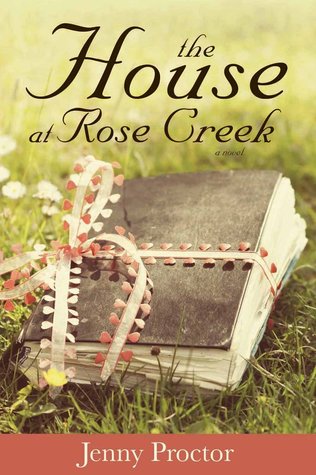
Author: Jenny Proctor
Enjoyment Rating: ***
Source: Kindle
This book would be rated: PG
Kate Sinclair was content with her life in Atlanta. Her job was busy, but satisfying, and her boyfriend helped her pass the time. But when the aunt who raised her dies and Kate inherits the family farm, she has to take a temporary leave from her life in Atlanta to get things settled in the small town in North Carolina where she grew up. Unfortunately, Kate soon learns that the home is slated for demolition, and it becomes her personal mission to prevent that from happening, while righting some wrongs in her personal life. As she searches more deeply into her family's story, she finds herself completely enthralled with family history, which leads her to the Mormons (and away from life in Atlanta), which leads her to make some big changes in her life.
I think that Proctor is a good writer who knows how to create characters, keep readers interested, and work with conflicts. I really thought that the story of Kate's family history was fascinating. However, I'm not sure about how I feel about this turning into a conversion narrative. If the book is written for a general, non-LDS audience, would they feel manipulated by the turn the story takes? If the book is written for an LDS audience, then would the conversion narrative be interesting to someone who is, theoretically, already converted? I thought that part of the story was less compelling than the rest of the story.
Wednesday, February 19, 2014
Book Review: Road to Bountiful by Donald Smurthwaite (Whitney Finalist 2013)

Author: Donald Smurthwaite
Enjoyment Rating: ***
Source: Kindle
This book would be rated: PG
Loyal is an old man. He buried his wife some time ago, and now he's doing the responsible thing-- leaving his home in South Dakota to live in a retirement community near his daughter in Utah.
Levi is a young man, a college student who has spent the summer bagging groceries with precious little to show for it. So when his aunt offers to pay him to drive her father from South Dakota to Utah, he plots the quickest route to the cash.
But over the course of the journey, Loyal's slow pace begins to rub off on Levi, who starts to see the journey as an adventure rather than a job.
Smurthwaite is a gifted writer. His sentence structure and pacing are excellent, and he knows how to say what he wants to say in order to get a reaction. I was delighted by the early chapters of the book. However, as the narrative continued, I found myself less enamored with the story, which felt sentimental and simplistic. I can see how readers who read to be uplifted or to have their emotions stirred would like this story, but I felt that Smurthwaite had the writing chops to make it better and more complicated with less overt motivations.
Tuesday, February 18, 2014
Book Review: The Power of Habit by Charles Duhigg

Author: Charles Duhigg
Enjoyment Rating: ****
Source: Audible
This book would be rated: PG
Every morning at 4:50 the alarm goes off and I check my email and Instagram, then head to the closet to get dressed for my run. Every afternoon around 2pm, I have a hankering for a Diet Coke. I fall asleep most nights with a book in my hand. These are habits that I've developed over the years, and in The Power of Habit Charles Duhigg writes about how we create habits, how we change them, and how habits work to help or hinder us in our personal lives and at work.
If you're interested in a how-to book about changing your habits, this might not be the book for you, although I would recommend reading the epilogue first (where he lays out some concrete ideas for changing habits) and then the rest of the book with that epilogue in mind. However, if you want to know why you do what you do, or why the people in your lives keep making the same crazy choices, or if you want some insight into why your body wants a Diet Coke at 2pm every afternoon, this is a fascinating read. Lots of examples and stories, and good analysis by the author. It's also engaging and readable.
Monday, February 17, 2014
Book Review: The Golem and the Jinni by Helene Wecker

Author: Helene Wecker
Enjoyment Rating: *****
Source: Audible
This book would be rated: PG-13, I guess. Plenty of salty language, a little bit of sex
Chava is a golem: a woman made of clay and intended to serve her master, who awakens her on their journey from Poland to New York City and then speedily dies. She's not supposed to be able to live without a master, and just before she gets herself in trouble, a rabbi recognizes what she is and takes her in, hoping to give her a semblance of a normal life-- hoping he doesn't have to destroy her.
Ahmad is a jinni: a man of fire and spirit who had been trapped inside a copper flask for more than a thousand years, awakened only when a New York tinsmith attempts to repair the flask. But Ahmad has been trapped by a former master in human form, and he too has to find a way to blend in to life in New York City at the turn of the century.
Both go through life, struggling to find their way. Chava gets a job at a bakery and a man falls in love with her (much to her horror). The rabbi who cares for her dies. Ahmad hates being bound, hates the mundaneness of the human life. Eventually, the two meet. Neither sleeps, so they go on long rambles around the city, and they find their lives being bound together in ways they could not have predicted.
Wecker does a wonderful job recreating New York City in 1899, and makes her characters rich, complicated, and fanciful. The audio recording of the book is excellent, with George Guidall providing the perfect, haunting narrator. The story, with its flashbacks to Syria in the 800s and its range of magical characters, definitely keeps a reader interested and entertained. It's one of those books that is entertaining and enlightening, and a complete joy to read.
Sunday, February 16, 2014
Book Review: Ruby's Secret by H.B. Moore (Whitney Finalist 2013)

Author: H.B. Moore
Enjoyment Rating: ***
Source: Kindle
This book would be rated: PG
Ruby Crenshaw is newly-widowed when she has the idea to form The Newport Ladies Book Club. She's the kind of woman that everyone thinks is perfect. Her house is immaculate, and her clothes are stylish. She knows about the world, and she's interested in other people. But she's also been carrying the secret that her husband was repeatedly unfaithful during their marriage. It makes her believe that her future will be a solitary one, filled with friends and extended family, yes, but never with a partner.
At the urging of her daugher-in-law, and not because she feels like a senior citizen, Ruby starts attending the local senior center, and soon finds herself signing up for a trip to Greece with a group from the center. Soon she finds herself second-guessing her resolve to stay single, while questioning whether or not she wants to let someone new in. Moore's writing is smooth and the story is very readable. Ruby is an engaging character and I think many readers will identify with her struggle.
Subscribe to:
Posts (Atom)