Showing posts with label short stories. Show all posts

Tuesday, January 6, 2015

Book Review: The UnAmericans by Molly Antopol

Title: The UnAmericans: Stories
Author: Molly Antopol
Enjoyment Rating: ****
Source: Audible
Content Alert: some swearing, sex

An ex-convict and his son take a road trip to Napa in the 1950s. A political science professor in Maine attempts to rein in what his daughter will say about him in her off-Broadway play. A recently divorced owner of a dry cleaning shop picks up a Ukrainian woman and finds himself married in Kiev. An Israeli soldier saves his brother's life. What do these stories (and several others) have in common? All are represented in Molly Antopol's stunning collection The UnAmericans.

I didn't know this was a collection of stories when I started it, and when the first story ended, I was left with a deep sense of loss. I wanted to know so much more about these people, their lives, and the resolution they would come to. Thankfully, the stories that came after were just as interesting and satisfying as the first. I particularly loved the last, the story of an estranged couple from Vermont who reunites in Jerusalem to settle the estate of her grandmother. The collection features Jewish characters, some American, some with no ties at all to America, so the title puzzles a bit, but the stories are definitely worth reading.

Sunday, April 20, 2014

Book Review: One More Thing by BJ Novak

Title: One More Thing
Author: BJ Novak
Enjoyment Rating: ***
Source: Audible
Content Alert: some of these short stories would be suitable to read to your nursery school class, others would be "headphones only" with strong language and sexual situations.

BJ Novak, one of the foremost comedy writers of our day, establishes himself as someone who's out for more than just laughs with One More Thing. This series of short stories is sometimes funny, sometimes absurd. Some of the stories work really well, others fail. My kids loved the one about the principal who wants to stop offering math at his school. There were some stories I wanted to skip entirely, but I read them all, like a novel, because that's how I do things. I may have enjoyed the book more if I had given them a little more time to digest.

Tuesday, November 5, 2013

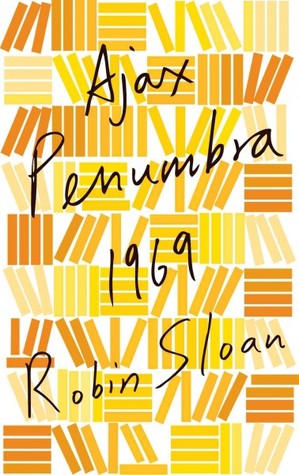
Book Review: Ajax Penumbra 1969 by Robin Sloan

Title: Ajax Penumbra 1969
Author: Robin Sloan
Enjoyment Rating: ****
Source: Audible
This book would be rated: PG

I fell in love with Mr. Penumbra's 24-Hour Bookstore when I read it earlier this year, and I was delighted to discover that Robin Sloan had written a prequel to the book, Ajax Penumbra 1969. I'm not sure if this book would be a long short story or a novella, but whatever it is, it's thoroughly enjoyable reading for anyone who loved the original book, or for people who want to start reading with this book. As expected by the title, the story takes place in 1969. Ajax Penumbra is working as a research librarian at a small Midwestern college, when he's sent on a quest to find a missing book. He ends up in San Francisco, and discovers the 24-Hour bookstore, already the site to many mysteries. I found the story, which takes people around and through and underneath San Francisco at a pivotal point in history, utterly fascinating. I was just sad that it was over so quickly!

Thursday, October 25, 2012

Title: This is How You Lose Her by Junot Diaz

Title: This is How You Lose Her
Author: Junot Diaz
Enjoyment Rating: *****
This book would be rated: R (sex and language)
Source: Library Copy
Books I've read this year: 109

There are some books that deserve to be reviewed while they're fresh in the reader's mind, and while I would definitely say that This is How You Lose Her falls into that category, I'm also pleased to discover that more that three weeks after I sent it back to the library, I still remember the individual stories well. It's a book with staying power.

Readers who loved Junot Diaz's Pulitzer Prize winning novel The Brief Wondrous Life of Oscar Wao might be surprised, although not disappointed, by his return to short stories. In This is How You Lose Her Diaz writes mainly in the gritty voice of Yunior, who is in some stories a teenager watching how his brother (dying of cancer) treats women, and in others is a man mistreating women himself. The stories aren't chronological, and there is at least one told from a women's perspective, but there's a richness that comes from reading the entire collection and seeing Yunior's collection of failed relationships all laid out side by side. I also had to resist the urge to see the stories as Yunior = Junot-- the names are similar enough and the choice of professions are identical. I really wanted to get my hands on Wikipedia to see how parallel the stories were. But I resisted the urge.

I remember reading Jhumpa Lahiri's Unaccustomed Earth a few years ago and being blown away by how interconnected short stories sometimes presented a better picture of an individual than a novel does. I got the same sense with This is How You Lose Her. What stays with me is Yunior's voice-- a voice that sounds like it hasn't moved beyond the barrio until it slips in a word like prestidigitation, a voice that is at turns, both pained and capable of inflicting great pain.

Friday, November 18, 2011

Book Review: Troll's Eye View by Datlow/Windling

Title: Troll's Eye View: A Book of Villainous Tales
Editors: Ellen Datlow and Terri Windling
Enjoyment Rating: 7/10
Referral: Annie said I should read it and I thought it might inspire me to write another retelling for my Fairy Tales Class
Source: Our bookshelf-- someone gave it to Annie for Christmas last year, I think
Books I've read this year: 145

I wrote some fairy tale retellings for my short story class this semester, and I've been flirting with the idea of writing another for my fairy tale class final, so when Annie suggested that I read this book, I hopped right on it. I'll admit now that I didn't read every page, but the stories I did read were pretty entertaining. Like the story of Hansel and Gretel from the POV of the witch, who not only lives in a house made out of sugar, but she's made out of sugar too. A lot of the heavy hitters in YA and fairy tale fantasy are included in this collection (Jane Yolen, Gregory Maguire and Neil Gaiman, to name a few), and it simultaneously inspired me to think differently about fairy tale retellings and depressed me because my attempts are so pathetic compared with some of these.

Sunday, November 13, 2011

Book Review: A Sense of Order and Other Stories by Jack Harrell

Title: A Sense of Order and Other Stories
Author: Jack Harrell
Enjoyment Rating: 9/10
Referral: I bought this book a few months ago but only got around to reading it this week because he was visiting campus.
Source: I think I ordered it from Amazon but I can't remember
Books I've read this year: 144

I've read a lot of bad books lately. When I picked up Jack Harrell's A Sense of Order and Other Things earlier this week, I worried that it would be one more thing on my "have to read" list for school. Instead, I was pleasantly surprised, delighted even, at Harrell's stories. In fact, after reading A Sense of Order, I have officially revised my "I don't like short stories" opinion. Sure, there are still short stories I don't like, but I'm not going to pooh-pooh the genre any more.

Jack Harrell's writing gives me hope that the LDS tradition does have room for excellent writing, and that there is an audience for that writing, even if it's a small one. His stories take place in settings as varied as rural Illinois, Rexburg, ID, the office of the prophet, and the lone and dreary world. Not all of his characters are LDS, but many are. Some of the stories contain supernatural elements. But all of the stories, regardless of setting or worldview, feel very real and grounded. They also contain an element of hope and faith. I'm eager to read more of Harrell's work, and hope to become one of the people who can ride on his coattails as a writer.

Thursday, October 20, 2011

Book Review: Invisible Cities by Italo Calvino

Title: Invisible Cities
Author: Italo Calvino
Enjoyment Rating: 8/10
Referral: Required reading for my Creative Writing seminar
Source: Purchased from Amazon
Books I've read this year: 129

I really, really wish I had been able to attend my class discussion on Invisible Cities. I drove down to Provo, walked across campus to the building, and sat down at the seminar table when the phone rang. It was Isaac's school calling to say he was sick. And I was super-bummed, not just because I now had to walk back across campus and drive back to Salt Lake, but because I wonder what everyone else thought about the book.

I labeled Invisible Cities a book of short stories, but it feels more like a book of dreams. The premise is that Marco Polo is talking to Kubla Khan about the cities he has encountered in his travels. He recounts visits to dozens of places, but these places are all magical and mystical, and don't feel like places in the Orient in the 13th century. In fact, as Polo and Khan continue their discussion, it's evident that the places are much more in Polo's head than they are in any real place.

The language of Invisible Cities is exquisite-- it's more poetic than poetry. As a result, I felt like I approached it like I approached poetry. I tried to soak up the rhythm and the images, and didn't care too much if I didn't "get it." I think the book worked, and some of the cities were haunting (like the one where a mirror of the aboveground city existed underground and all of the dead were positioned in the underground city, engaged in the kind of work they did while they were alive).

Anyway, I wish I could have heard what other people felt about the book. I feel like 90% of it went over my head, but the 10% that stayed with me was pretty enjoyable.

Tuesday, October 4, 2011

Book Review: The Classic Fairy Tales by Maria Tatar

Title: The Classic Fairy Tales
Author: Maria Tatar
Enjoyment Rating: 6/10
Source: Ordered used from Amazon
Referral: Required reading for my Fairy Tale Folklore class
Books I've read this year: 120

This is another "school" book, and one that I would have been unlikely to pick up on my own. After all, I know the basic fairy tales, right? Well, after reading Tatar's book, I've decided I barely know the tip of the iceberg when it comes to fairy tales. The book gives a bit of history on the genre in the beginning, then includes versions of six different tales (Snow White, Beauty and the Beast, Hansel and Gretel, Little Red Riding Hood, and Bluebeard), then stories by Oscar Wilde and Hans Christian Andersen, then some fairy tale criticism. What it can't include are the early oral versions of the tales, but I've been forced to reframe my thinking so now I see all of the written or film versions as retellings of older versions, or even as retellings of each other. For each tale, Tatar includes at least half a dozen versions, ranging from Perrault and the Grimm Brothers' traditional tales, to Roald Dahl poems based on the tales, to modern short stories by Anne Sexton and Margaret Atwood that use the tales as inspiration, but aren't straightforward retellings. Anyway, it's an interesting book and it's forced me to look more deeply at a subject that I may have dismissed as child's play before taking the class.

Monday, October 3, 2011

Book Review: The Magic Barrel by Bernard Malamud

Title: The Magic Barrel
Author: Bernard Malamud
Enjoyment Rating: Some stories 9/10, others 5/10, overall 7/10
Source: Ordered used from Amazon
Referral: Required reading for Creative Writing workshop
Books I've read this year: 119

I'm a little bit embarrassed that I've come this far in life without reading Malamud (I've been too busy reading Maisie Dobbs, I guess). I know he's considered important and he won all kinds of big awards in his day, so I should have had the internal motivation to tackle one of his novels earlier, but I didn't. Now I've been compelled by my professor to read Malamud, and despite my prejudice against the short story, I have to say that I'm finding this book delightful. Malamud has kind of a stock thing in these stories-- they're all about some guy (usually either Jewish or Italian), living in New York (I imagine them in the Brooklyn of the 1950s and 1960s), and they're all impotent in some way. They have dreams that they can't seem to rise above. Sometimes bad luck holds them down, but more often they just can't get their stuff together. And now that I've read about a dozen of these guys, I have a soft spot in my heart growing for them. Malamud's writing is also really engaging-- mostly simple, straightforward sentences, a great ear for voices, and occasionally these zingers of an image that really stand out. While Malamud does some zany things (the black Jewish angel, for instance), I love that his stories seem to focus on conflict and character rather than impressing an audience with his bag of tricks. 

Saturday, October 1, 2011

Book Review: Birds of America by Lorrie Moore

Title: Birds of America
Author: Lorrie Moore
Enjoyment Rating: some stories were 10/10, others were 3/10, overall 7/10
Source: Ordered new from Amazon
Referral: My creative writing professor recommended one of the stories
Books I've read this year: 117

As I've loudly proclaimed since I started this blog, short stories are not my thing. I do not like to write them, I do not like to read them, I do not like them Sam I Am. And I've resisted all the "Try them, try them, and you may/Try them and you may I say." Well, this semester I've had no choice but to try them since I'm taking a fiction seminar where we read and write short stories exclusively.

What is it that I don't like, exactly? I guess it's that I don't feel like there's often resolution to a short story-- I feel like it's more a venue for experimentation on the part of the author, which is all fine and good for the author, but often has mixed results for the reader. Some short stories in a collection will be fantastic, but others don't seem to work at all. I also like the chance to spend several days with an interesting character, and short stories are over too soon to develop a real relationship. What can I say? I'm a monogamist.

So, kicking and screaming, I've been eating my green eggs and ham reading short stories. On the first day of class, my Amazon addiction kicked in (a subject for another post), and I bought two of the collections that included stories that professor recommended. The first was this Lorrie Moore collection, and I bought it on the basis of the story "People Like that are the Only People Here: Canonical Babbling in Peed Onc." My professor introduced it in the context that it's a story where the author's life and her character's life are similar, so in a reader's mind it might blend some elements of fiction and nonfiction. For example, Moore was living in Madison, WI and had a child with kidney cancer, and her character is a writer living in Madison, and her story focuses on her son's kidney cancer. Furthermore, the character's husband tells her to take notes and write a story about the experience. It's a brilliant story, and I felt a strong emotional connection to the character, probably because of the things we went through with Isaac several years ago. Anyway, I'd buy the book again just on the basis of that story. The other stories are fairly typical for a short story collection-- some are awesome, others leave me scratching my head. But overall, I've discovered a voice I really like in Lorrie Moore, and I see myself in her characters, who are, in large part, overly educated Midwesterners. 

Now I need to go order some of her novels.

Monday, August 22, 2011

Book #103: Swim Back to Me

Swim Back to MeTitle: Swim Back to Me
Author: Ann Packer
Enjoyment Rating: 7/10
Source: Audible.com
Referral: Browsing the Audible website

I really liked Ann Packer's The Dive from Clausen's Pier, and liked her other novel (the name of which is escaping me at the moment) pretty well too. So I ordered the audiobook of Swim Back to Me on the basis of her two previous novels, without reading anything about this one. So the first "chapter" of the book threw me a little bit. Packer delves into the story of Richard and Sasha, two middle schoolers living in Palo Alto who cope with their loneliness and unhappy families by hanging out with each other and smoking dope. It felt like Packer was doing a lot of exploring these two characters, but not a lot of developing a story. One morning during my run, I pulled off my headphones and did a search on the book and discovered that I wasn't listening to a novel at all-- rather this was a group of short stories. Aha! It all made perfect sense now.

In general, I think that the short story format allows a little more experimentation, a little more delving into character without a story arc, and Packer is playing with those conventions. Once I realized I was listening to stories, I really liked them. I particularly liked the story about the husband who does a runner and how his kids and his new wife react to the situation. I also liked that Northern California was a constant in the stories (and two of them dealt with Sasha, only she's in her fifties in the second one, and not nearly as messed up as we might have predicted from the first). I'm glad I read the collection, and glad that I didn't know I'd be reading short stories when I started the book, because I generally don't read a lot of them. All in all, a satisfying read, and it felt like an interesting departure from Packer's other books. 

Saturday, July 30, 2011

Book #91: Barrel Fever

Barrel Fever: Stories and EssaysTitle: Barrel Fever: Stories and Essays
Author: David Sedaris

I've read a lot of David Sedaris, and although I didn't love his most recent book (the animal one), I'd probably still say that I'm a fan of his work. But if anything would turn me into an anti-Sedarisite, it would be Barrel Fever. The work is short on the essays (I love me a Sedaris essay) and long on the short stories. I'm probably outing myself as a provincial and a prude, but the stories were pretty vulgar and frankly didn't always make a lot of sense. If this is "real Sedaris," then I guess I'm a fan of "Sedaris lite." I ended up skimming or entirely skipping quite a few of the stories. There were one or two nice essays thrown in, but by and large, this is one I think all but the most die-hard readers can safely skip. 

Wednesday, June 9, 2010

Book #71: Dispensation

Dispensation: Latter-Day FictionTitle: Dispensation: Latter-day Fiction
Editor: Angela Hallstrom

I like to think I know what I enjoy reading. I like stories that are artful, thought-provoking, challenging. I like stories about faith and inner struggles. I like stories that give me insight into the culture from which they derive. I like stories that are readable. Most of all, though, I like novels. I'm a binge reader (you're not surprised by that if you've read the blog for long) and I want a story that I want to keep coming back to, one that will go with me from the carpool line to the doctor's waiting room, to the kitchen counter while I chop vegetables, to my bed at the end of the night. As a result, I read a lot more novels than short stories. In fact, I've probably been known to say that I don't really like short stories.

But I do like Dispensation. And it's not because Angela Hallstrom, the collection's editor, is a friend. It's because even though it's a collection of short stories, which forces my novel-loving brain to switch gears, reset, and reboot when I finish one and start another (I still read the book as if it were a novel, one after the other after the other), Dispensation is, at its heart, a collection that contains all of the other stuff I talked about up there when I talked about what I like. I love that there are great short stories coming out of my culture, my people (literally-- some of these people are professors, colleagues, friends), that the Jewish synagogue down the street is mentioned in one story, that the exact route I run in the Avenues when I want to hit the hills so hard that I'm afraid I'll throw up by the time I'm done is referenced in another, while a third takes place in the back garden of a house in South Africa.

What I liked most about Dispensation is that while the stories come out of a Mormon faith and a Mormon culture, they exemplify the idea that there are lots of ways to be a Mormon in this world. I had no problem seeing the characters in these stories as the people I see next to me on the pews of my ward building on Sunday, looking clean-scrubbed and generic, giving the right answers in Sunday School, but still having rich and complicated lives. I felt this most profoundly with Margaret Young's "Zoo Sounds," where a bishop's wife mourns for her son who is in jail, and with Helen Walker Jones's "Voluptuous" where the protagonist, a teenage girl, could be one of the faces in my Sunday School class.

While there were individual stories I didn't love, those few stories are far outweighed by really great ones. I was particularly impressed with the stories by women. In addition to the stories by Jones and Young, I was very moved by "Obbligato" by Lisa Madsen Rubilar, "White Shell" by Arianne Cope  and "Clothing Esther" by Lisa Torcasso Downing. There are just too many good stories to name each one.

Tuesday, November 24, 2009

Book #74: In Other Rooms, Other Wonders

Title: In Other Rooms, Other Wonders
Author: Daniyal Mueenuddin

This is the third time I've checked In Other Rooms, Other Wonders out of the library. As much as I like fiction, I don't really enjoy short stories (I don't know why, it makes no sense), and it wasn't until I found out that the stories loosely connect (like in Jhumpa Lahiri's Unaccustomed Earth) around a central character, that I convinced myself that I could read the book, because isn't a novel just a bunch of connected stories?

The stories in In Other Rooms, Other Wonders mostly take place in Pakistan, and focus on people who have connections to wealthy landowner KK Harouni. However the characters range from servants, to electricians, to fallen gentry, rising local politicians, and other wealthy Pakistanis. All in all, they give an interesting picture into the ways that people from different, clearly delineated social classes interact. Mueenuddin focuses particularly on the vulnerability of women within the culture. My favorite story is "Our Lady of Paris," which seemed particularly close to the author's heart and experience.

Tuesday, June 17, 2008

Book #41: Interpreter of Maladies


Title: Interpreter of Maladies
Author: Jhumpa Lahiri

Jhumpa Lahiri's first series of short stories about Indians in America (and, in one instance, Americans in India).

That's right-- I've read two books of short stories in the last few weeks, and I'm not even sick of them yet! Once again, I found myself totally drawn in by Lahiri's characters. I read the first half of the book (four unrelated short stories) during a very, very long stay at the Firestone shop. Despite the two old guys talking about gas prices and a rerun of Nashville Star blaring on CMT, I found it easy to focus on the stories. If you love contemporary American literature and you haven't read Intepreter of Maladies yet, just read it. I don't know why I waited so long.

Book #40: Bound on Earth


Title: Bound on Earth
Author: Angela Hallstrom

A series of vignettes and short stories about three generations of an LDS family in Salt Lake City, which, when taken together highlight the LDS views about the eternal nature of families.

I tend to put books in two categories-- easy reads and books I learn from. Rarely do I find a book that I can put in both categories. Bound on Earth is a refreshing exception. I read it in about a day (it's only about 200 pages), yet several weeks later, I still find myself thinking about the characters and the struggles they face. In contrast to much of current LDS fiction, Hallstrom presents "real" flawed characters, who ultimately find that their family ties that hold them together eternally also bring them both the most joy (and pain) while here on Earth.

Monday, May 26, 2008

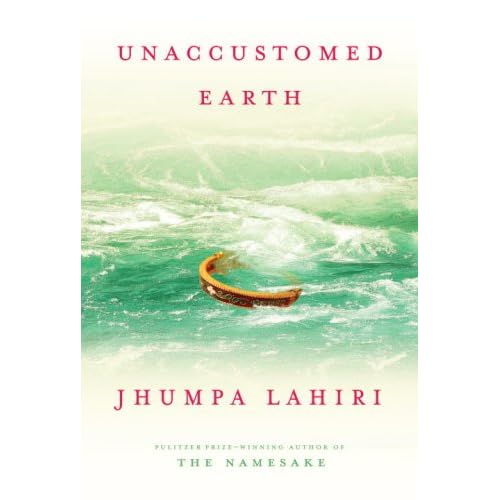
Book #34: Unaccustomed Earth


Title: Unaccustomed Earth
Author: Jhumpa Lahiri

Eight short stories about second-generation Indian-Americans navigating childhood, adolescence and young adulthood in the United States.

I'll admit it, I have some kind of inborn prejudice against short stories. Even though smartmama keeps trying to convince me to take on her favorite genre, every time I pick up a book of short stories, I get frustrated and end up putting it down before I finish. Not this time. Lahiri's stories felt like my own. Her characters struggles with being bored as a stay-at-home mom, relationships with adult children and their parents, going through adolescence when you feel separate from the dominant culture-- all of them could have been written about me. As I read the stories, I kept thinking of that famous opening line from Anna Karenina, which says something to the effect of "Happy families are all happy in the same way, but unhappy families are unhappy in different ways." Tolstoy makes happy families sound boring. The families in Lahiri's book while not perfect, are, for the most part, happy, but they're definitely not boring. I just got finished ordering her first book of stories, Interpreter of Maladies, from amazon. I can't wait to get my hot little hands on it.

Sunday, August 5, 2007

Book #75: Specimen Days

Specimen Days: A Novel


Title: Specimen Days


Author: Michael Cunningham


I was pretty skeptical when I started reading Specimen Days. In general, I don't like short stories, and I don't like science fiction. And the book, although three hundred pages in length, is really three novellas, loosely connected by Walt Whitman's epic poem Leaves of Grass. Prior to starting the novel, my only experiences with Leaves of Grass came from reading it in an American lit survey class in college and from watching With Honors a few too many times with my roommates. The only line I could recite was "I effuse my flesh in eddies" which I thought was very creative sexual wordplay unique to my situation.


So the other night, when we were lying in bed, Eddie asked me what the book I was reading was about. I felt sort of silly as I explained that it was the story of three people (Catherine, Simon and Lucas) who lived in all three stories. In the first story, all three are Irish immigrants living in New York during the height of the industrial revolution. The second story takes place in the near future. Cat is a black cop who profiles suicide bombers, Simon her white investment banker lover, and Lucas is one of the suicide bombers Cat should turn in. Finally, in the third story, Cat is a lizard from another planet, Simon is a droid with human qualities, and Lucas is a dwarf on the run.


I know, I know, it sounds weird. Really weird. I guess at times I thought the stories were weird. But Michael Cunningham seems to me to be one of the only authors who could pull off a set of stories like these and have the characters and their plights really be the focus. If you read and loved The Hours, you probably know what I mean. And you'll probably also appreciate (if not love) Specimen Days.


--originally published 11/11/06