Title: Death of a Disco Dancer
Author: David Clark
Enjoyment Rating: 9/10
Referral: I've heard lots of buzz about this book and was curious to see if the book lived up to the hype (it does!)
Source: Kindle for iPad
Books I've read this year: 34
In the hierarchy of fiction, at the very bottom is the badly written book that is hard to read. We've all read books like this-- they're boring or the characters don't work or the plot just makes no sense at all and the writing is choppy or overly descriptive or poorly edited. Those are bad, bad books. Then there are the books that are badly written or edited, but the story is entertaining enough for a reader to keep going, although if that reader is me, she might hide the book inside of something more literary or refrain from bringing it out in a public place. I'd say a fair majority of mass market fiction falls into this category (think your Dan Browns and John Grishams or Stephenie Meyers). Then there are the boring "literary" books-- the raw vegetables, the bran cereals of literature. They're the books you're assigned to read in school-- the ones where you know the author is trying to impress you with his or her brilliance and you know you should read them and think that you must be dumb for not enjoying them very much. And then, at the very top of the literary hierarchy, there are the entertaining works of literary fiction. I read enough books that I feel confident in saying that this category is the one most authors strive for, but very few attain. In Death of a Disco Dancer, David Clark's first novel, he shoots right to the top of the hierarchy.
The main narrative of Death of a Disco Dancer tells the story of Todd Whitman, an eleven-year-old Mormon kid living in Mesa, Arizona, whose grandmother, suffering from dementia recently moved in with his family. In the daytime, Todd's life is like most eleven-year-old kids on the cusp of graduating from Primary and going to junior high-- he's consumed by his first crush, and by the social scene of keeping up with two older siblings. At night, when everyone else is asleep, Granny likes to visit Todd's bedroom, where she proclaims her love for the Dancer (John Travolta from Saturday Night Fever), teaches him how to dance, and relives her past.
The secondary narrative takes place in the present time and shows Whitman, now an adult, working through the waning days of his own mother's life, which provides a nice, subtle reinforcement of how patterns cycle in families, and also puts the events of 1981 into relief as Whitman looks back at them from a distance of 30 years.
Clark is able to do something that few authors have achieved so far-- his book is a book about Mormons but not necessarily for a Mormon audience. He talks about Mormon elements in a familiar way, but while the book is about subjects that are central to the Mormon experience (eternal families, repentance, secrets, coming of age) they're presented in a universal way. Todd feels older than eleven to me, at least based on what I see going on with my own eleven-year-old. I would have found his thoughts and concerns more believable as a ninth grader than as a seventh grader, unless Clark acknowledges early on that Todd is an unusually precocious eleven-year-old (or else a 40-something looking back on his experiences at eleven). There are some anachronistic elements, Elmo didn't exist in 1981, for example, but overall the book feels tight and well-edited. It's rich and complex and totally compelling. I read the 300+ page book in less than a day, and not because I had to, but because I wanted more. I hope Clark gives us more.
Showing posts with label 9/10. Show all posts
Saturday, March 3, 2012
Friday, February 17, 2012
Book Review: The Sense of an Ending by Julian Barnes
Title: The Sense of an Ending
Author: Julian Barnes
Enjoyment Rating: 9/10
Referral: I had seen this one mentioned frequently on book lists this year and my friend Nicole said she wanted to read it.
Source: Audible for iPhone
Books I've read this year: 20
The book I listened to just before The Sense of an Ending was 11-22-63. That book was thirty hours long and while it had many introspective moments, it was filled with action and shooting and fights and time travel. The Sense of an Ending couldn't be more different. For one thing, I'm not sure I'd characterize it as a novel at all-- I think the audiorecording is four hours long, which is about half as long as most YA novels. Not much happens in the book-- Tony Webster, a sixtysomething, retired divorce living in London receives word that the mother of a former girlfriend has willed him 500 pounds and the diary of another old friend who died 40 years earlier.
This letter (which Tony actually receives about halfway through the novel, although presumably everything that comes before is backstory) sends Tony on a mission to understand why his ex's mother had Adrian's diary in the first place, and why she wanted Tony to take possession of it. We get a LOT of introspection in the story-- we have Tony looking back at his youth and analyzing it, Tony looking back at his time with the ex-girlfriend and analyzing it, Tony looking back on his marriage and analyzing it. In fact, there's so much introspection that although I get the sense that Tony's not out to deceive us as readers, his logic and remembering might have some gaps. This is evident when the ex, who now has the diary and doesn't want to give it up, sends Tony a copy of a letter he sent to her shortly after the breakup. Tony has told us that the breakup was relatively uncomplicated, but the letter is vitriolic. Once he sees the letter he reasons that he just forgot writing it.
There is a reward for all this introspection-- the plot picks up significantly in the last third. Although the turn of events is a surprise, it also makes perfect sense. And my sense of this ending was that Barnes got it just right.
Now the inevitable question-- is it right for a book club? It depends on the book club. It's nice and short, but it is dense, and I think many readers might find the introspection kind of boring. There is at least one sex scene, lots of talk of frustrated lust, and a good smattering of cursing.
Author: Julian Barnes
Enjoyment Rating: 9/10
Referral: I had seen this one mentioned frequently on book lists this year and my friend Nicole said she wanted to read it.
Source: Audible for iPhone
Books I've read this year: 20
The book I listened to just before The Sense of an Ending was 11-22-63. That book was thirty hours long and while it had many introspective moments, it was filled with action and shooting and fights and time travel. The Sense of an Ending couldn't be more different. For one thing, I'm not sure I'd characterize it as a novel at all-- I think the audiorecording is four hours long, which is about half as long as most YA novels. Not much happens in the book-- Tony Webster, a sixtysomething, retired divorce living in London receives word that the mother of a former girlfriend has willed him 500 pounds and the diary of another old friend who died 40 years earlier.
This letter (which Tony actually receives about halfway through the novel, although presumably everything that comes before is backstory) sends Tony on a mission to understand why his ex's mother had Adrian's diary in the first place, and why she wanted Tony to take possession of it. We get a LOT of introspection in the story-- we have Tony looking back at his youth and analyzing it, Tony looking back at his time with the ex-girlfriend and analyzing it, Tony looking back on his marriage and analyzing it. In fact, there's so much introspection that although I get the sense that Tony's not out to deceive us as readers, his logic and remembering might have some gaps. This is evident when the ex, who now has the diary and doesn't want to give it up, sends Tony a copy of a letter he sent to her shortly after the breakup. Tony has told us that the breakup was relatively uncomplicated, but the letter is vitriolic. Once he sees the letter he reasons that he just forgot writing it.
There is a reward for all this introspection-- the plot picks up significantly in the last third. Although the turn of events is a surprise, it also makes perfect sense. And my sense of this ending was that Barnes got it just right.
Now the inevitable question-- is it right for a book club? It depends on the book club. It's nice and short, but it is dense, and I think many readers might find the introspection kind of boring. There is at least one sex scene, lots of talk of frustrated lust, and a good smattering of cursing.
Sunday, January 29, 2012
Book Review: Factory Girls by Leslie T. Chang
Title: Factory Girls: From Village to City in a Changing China
Author: Leslie T. Chang
Enjoyment Rating: 9/10
Referral: This book came up in my Audible queue
Source: Audible for iTunes
Books I've read this year: 4
I've read a whole bunch of books about China in the last year. Some have been instructive for what our experience might be like (many of the adoption memoirs, for example), and others have been less relevant (The Man Who Loved China). But Factory Girls is the first book that's given me some insight into what Rose's life might have been like if she'd stayed in China (if she'd stayed with her birth family). Chang originally started her project, following several girls working in the factories in Southern China, while working as a reporter for the Wall Street Journal. She followed two girls over the course of years, from their first jobs on the factory floor, moving up the ranks and switching factories, always angling for a way to get ahead.
As an American of Chinese descent, Chang also took the opportunity to track her own family history in China. At first, these two storylines don't seem related enough to work together, and I listened to the first part of Chang's family history, which was interesting in and of itself, wondering if this was a gratuitous sidetrack, but eventually it felt that Chang's grandfather, who came to America to get trained as a mining engineer and then returned to China and was ultimately murdered by the communists served as both a guide and a counterpoint to the girls who are making it in the shoe and cell phone factories of Guangdong.
While we in America tend to look down on products made in China and on Chinese labor laws, one of the most interesting things that Chang shows is how migrants, especially young, single women, have gained a lot of power through their work experience. Yes, the hours are long and the conditions are inhumane by US standards, but one of the most poignant parts of the book for me was when Min goes home for her first Chinese New Year and she suddenly has enough clout to call the shots around the house. She requests that her parents purchase a hot water heater. She tells her younger sister to do well in school because Min is her support. Rather than receiving money in red envelopes from her elders (a Chinese New Year tradition) in recent years it's become customary for the young migrant girls to give money envelopes to their elders. It's interesting that hundreds of years of tradition is being completely turned around by the migrant economy. While the book didn't address adoption directly, it did show me a lot about what modern China is like, and showed a much more nuanced portrait of Chinese factories than I'd come to expect.
Author: Leslie T. Chang
Enjoyment Rating: 9/10
Referral: This book came up in my Audible queue
Source: Audible for iTunes
Books I've read this year: 4
I've read a whole bunch of books about China in the last year. Some have been instructive for what our experience might be like (many of the adoption memoirs, for example), and others have been less relevant (The Man Who Loved China). But Factory Girls is the first book that's given me some insight into what Rose's life might have been like if she'd stayed in China (if she'd stayed with her birth family). Chang originally started her project, following several girls working in the factories in Southern China, while working as a reporter for the Wall Street Journal. She followed two girls over the course of years, from their first jobs on the factory floor, moving up the ranks and switching factories, always angling for a way to get ahead.
As an American of Chinese descent, Chang also took the opportunity to track her own family history in China. At first, these two storylines don't seem related enough to work together, and I listened to the first part of Chang's family history, which was interesting in and of itself, wondering if this was a gratuitous sidetrack, but eventually it felt that Chang's grandfather, who came to America to get trained as a mining engineer and then returned to China and was ultimately murdered by the communists served as both a guide and a counterpoint to the girls who are making it in the shoe and cell phone factories of Guangdong.
While we in America tend to look down on products made in China and on Chinese labor laws, one of the most interesting things that Chang shows is how migrants, especially young, single women, have gained a lot of power through their work experience. Yes, the hours are long and the conditions are inhumane by US standards, but one of the most poignant parts of the book for me was when Min goes home for her first Chinese New Year and she suddenly has enough clout to call the shots around the house. She requests that her parents purchase a hot water heater. She tells her younger sister to do well in school because Min is her support. Rather than receiving money in red envelopes from her elders (a Chinese New Year tradition) in recent years it's become customary for the young migrant girls to give money envelopes to their elders. It's interesting that hundreds of years of tradition is being completely turned around by the migrant economy. While the book didn't address adoption directly, it did show me a lot about what modern China is like, and showed a much more nuanced portrait of Chinese factories than I'd come to expect.
Friday, January 27, 2012
Book Review: Maui Revealed by Andrew Doughty
Title: Maui Revealed: The Ultimate Guidebook
Author: Andrew Doughty
Usefulness Rating: 9/10
Referral: I can't remember
Source: Ordered from Amazon
Books I've read this year: 2
I recognize that reviewing a guidebook may be pushing the limits of what constitutes "books I've read" but I'm counting it anyway, since I read basically everything. I found the book very helpful in finding a snorkeling trip and in where to stop and what to do on the drive from the airport to Ka'anapali (we took the north lobe drive, which is rarely traveled, one lane, and pretty crazy). I was also gratified to see that the hotel I'd already booked was labeled "a real gem" (and it was one). The restaurant stuff was less helpful, mostly because I was traveling with four kids and we didn't eat out much. I think that if you had a long time to spend in Maui, this book would be even more insightful and helpful. I appreciate the authors' "cut the crap" approach.
Author: Andrew Doughty
Usefulness Rating: 9/10
Referral: I can't remember
Source: Ordered from Amazon
Books I've read this year: 2
I recognize that reviewing a guidebook may be pushing the limits of what constitutes "books I've read" but I'm counting it anyway, since I read basically everything. I found the book very helpful in finding a snorkeling trip and in where to stop and what to do on the drive from the airport to Ka'anapali (we took the north lobe drive, which is rarely traveled, one lane, and pretty crazy). I was also gratified to see that the hotel I'd already booked was labeled "a real gem" (and it was one). The restaurant stuff was less helpful, mostly because I was traveling with four kids and we didn't eat out much. I think that if you had a long time to spend in Maui, this book would be even more insightful and helpful. I appreciate the authors' "cut the crap" approach.
Sunday, December 25, 2011
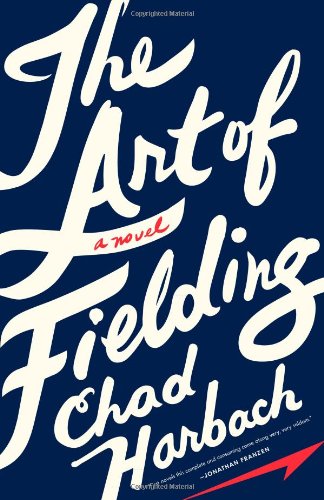
Book Review: The Art of Fielding by Chad Harbach
Title: The Art of Fielding
Author: Chad Harbach
Enjoyment Rating: 9/10
Referral: One of those buzzy books of the season-- not sure where I heard of it first
Source: Audible for iPhone
Books I've read this year: 157
The Art of Fielding is a book about baseball. More specifically, it's a book about Division 3 college baseball. It's the kind of baseball that, as Harbach says in the book, people end up watching late at night when they turn on ESPN 2 in hopes of seeing reruns of baseball or billiards. In other words, it could be a snoozer of a topic. Except that in Harbach's hands, the story works, even for someone who doesn't know or care a single little bitty bit about baseball. The 528-page book essentially covers one baseball season of the Westish Whalers, a small liberal arts college in Wisconsin. It centers on shortstop Henry Skrimshander, the best player Westish has ever seen, on the cusp of breaking the NCAA record for error-free games. Skrimshander's roommate, Owen, and mentor, Schwartz, make up two of the five central characters, as do Guert and Pella Affenlight, father and daughter, college president and high school dropout, who are dating Owen and Schwartz, respectively.
A couple of things really, really surprised me about The Art of Fielding. The first is that the author, Chad Harbach, wrote such a straightforward, almost classical novel. Harbach, the editor of the journal n + 1, seems to take lots of risks with his journal which spotlights politics, literature, culture, and art, among other things. I would have expected something more postmodern out of Harbach, but I was pleasantly surprised to see that the novel is not dead, at least not here.
The other big surprise is that the reviews on Amazon are so polarizing, which I generally think is a sign of a book with serious potential. Some people say it's the worst book they ever read, others adore it. It's true that the book could have been edited by about 100 pages without losing any of the story, but I loved the way that Harbach sometimes took his time with language or spent a lot of time on someone's thoughts. It helped me see ways that I could flesh out my current writing project to make it richer. I've already pressed it on Eddie and my dad is getting a copy for Christmas. I know, it is Christmas, but if you hurry, you can order a Kindle copy for the baseball lover or the reader in your life.
Author: Chad Harbach
Enjoyment Rating: 9/10
Referral: One of those buzzy books of the season-- not sure where I heard of it first
Source: Audible for iPhone
Books I've read this year: 157
The Art of Fielding is a book about baseball. More specifically, it's a book about Division 3 college baseball. It's the kind of baseball that, as Harbach says in the book, people end up watching late at night when they turn on ESPN 2 in hopes of seeing reruns of baseball or billiards. In other words, it could be a snoozer of a topic. Except that in Harbach's hands, the story works, even for someone who doesn't know or care a single little bitty bit about baseball. The 528-page book essentially covers one baseball season of the Westish Whalers, a small liberal arts college in Wisconsin. It centers on shortstop Henry Skrimshander, the best player Westish has ever seen, on the cusp of breaking the NCAA record for error-free games. Skrimshander's roommate, Owen, and mentor, Schwartz, make up two of the five central characters, as do Guert and Pella Affenlight, father and daughter, college president and high school dropout, who are dating Owen and Schwartz, respectively.
A couple of things really, really surprised me about The Art of Fielding. The first is that the author, Chad Harbach, wrote such a straightforward, almost classical novel. Harbach, the editor of the journal n + 1, seems to take lots of risks with his journal which spotlights politics, literature, culture, and art, among other things. I would have expected something more postmodern out of Harbach, but I was pleasantly surprised to see that the novel is not dead, at least not here.
The other big surprise is that the reviews on Amazon are so polarizing, which I generally think is a sign of a book with serious potential. Some people say it's the worst book they ever read, others adore it. It's true that the book could have been edited by about 100 pages without losing any of the story, but I loved the way that Harbach sometimes took his time with language or spent a lot of time on someone's thoughts. It helped me see ways that I could flesh out my current writing project to make it richer. I've already pressed it on Eddie and my dad is getting a copy for Christmas. I know, it is Christmas, but if you hurry, you can order a Kindle copy for the baseball lover or the reader in your life.
Sunday, November 27, 2011
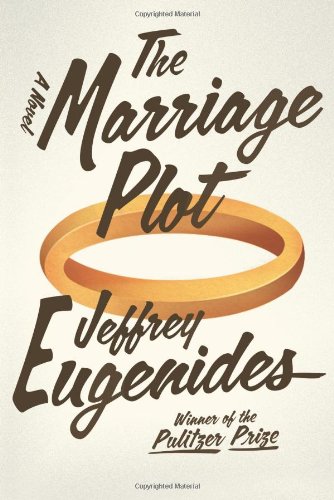
Book Review: The Marriage Plot by Jeffrey Eugenides
Title: The Marriage Plot
Author: Jeffrey Eugenides
Enjoyment Rating: 9/10
Referral: My friend Lyn read it before going to a Eugenides reading and said it was great
Source: Ordered new from Amazon
Books I've read this year: 149
It's not too uncommon for me to find bits of myself in the main character of a novel. After all, who writes books but people who like to read? But I really identified with Madeleine, the college senior English major at Brown in 1982, writing her thesis on the idea of the marriage plot in Regency/Victorian literature (I wrote my first MA thesis on many of the same authors Madeleine was studying). While Madeleine works on her thesis, she's involved in her own marriage plot-- she's dating Leonard, someone entirely unsuitable (mainly because he's struggling to get in control of his bipolar disorder, which is a bold move on Eugenides' part because it feels totally un-PC to have a character be unsuitable because of a mental illness), while a perfectly suitable boy, Mitchell, pines after her from afar (literally, he spends much of the book in Europe and India).
I didn't read the reviews on Amazon before I read the book, so I was a little bit surprised when I went on the website to pick up a picture to see that readers are only giving the book 3 1/2 stars (on average). All of the Amazon reviews seem to say that The Marriage Plot is too detailed-- we don't need so much insight into what everyone is thinking or to what Paris looked like in 1982. We don't need a twenty page description of what's happening at a party. But I've decided that when the authors have serious writing chops (and Eugenides does) I don't mind going all Victorian with them in terms of the details. I had a similar reaction to Elizabeth Kostova's books The Historian and The Swan Thieves, which people said was similarly mired in description. In fact, I always think these books are fantastic reads because the authors do such a good job creating a complete world. So it you like your description or your access to the characters' minds to be a little more limited, this might not be the book for you. But if you're willing to push through 400+ pages to come to what is really the only satisfying end to this marriage plot, then you just may be surprised at how much you enjoy the ride.
Author: Jeffrey Eugenides
Enjoyment Rating: 9/10
Referral: My friend Lyn read it before going to a Eugenides reading and said it was great
Source: Ordered new from Amazon
Books I've read this year: 149
It's not too uncommon for me to find bits of myself in the main character of a novel. After all, who writes books but people who like to read? But I really identified with Madeleine, the college senior English major at Brown in 1982, writing her thesis on the idea of the marriage plot in Regency/Victorian literature (I wrote my first MA thesis on many of the same authors Madeleine was studying). While Madeleine works on her thesis, she's involved in her own marriage plot-- she's dating Leonard, someone entirely unsuitable (mainly because he's struggling to get in control of his bipolar disorder, which is a bold move on Eugenides' part because it feels totally un-PC to have a character be unsuitable because of a mental illness), while a perfectly suitable boy, Mitchell, pines after her from afar (literally, he spends much of the book in Europe and India).
I didn't read the reviews on Amazon before I read the book, so I was a little bit surprised when I went on the website to pick up a picture to see that readers are only giving the book 3 1/2 stars (on average). All of the Amazon reviews seem to say that The Marriage Plot is too detailed-- we don't need so much insight into what everyone is thinking or to what Paris looked like in 1982. We don't need a twenty page description of what's happening at a party. But I've decided that when the authors have serious writing chops (and Eugenides does) I don't mind going all Victorian with them in terms of the details. I had a similar reaction to Elizabeth Kostova's books The Historian and The Swan Thieves, which people said was similarly mired in description. In fact, I always think these books are fantastic reads because the authors do such a good job creating a complete world. So it you like your description or your access to the characters' minds to be a little more limited, this might not be the book for you. But if you're willing to push through 400+ pages to come to what is really the only satisfying end to this marriage plot, then you just may be surprised at how much you enjoy the ride.
Sunday, November 13, 2011
Book Review: A Sense of Order and Other Stories by Jack Harrell
Title: A Sense of Order and Other Stories
Author: Jack Harrell
Enjoyment Rating: 9/10
Referral: I bought this book a few months ago but only got around to reading it this week because he was visiting campus.
Source: I think I ordered it from Amazon but I can't remember
Books I've read this year: 144
I've read a lot of bad books lately. When I picked up Jack Harrell's A Sense of Order and Other Things earlier this week, I worried that it would be one more thing on my "have to read" list for school. Instead, I was pleasantly surprised, delighted even, at Harrell's stories. In fact, after reading A Sense of Order, I have officially revised my "I don't like short stories" opinion. Sure, there are still short stories I don't like, but I'm not going to pooh-pooh the genre any more.
Jack Harrell's writing gives me hope that the LDS tradition does have room for excellent writing, and that there is an audience for that writing, even if it's a small one. His stories take place in settings as varied as rural Illinois, Rexburg, ID, the office of the prophet, and the lone and dreary world. Not all of his characters are LDS, but many are. Some of the stories contain supernatural elements. But all of the stories, regardless of setting or worldview, feel very real and grounded. They also contain an element of hope and faith. I'm eager to read more of Harrell's work, and hope to become one of the people who can ride on his coattails as a writer.
Author: Jack Harrell
Enjoyment Rating: 9/10
Referral: I bought this book a few months ago but only got around to reading it this week because he was visiting campus.
Source: I think I ordered it from Amazon but I can't remember
Books I've read this year: 144
I've read a lot of bad books lately. When I picked up Jack Harrell's A Sense of Order and Other Things earlier this week, I worried that it would be one more thing on my "have to read" list for school. Instead, I was pleasantly surprised, delighted even, at Harrell's stories. In fact, after reading A Sense of Order, I have officially revised my "I don't like short stories" opinion. Sure, there are still short stories I don't like, but I'm not going to pooh-pooh the genre any more.
Jack Harrell's writing gives me hope that the LDS tradition does have room for excellent writing, and that there is an audience for that writing, even if it's a small one. His stories take place in settings as varied as rural Illinois, Rexburg, ID, the office of the prophet, and the lone and dreary world. Not all of his characters are LDS, but many are. Some of the stories contain supernatural elements. But all of the stories, regardless of setting or worldview, feel very real and grounded. They also contain an element of hope and faith. I'm eager to read more of Harrell's work, and hope to become one of the people who can ride on his coattails as a writer.
Subscribe to:
Posts (Atom)