Showing posts with label literary fiction. Show all posts

Wednesday, February 3, 2016

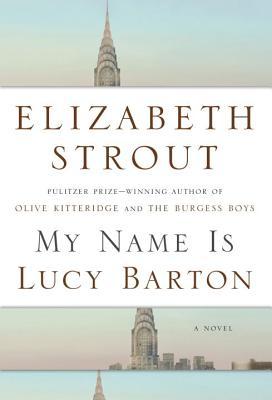
Book Review: My Name is Lucy Barton by Elizabeth Strout

Book Review: My Name is Lucy Barton
Author: Elizabeth Strout
Enjoyment Rating: ****
Source: Audible
Content Alert: a pretty clean read with some oblique references to violence

When Lucy Barton was a young mother living in New York in the 1980s, she developed a mysterious infection after an appendectomy, requiring a long hospital stay. Barton's mother, from whom she had been estranged, came to stay at the hospital with her daughter. That visit provides the central action for this spare book, in which the narrator looks back from the present to that moment and to the more distant past in order to help make sense of their relationship.

Of all the relationships I've known, the mother-daughter relationships in my life have been the most complicated. Now that I'm in my forties and have gone through the transitions from adulation to indignation to separation to judgment and finally, I hope to some grace in how I see my own mother, I'm starting to see the patterns repeat with my daughters. In this week that they spend together, Lucy seems to try to work on that reconciliation to peace with a mother whose way of life she escaped without ever wanting to look back.

My Name is Lucy Barton is a strange little book, without a lot of plot-driven action. It's the kind of book to read slowly, and I would say it's also the kind of book an author can only write when she has made it. The writing is spare, and often feels a little disjointed unless you do the work of making the connections with the narrator. I loved that Barton was an author herself, and her interactions with another established author provided some interesting conversations about creating character and narrative voice. But ultimately, this is a book about mothers and daughters, and learning to make peace with the place we come from, even if it's not a place we would have chosen on our own.

Wednesday, January 27, 2016

Book Review: Purity by Jonathan Franzen

Title: Purity
Author: Jonathan Franzen
Enjoyment Rating: DNF
Source: Digital Copy

I think I started reviewing books on this blog eight years ago. Since that time, I've reviewed everything I've read, and there hasn't been a single time when I haven't finished a book. There have been books I would have preferred not to finish, but I powered through. But I couldn't power through Purity, Jonathan Franzen's newest novel. The first two hundred pages of the book (which I where I gave up) follow Purity, a recent college graduate living in the Bay Area, from her crappy job in Oakland to her mother's house in rural California, to Bolivia, where she takes an internship with a German anarchist.

I've said this before about Franzen's characters in other novels, and I think it applies here. When I read a book I need someone to care about, especially in a book that's more than 500 pages long. That doesn't mean I need someone I identify or agree with, but just someone about whom I want to know more. Franzen's characters tend to be people I don't care about (this was more true in Freedom than in The Corrections, where I actually did care about the characters, despite finding them kind of repugnant). There was no one for me to hold onto in the first two hundred pages of Purity. Her friends are nasty squabbling squatters, her mom is flaky and narcissistic, and she seems to float on the wind between these characters. Maybe it's because I tried to read this novel on a tropical beach, where everything was warm and sunny and kind of perfect, but I could not find purchase here.

Wednesday, November 18, 2015

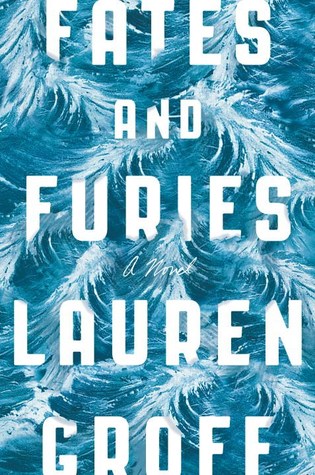
Book Review: Fates and Furies by Lauren Groff

Title: Fates and Furies
Author: Lauren Groff
Enjoyment Rating: *****
Source: Audible
Content Alert: sex

Today the National Book Awards are being announced. I've read three of the five finalists (you can see my reviews of The Turner House and A Little Life), and Fates and Furies by Lauren Groff would be my pick if I were judging. I was captivated by the first page of the book, which opens on the day Lotto and Mathilde, seniors at Vassar, elope after two weeks of dating. Lotto, the scion of a wealthy Florida family, struggles as an actor, and when he finds success as a playwright, he credits all of it to Mathilde, who loved him and made his work possible. First, we get Lotto's view of the marriage, and after his death (about midway through the book), the point of view switches to Mathilde, whose outlook on the relationship was more pragmatic and less rosy.

I read an NPR review of the book that says that Lotto's perspective represents the fates (the gifts) while Mathilde's represents the furies (the vengeance), but I think it's a lot more complicated than that. Lotto and Mathilde enter the marriage as nearly complete strangers, and while they do love each other and stay married for a long time, they (or at least she) still keep parts of themselves secret. I love the epic nature of this book (how could it be anything else with a title so grounded in Greek mythology?), and the focus on the minutae of marriage. Lotto and Mathilde are gorgeous, fully-rounded characters, and one of the things I loved best was that they still had the capacity to surprise each other, in good ways and in bad, even years into their marriage. Fates and Furies isn't only a love story, or the story of a marriage, because Mathilde's story is also a lot about childhood trauma, grief and resolution. Although the subject matter is difficult at times, it was a really engaging read for me. I wanted to gobble this book up, and then I was sad when it was over.

Monday, November 16, 2015

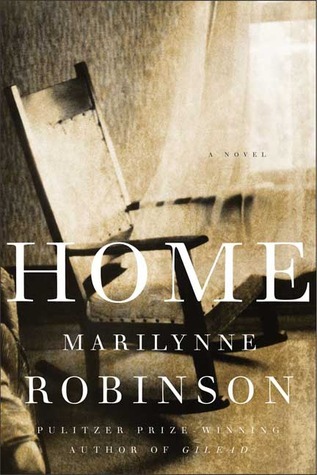
Book Review: Home by Marilynne Robinson

Title: Home (Gilead #2)
Author: Marilynne Robinson
Enjoyment Rating: ****
Source: Audible
Content Alert: A clean read

Home is the second installment in Marilynne Robinson's trilogy about Gilead, Iowa, although it takes place concurrently with Gilead. I read it third, and probably loved it the most. Glory, one of the youngest of Reverend Robert Boughton's many children, has left her job as a schoolteacher to care for her ailing father. Shortly after Glory returns, her brother Jack, the lone prodigal, also comes home. The two siblings, the spinster and the rake (as their father sees them, and as they've come to see themselves) have to sort out problems in their own lives and shepherd their father through his final days.

For me, Home is all about the assumptions people make in families and tight-knit communities-- Glory and Jack have known each other all their lives, and it's hard for anyone to see them in new and different ways. Glory can never tell anyone about the fiance who turned out to be married. Jack never opens up about what it means to be in love with a black woman and the father of a biracial in the American South in the 1950s. Reverend Ames, a much more prominent character in Gilead and Lila, the other books in the trilogy, never learns to see Jack as anything other than a ne'er do well, even though he's gone through transformative experiences with people in his own life. The ending of this book is both profoundly beautiful and sad. Robinson's beautiful writing and thoughtful Christianity make Home a book to be savored.


Wednesday, November 11, 2015

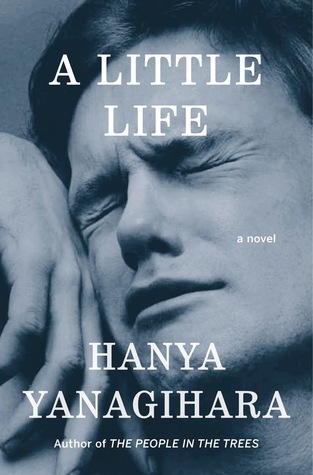
Book Review: A Little Life by Hanya Yanagihara

Title: A Little Life
Author: Hanya Yanagihara
Enjoyment Rating: *****
Source: Digital Copy
Content Alert: repeated sexual abuse of a child, violence

A couple of nights ago, Ed and I were driving down to the BYU basketball game together, and I started telling him about this fantastic book I was reading. I said something about how it was about a group of friends who met in college, then moved to New York, and how the central character, Jude St. Francis, had suffered horrible abuse as a child, first abandoned at birth, then growing up in a monastery, then when he was taken by one of the monks and used as a prostitute, then finally, when he ran away and met even worse people who damaged him both physically and mentally. But eventually he became successful and found a family and someone with whom he could share his life, and yes, it's true that he refused to talk to anyone about his past and cut himself to deal with the psychic pain, but it really was a fantastic story.

"Wow," Ed said. Remind me not to read that book.

A Little Life is a deep dive into Jude St. Francis's life. His struggles to overcome his past, and the way he never really can see himself as something other than fragile or broken. I don't think it could be classified as anything other than a tragedy, but it's also hopeful in lots of ways. I think it shows that someone whose life is scarred from the beginning and continues to bear those wounds can also have moments, even years, of beauty. It's a difficult book, and a book that is both incredibly detailed yet also feels almost timeless (I never could figure out what year the book started and what year it ended-- it all felt like it took place in the present), and I can see that it wouldn't be something everyone would enjoy, but I found it really moving, and I think I'm a more empathetic person for having known Jude, at least over the course of 700 pages.

Wednesday, September 30, 2015

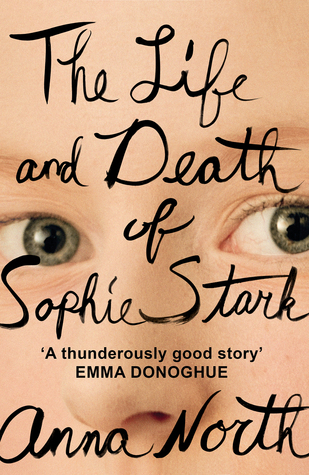
Book Review: The Life and Death of Sophie Stark by Anna North

Title: The Life and Death of Sophie Stark
Author: Anna North
Enjoyment Rating: ****
Source: Audible
Content Alert: Sex, swearing, suicide

Filmmaker Sophie Stark let few people truly know her. A relentless, often selfish and abrasive visionary, her modus operandi was to obsess over someone else's life, borrow pieces of it, and present it as a film. This method worked over and over for her-- with the star basketball player of her college team, with the girl in NYC whose yarn about growing up in West Virginia she turned into a feature film, and with the story her husband told her about his mother's life. This unflinching reshaping of reality to conform to her vision has devastating consequences in her relationships, and Sophie ends up attracting and repelling the people who are closest to her.

It's no secret from the title of the book what eventually happens to Sophie Stark. The Life and Death of Sophie Stark just shows how she got there. It's interesting, because at times I thought she was truly genius, and at other times I thought she was simply weird or downright crazy. The mind and motivations of this character don't resonate with my experience, and I think that might be what made this read so compelling. There's a delicious, satisfying twist at the end of the book that makes it entirely worth the read.

Saturday, September 26, 2015

Book Review: A God in Ruins by Kate Atkinson

Title: A God in Ruins
Author: Kate Atkinson
Enjoyment Rating: ****
Source: Digital Copy
Content Alert: Wartime violence, sex, swearing

If you loved Kate Atkinson's Life After Life (the story of Ursula Todd, an English girl born in 1910 who gets to live her life over and over again until she gets it right) like I loved Life After Life, then you probably anticipated the companion story, A God in Ruins, as much as I did. While Life After Life was full of sorrow, whimsy, and hijinks (and ended with a fist-pumping cheer from me), A God in Ruins felt wholly different in tone. While Ursula Todd's life had more and more possibilities each time she lived it, Teddy Todd's (Ursula's younger brother) narrative feels very straightforward in contrast. Teddy goes off to war, where he's an RAF bomber (where the average life span was about two weeks after being called into action), who returns home from the war to marry the girl next door, father a child, and life a quiet life in York. There are the usual domestic tragedies, but all in all, it's a good life.

I have a friend who was reading A God in Ruins and asked if I'd read it yet. She then told me that she found the book underwhelming, especially after Life After Life. I was really glad that I talked to her before delving into the story myself, because it tempered my expectations enough that I could appreciate the story for what it was. Yes, this story is long, and at times feels a little mundane (although expertly told). There were times when I almost gave up on it, but I persisted, and I'm glad, because the last few pages are knock your socks off-- they reframed the previous 460 and made the whole read feel worth it.

Friday, September 25, 2015

Book Review: The Narrow Road to the Deep North by Richard Flanagan

Title: The Narrow Road to the Deep North
Author: Richard Flanagan
Enjoyment Rating: *****
Source: Audible
Content Alert: War, sex, language-- it's definitely a book for adults

Dorrigo Evans is a fine doctor, although what would have been his crowing achievement as a surgeon, a new cancer surgery, didn't work out. Although he's been married for many years, he's a complete failure as a husband, and a minor failure as a father, a role that seems almost forgotten as he nears the end of his life. He's been a serial adulterer forever. He once knew true love. And a long, long time ago, he led a group of POWs in Burma during World War II. For that, the people of Australia consider him one of their greatest heroes.

The Narrow Road to the Deep North is a complicated book. The narration, which goes back from the 1910s and forward to the 1990s with many stops in between, isn't always easy to follow. Dorrigo's motivations are often unclear as well. Why does he act so nobly on behalf of his men, dying by the dozens as they work to build a train line, but so ignobly at home? Does the loss of one love kill all other opportunities for love? What purpose does sex serve when it doesn't bring two people together? The Narrow Road to the Deep North is beautifully written and very thought-provoking. There's a scene toward the end of the novel when he sees a woman he hasn't seen in years which is possibly the loveliest and most painful thing I've read in my life. It's not an easy read, but it as a rewarding one.

Monday, June 29, 2015

Book Review: The Sky is Everywhere by Jandy Nelson

Title: The Sky is Everywhere
Author: Jandy Nelson
Enjoyment Rating: *****
Source: Personal Copy
Content Alert: Swearing, acknowledgement of teen sex

Seventeen-year-old Lennie has always been okay with being second. She's the second clarinet in band at her Northern California high school, the one her best friend is always encouraging to live a little, and the younger, quieter of two sisters being raised by their uncle and grandmother. When her older sister Bailey suddenly dies, Lennie doesn't know how to grieve, doesn't know how to be alone, and feels uncomfortable with all of the attention she's getting. To make matters worse, she's feeling attracted to two boys, Bailey's boyfriend Toby, maybe the only person on earth who understands how Lennie feels, and Joe, the gorgeous French horn player who just moved to town and doesn't understand that Lennie is supposed to be a sidekick. The Sky is Everywhere is a hard, lovely story about a girl who's trying to put her own mind back together after it's been rocked in the worst way possible.

I think most people who read my blog know how much I loved Nelson's 2014 second book, I'll Give You the Sun, when I read it last year (The Sky is Everywhere is her first book). Annie is reading it now, and it's all I can do not to go into her room every day and grill her about what she thinks about it. So the bar was set high, really, really high, for The Sky is Everywhere. Did it succeed? In many ways, I think it did. Nelson does a great job making Lennie a rounded character, someone I felt like I knew and understood. She does incredibly stupid things during the course of the novel and matures a lot in the process. The supporting cast of characters is also pretty great, and the way Nelson intersperses dozens of poems and notes that Lennie writes to Bailey in the months after her death (and finally ties them into the narrative) is also lovely. It wasn't quite as moving for me as I'll Give You the Sun, but I think that was mainly because I loved the way she focused on the brother-sister relationship in that novel, and redeeming people who thought themselves too broken for redemption, while The Sky is Everywhere is more of a totally rocking, very thoughtful, teen romance.

Wednesday, June 24, 2015

Book Review: The Turner House by Angela Flournoy

Title: The Turner House
Author: Angela Flournoy
Enjoyment Rating: ****
Source: Audible
Content Alert: Some sex, language

Cha-Cha and Lelah are the bookends of the Turner family. Cha-Cha, the oldest of Viola and Francis's thirteen children, is old enough to be Lelah's father, and he often acts like he is the patriarch of the family. He's capable and responsible, makes decisions on behalf of the entire sibling group, and he sees ghosts. Lelah's sneaking around in the abandoned family home in a part of Detroit that has gone to seed after losing her job due to her gambling addiction and being evicted from her apartment. Detroit itself is a major player in this story, with its prosperity of the forties and fifties and blighted state of the last couple of decades playing strongly into the characters actions and motivations.

As someone who wants to write about Mormons, one of the challenges I frequently encounter when I'm thinking about crafting a story is how to write about big families. Sometimes it seems like there are just too many people to keep track of to make a story work well. While Flournoy solves this problem in part by focusing mainly on Cha Cha and Lelah (the round characters), she does include some of the other siblings (the sister who had gastric bypass, the brother who was in the military). She writes in the third-person, bouncing back and forth from Arkansas in the 1940s to present-day Detroit and all the places in between, but I didn't find myself feeling confused by the narrative, so that encourages me not to avoid complex storytelling from many points of view. Reading The Turner House also made me realize that although I think I've read widely, I haven't read nearly enough
contemporary stories by African Americans featuring African Americans (the graduate seminar I took fifteen years ago no longer feels relevant). Flournoy does a lovely job featuring some of the problems endemic to Detroit. The ghosts Cha-Cha sees and the ghost of their home, now underwater and empty, feel like natural parallels. All in all, a great read with lovely, flawed, generous characters.
Viola should feel proud of her posterity.

Tuesday, June 23, 2015

Book Review: The Children's Crusade by Ann Packer

Title: The Children's Crusade
Author: Ann Packer
Enjoyment Rating: ****
Format: Kindle
Content Alert: Some swearing

Bill Blair, a pediatrician from Michigan, came to Northern California after his service in the Korean War and fell in love. He fell in love with a place, actually, and chose a local woman, Penny, to share it with. As the years pass, they raise their four children to adulthood in an idyllic home near Palo Alto, but their relationship flounders. Years later, after Bill dies and Penny moves to New Mexico, this relationship colors the way the adult children live their lives.

I saw one reviewer say that The Children's Crusade reminded them a lot of Jonathan Franzen's The Corrections. While I think that's true, I think that Franzen's characters were generally unlikeable, while I saw things to like in all of the Blairs. I love that Bill is a wonderful, very involved father (in an era when many fathers were not) and a caring doctor, but not a particularly empathetic husband. It would be easy to write Penny off as uninvolved or inflexible (she never quite gets over getting pregnant with a fourth child and retreats to a backyard art studio instead of engaging with her kids), but instead I recognized that I feel a lot of those same impulses. Packer also does a lovely job fleshing out the lives of all four children, and of making the place the Blairs loved so well a central character in the novel.

Wednesday, May 13, 2015

Book Review: The Paying Guests by Sarah Waters

Title: The Paying Guests
Author: Sarah Waters
Enjoyment Rating: ***
Source: Digital Copy
Content Alert: violence and hot sex

It's 1922 and the Wrays, mother and twentysomething daughter Frances, have finally come to terms with the fact that they can't afford to live in their home, on the outskirts of London, unless someone else helps pay. Enter Leonard and Lilian Barber, the young couple who rent a few rooms on the upper floor. While the Wrays and the Barbers initially seem to have a friendly relationship that goes no further than landlord and lodger, soon the families find themselves almost irrevocably intertwined.

The first third of The Paying Guests reads like a well-written literary/historical novel. Readers come to understand the mores of the Wray's society, and the reasons why they're forced to take in lodgers (basically, all the men in the family died). Waters does a beautiful job recreating London in 1922, complete with the disabled veterans, the men who returned from the war, and the women who had a degree of freedom and have found themselves displaced. The second third of the novel is, in a word, hot. One of the lodgers and one of the landladies (if you've read any of Waters's other novels, you probably can guess which ones) get together, and wow-ee, sparks fly. Then a crime takes place at the cusp of the third third of the novel, and the book becomes something of a police procedural. While I was delighted by the first third, and entertained by the second third, I found the last third totally boring. The Paying Guests lost all its sparkle, and I can't envision a happily ever after for these characters, no matter what Waters's characters pledge in the final pages.

Book Review: The Buried Giant by Kazuo Ishiguro

Title: The Buried Giant
Author: Kazuo Ishiguro
Enjoyment Rating: **** (actually enjoyment was 3/5, appreciation was 5/5)
Source: Audible
Content Alert: some violence, but a fairly clean read

Imagine the scene: England just after the time of King Arthur. Knights still roam the land, and the Angles and Saxons still want to clobber each other. Axl and Beatrice, an elderly couple, can't shake a feeling of malaise. They feel compelled to leave their village to search for their son, but their memories are so fleeting and impermeable that it's hard for them to remember much from the present, let alone the distant past when they think their son left the village. Along the way, they encounter all kinds of fantastical creatures-- dragons and warriors and ogres, and spend quite a bit of time with Sir Gawain, and often find themselves sidetracked on their original quest to find their son, instead focusing on their relationship and lost memories.

The Buried Giant is the kind of book that makes me feel pretty stupid for not enjoying more. I listened to the entire book, which I think helped, since it's the kind of story that I would probably skim, finding it difficult to find a footing with the text. I respect Ishiguro as a writer enough to  know that he's saying a lot about our contemporary society with this fable, and I think I was able to see a lot of the connections he seems to want to be making, particularly when it comes to making memories and feeling guilt.  I wanted the narrative to grab me more than it did, and felt myself plodding along out of respect and duty more than enjoyment. I also pegged the last scene, involving a ferryman, the first time we encountered the ferryman hundreds of pages earlier, which made me a little disappointed that Ishiguro didn't surprise me more.