Title: A Sense of Order and Other Stories
Author: Jack Harrell
Enjoyment Rating: 9/10
Referral: I bought this book a few months ago but only got around to reading it this week because he was visiting campus.
Source: I think I ordered it from Amazon but I can't remember
Books I've read this year: 144
I've read a lot of bad books lately. When I picked up Jack Harrell's A Sense of Order and Other Things earlier this week, I worried that it would be one more thing on my "have to read" list for school. Instead, I was pleasantly surprised, delighted even, at Harrell's stories. In fact, after reading A Sense of Order, I have officially revised my "I don't like short stories" opinion. Sure, there are still short stories I don't like, but I'm not going to pooh-pooh the genre any more.
Jack Harrell's writing gives me hope that the LDS tradition does have room for excellent writing, and that there is an audience for that writing, even if it's a small one. His stories take place in settings as varied as rural Illinois, Rexburg, ID, the office of the prophet, and the lone and dreary world. Not all of his characters are LDS, but many are. Some of the stories contain supernatural elements. But all of the stories, regardless of setting or worldview, feel very real and grounded. They also contain an element of hope and faith. I'm eager to read more of Harrell's work, and hope to become one of the people who can ride on his coattails as a writer.
Showing posts with label school. Show all posts
Sunday, November 13, 2011
Saturday, November 12, 2011
Book Review: Why Fairy Tales Stick by Jack Zipes
Title: Why Fairy Tales Stick: The Evolution and Relevance of a Genre
Author: Jack Zipes
Usefulness rating: 6/10
Referral: I picked it for a book review required by my fairy tale films class because I'm writing a paper about how one particular tale has evolved
Source: Borrowed from the BYU library
Books I've read this year: 143
This is the review I wrote for my class:
Author: Jack Zipes
Usefulness rating: 6/10
Referral: I picked it for a book review required by my fairy tale films class because I'm writing a paper about how one particular tale has evolved
Source: Borrowed from the BYU library
Books I've read this year: 143
This is the review I wrote for my class:
In the early chapters of Why
Fairy Tales Stick: The Evolution and Relevance of a Genre, Jack Zipes seems
to set up a pattern for what he’ll do in the rest of the book. In the first
chapter, he lays the groundwork for how fairy tales became a genre in the first
place. He shows how there needed to be a critical mass of people, reading and
writing in the vernacular, before the oral folk and fairy tales which had been
circulating for centuries could be written down. While we can’t see how stories
changed in the oral tradition, Zipes attempts to demonstrate how the tales have
changed in the years when they have become part of the print and mass-media
culture. While Zipes deals primarily with the history of language in the first
chapter, his focus shifts to the history of fairy tales as a whole in the
second chapter. The most surprising part of these first two chapters may be
Zipes’ definition of a fairy tale, which is broader than many others I’ve read.
While many other fairy tale scholars keep the definition narrow because they
consider all tales that are fairy tales to come from the oral tradition, Zipes
includes Barrie, Wilde, Andersen, Baum, Tolkien, Salman Rushdie, and even the
creators of X-Men as authors of fairy tale. Zipes says, “The
institutionalization of a genre means that a certain process of production,
distribution, and reception had become fully accepted within the public sphere
of a society and plays a role in forming and maintaining the cultural heritage
of that society. Without such institutionalization, any genre would perish”
(89). It seems logical that Zipes, who argues that the fairy tale is alive and
evolving in the 21st century, would keep the definition broad,
because if the traditional tales fail to speak to those in the future, there
will undoubtedly be other tales to take their place.
Based on these first two chapters, I expected that Zipes
would continue to look at the genre as a whole, perhaps looking at the
evolution of various issues or linguistic elements in Western European tales.
However, Zipes seems to change the scope of his work quite dramatically as the
book progresses past the first two chapters. In the next four chapters Zipes looks
at various tales (Little Red Riding Hood, Cinderella, Snow White, Beauty and
the Beast, Mulan, and Bluebeard) and show how each tale has departed from the
traditional literary versions in the retellings that have been written over the
last two or three centuries. He finds trends in the patterns of retellings
(Bluebeard characters after World War II seems to represent some of the
anxieties and feelings of emasculation that men felt after the end of the war,
Cinderellas in the late 20th century show trends toward
multiculturalism) and attempts to draw some conclusions about what those
patterns may say about particular periods of time. Zipes seems to feel that the
Aarne-Thompson classification index is a too categorical and formulaic to be
useful in the modern era, but his book works best as an extension of that
index. It would be particularly useful to anyone studying a traditional tale
and its many retellings, since he provides exhaustive lists of retellings as
well as more in-depth summaries and analysis of particular retellings which
seem to highlight a certain moment in history.
When I chose this book to review, I was surprised at just
how ubiquitous Jack Zipes seems to be in the world of fairy tale studies. I
wondered how he could possibly write all of the books and articles he does. In
reading Why Fairy Tales Stick, I think I found some of the answer—he reuses
significant portions of his material. This book is only seven chapters long,
and at least one of the chapters is a condensation of previously published work
(in this case, a study of Little Red Riding Hood). If other chapters function
in the same way, that might explain some of Zipes’s ability to be prolific in
his publishing, but I’m not sure how it reflects on his academic work as a
whole. Zipes is at his least successful when he’s catty. He goes on for several
paragraphs about Ruth Bottigheimer’s argument that print culture was
responsible for the dissemination of the fairy tale, and the attack was so
mean-spirited that it seemed to veer from the academic into the personal.
Ultimately, while Zipes’s book can be useful for researchers who want to find
retellings for their own research, I think that because he never announces his
intentions to look at patterns individual fairy tales rather than continuing to
look at evolution more broadly, those reading the book feel somewhat
unsatisfied when the book takes that direction.
Friday, November 11, 2011
Book Review: Fairy Tale Films by Pauline Greenhill and Sidney Ann Matrix
Title: Fairy Tale Films: Visions of Ambiguity
Author: Pauline Greenhill and Sidney Ann Matrix
Usefulness Rating: 6/10
Referral: Required reading for my fairy tale folklore class
Source: Ordered from Amazon
Books I've read this year: 142
I took away two things from reading this book. First of all, pretty much any story can be seen as a fairy tale narrative. Greenhill and Matrix selected essays in which Eyes Wide Shut, Harry Potter, and Edward Scissorhands are considered fairy tales. Secondly, it's almost impossible to talk about fairy tales without talking about gender. While reading these essays was sometimes interesting, I think it would have been a more interesting read if we actually watched some of the films discussed in the chapters. Reading the secondary sources without watching the primary sources was ultimately unfulfilling.
Author: Pauline Greenhill and Sidney Ann Matrix
Usefulness Rating: 6/10
Referral: Required reading for my fairy tale folklore class
Source: Ordered from Amazon
Books I've read this year: 142
I took away two things from reading this book. First of all, pretty much any story can be seen as a fairy tale narrative. Greenhill and Matrix selected essays in which Eyes Wide Shut, Harry Potter, and Edward Scissorhands are considered fairy tales. Secondly, it's almost impossible to talk about fairy tales without talking about gender. While reading these essays was sometimes interesting, I think it would have been a more interesting read if we actually watched some of the films discussed in the chapters. Reading the secondary sources without watching the primary sources was ultimately unfulfilling.
Wednesday, October 26, 2011
Book Review: Your Cleft-Affected Child by Carrie Gruman-Trinker
Title: Your Cleft-Affected Child: The Complete Book of Information, Resources, and Hope
Author: Carrie Gruman-Trinker
Usefulness Rating: 7/10
Referral: Found on Amazon
Source: Ordered used from Amazon
Books I've read this year: 136
While A Parent's Guide to Cleft Lip and Palate was a more useful book from a medical perspective, there were things I really liked about Carrie Gruman-Trinker's Your Cleft-Affected Child. Gruman-Trinker's son Aidan (the fifth child in her family) was born with pretty serious bilateral cleft lip and palate, and the book is part memoir, part information resource, and part cheerleader. One of the things I like best about the book is the short set of profiles of other people who were born with clefts (including Tom Brokaw, Jesse Jackson and Joaquin Phoenix). I also appreciated reading about her experiences with Aidan.
However, Aidan was still a preschooler at the time the book was published, and I'd love to hear how a cleft lip and palate affects a child as she grows. Part of the reason why I'm interested in that is because I'm making this research do double duty. In my fiction class we were assigned to write a short story that we had to do some research to write about effectively, and since we got our referral of Rose shortly after we got the assignment, it seemed natural to write about cleft lip and palate. I don't want to write the story from the point of view of a young child, and I'm finding it hard to get information on the lasting effects of this birth defect (is birth defect a p.c. term? Gruman-Trinker uses it in this book). It served my purposes as the mother of a child, (but only hand-in-hand with the more technical books about cleft lip/palate) but not my purposes as a writer.
Author: Carrie Gruman-Trinker
Usefulness Rating: 7/10
Referral: Found on Amazon
Source: Ordered used from Amazon
Books I've read this year: 136
While A Parent's Guide to Cleft Lip and Palate was a more useful book from a medical perspective, there were things I really liked about Carrie Gruman-Trinker's Your Cleft-Affected Child. Gruman-Trinker's son Aidan (the fifth child in her family) was born with pretty serious bilateral cleft lip and palate, and the book is part memoir, part information resource, and part cheerleader. One of the things I like best about the book is the short set of profiles of other people who were born with clefts (including Tom Brokaw, Jesse Jackson and Joaquin Phoenix). I also appreciated reading about her experiences with Aidan.
However, Aidan was still a preschooler at the time the book was published, and I'd love to hear how a cleft lip and palate affects a child as she grows. Part of the reason why I'm interested in that is because I'm making this research do double duty. In my fiction class we were assigned to write a short story that we had to do some research to write about effectively, and since we got our referral of Rose shortly after we got the assignment, it seemed natural to write about cleft lip and palate. I don't want to write the story from the point of view of a young child, and I'm finding it hard to get information on the lasting effects of this birth defect (is birth defect a p.c. term? Gruman-Trinker uses it in this book). It served my purposes as the mother of a child, (but only hand-in-hand with the more technical books about cleft lip/palate) but not my purposes as a writer.
Friday, October 21, 2011
Book Review: Rewriting by Joseph Harris
Title: Rewriting: How to do things with texts
Author: Joseph Harris
Usefulness Rating: 6/10
Referral: Required reading for my Fairy Tale Folklore class
Source: Purchased from Amazon
Books I've read this year: 130
I think that if I were planning a career in academic writing, this would be a useful book to read as a graduate student. It contains many of the same ideas about writing that Booth, Colomb and Williams present in The Craft of Writing (which we used last year in the 311 class I taught), but the focus is more on academic writing than on writing research papers. However, the ideas of countering, forwarding, and responding are present in both books, and I think that The Craft of Writing is more accessible and interesting. However, the Harris book is more in-depth in its focus on academics.
I'll just say this-- reading Rewriting made me glad that I'm a creative writer. It's so much more fun to write stories than it is to write about things other people have written.
Author: Joseph Harris
Usefulness Rating: 6/10
Referral: Required reading for my Fairy Tale Folklore class
Source: Purchased from Amazon
Books I've read this year: 130
I think that if I were planning a career in academic writing, this would be a useful book to read as a graduate student. It contains many of the same ideas about writing that Booth, Colomb and Williams present in The Craft of Writing (which we used last year in the 311 class I taught), but the focus is more on academic writing than on writing research papers. However, the ideas of countering, forwarding, and responding are present in both books, and I think that The Craft of Writing is more accessible and interesting. However, the Harris book is more in-depth in its focus on academics.
I'll just say this-- reading Rewriting made me glad that I'm a creative writer. It's so much more fun to write stories than it is to write about things other people have written.
Thursday, October 20, 2011
Book Review: Invisible Cities by Italo Calvino
Title: Invisible Cities
Author: Italo Calvino
Enjoyment Rating: 8/10
Referral: Required reading for my Creative Writing seminar
Source: Purchased from Amazon
Books I've read this year: 129
I really, really wish I had been able to attend my class discussion on Invisible Cities. I drove down to Provo, walked across campus to the building, and sat down at the seminar table when the phone rang. It was Isaac's school calling to say he was sick. And I was super-bummed, not just because I now had to walk back across campus and drive back to Salt Lake, but because I wonder what everyone else thought about the book.
I labeled Invisible Cities a book of short stories, but it feels more like a book of dreams. The premise is that Marco Polo is talking to Kubla Khan about the cities he has encountered in his travels. He recounts visits to dozens of places, but these places are all magical and mystical, and don't feel like places in the Orient in the 13th century. In fact, as Polo and Khan continue their discussion, it's evident that the places are much more in Polo's head than they are in any real place.
The language of Invisible Cities is exquisite-- it's more poetic than poetry. As a result, I felt like I approached it like I approached poetry. I tried to soak up the rhythm and the images, and didn't care too much if I didn't "get it." I think the book worked, and some of the cities were haunting (like the one where a mirror of the aboveground city existed underground and all of the dead were positioned in the underground city, engaged in the kind of work they did while they were alive).
Anyway, I wish I could have heard what other people felt about the book. I feel like 90% of it went over my head, but the 10% that stayed with me was pretty enjoyable.
Author: Italo Calvino
Enjoyment Rating: 8/10
Referral: Required reading for my Creative Writing seminar
Source: Purchased from Amazon
Books I've read this year: 129
I really, really wish I had been able to attend my class discussion on Invisible Cities. I drove down to Provo, walked across campus to the building, and sat down at the seminar table when the phone rang. It was Isaac's school calling to say he was sick. And I was super-bummed, not just because I now had to walk back across campus and drive back to Salt Lake, but because I wonder what everyone else thought about the book.
I labeled Invisible Cities a book of short stories, but it feels more like a book of dreams. The premise is that Marco Polo is talking to Kubla Khan about the cities he has encountered in his travels. He recounts visits to dozens of places, but these places are all magical and mystical, and don't feel like places in the Orient in the 13th century. In fact, as Polo and Khan continue their discussion, it's evident that the places are much more in Polo's head than they are in any real place.
The language of Invisible Cities is exquisite-- it's more poetic than poetry. As a result, I felt like I approached it like I approached poetry. I tried to soak up the rhythm and the images, and didn't care too much if I didn't "get it." I think the book worked, and some of the cities were haunting (like the one where a mirror of the aboveground city existed underground and all of the dead were positioned in the underground city, engaged in the kind of work they did while they were alive).
Anyway, I wish I could have heard what other people felt about the book. I feel like 90% of it went over my head, but the 10% that stayed with me was pretty enjoyable.
Sunday, October 9, 2011
Book Review: Just Chris
Title: Just Chris
Author: Christopher Shiveley Welch
Enjoyment Rating: he's just a kid-- I refrain from giving a rating
Referral: Amazon search memoirs about cleft lip/palate
Source: Kindle for iPad
Books I've read this year: 125 (although this was more of a pamphlet than a book)
After reading Just Chris, I'm convinced that anyone can write a book. Maybe everyone should write a book. But maybe, just maybe, not everyone should make that book an eBook and sell it on Amazon. Especially if they're, like fifteen. And now I feel like a total jerk, because the book is about a kid who has had lots of struggles in life-- he was born with a cleft lip and palate and adopted when he was a week old, then he had lots of other school-related problems as he grew. I feel for the kid. I actually thought the first half of the book, when he was writing about his medical problems, was pretty interesting. But the second half is all about the trips he took with his family. It reads like an incredibly long Christmas card from someone I don't know, that I somehow got suckered into paying $1.99 to read.
Author: Christopher Shiveley Welch
Enjoyment Rating: he's just a kid-- I refrain from giving a rating
Referral: Amazon search memoirs about cleft lip/palate
Source: Kindle for iPad
Books I've read this year: 125 (although this was more of a pamphlet than a book)
After reading Just Chris, I'm convinced that anyone can write a book. Maybe everyone should write a book. But maybe, just maybe, not everyone should make that book an eBook and sell it on Amazon. Especially if they're, like fifteen. And now I feel like a total jerk, because the book is about a kid who has had lots of struggles in life-- he was born with a cleft lip and palate and adopted when he was a week old, then he had lots of other school-related problems as he grew. I feel for the kid. I actually thought the first half of the book, when he was writing about his medical problems, was pretty interesting. But the second half is all about the trips he took with his family. It reads like an incredibly long Christmas card from someone I don't know, that I somehow got suckered into paying $1.99 to read.
Tuesday, October 4, 2011
Book Review: The Classic Fairy Tales by Maria Tatar
Title: The Classic Fairy Tales
Author: Maria Tatar
Enjoyment Rating: 6/10
Source: Ordered used from Amazon
Referral: Required reading for my Fairy Tale Folklore class
Books I've read this year: 120
This is another "school" book, and one that I would have been unlikely to pick up on my own. After all, I know the basic fairy tales, right? Well, after reading Tatar's book, I've decided I barely know the tip of the iceberg when it comes to fairy tales. The book gives a bit of history on the genre in the beginning, then includes versions of six different tales (Snow White, Beauty and the Beast, Hansel and Gretel, Little Red Riding Hood, and Bluebeard), then stories by Oscar Wilde and Hans Christian Andersen, then some fairy tale criticism. What it can't include are the early oral versions of the tales, but I've been forced to reframe my thinking so now I see all of the written or film versions as retellings of older versions, or even as retellings of each other. For each tale, Tatar includes at least half a dozen versions, ranging from Perrault and the Grimm Brothers' traditional tales, to Roald Dahl poems based on the tales, to modern short stories by Anne Sexton and Margaret Atwood that use the tales as inspiration, but aren't straightforward retellings. Anyway, it's an interesting book and it's forced me to look more deeply at a subject that I may have dismissed as child's play before taking the class.
Author: Maria Tatar
Enjoyment Rating: 6/10
Source: Ordered used from Amazon
Referral: Required reading for my Fairy Tale Folklore class
Books I've read this year: 120
This is another "school" book, and one that I would have been unlikely to pick up on my own. After all, I know the basic fairy tales, right? Well, after reading Tatar's book, I've decided I barely know the tip of the iceberg when it comes to fairy tales. The book gives a bit of history on the genre in the beginning, then includes versions of six different tales (Snow White, Beauty and the Beast, Hansel and Gretel, Little Red Riding Hood, and Bluebeard), then stories by Oscar Wilde and Hans Christian Andersen, then some fairy tale criticism. What it can't include are the early oral versions of the tales, but I've been forced to reframe my thinking so now I see all of the written or film versions as retellings of older versions, or even as retellings of each other. For each tale, Tatar includes at least half a dozen versions, ranging from Perrault and the Grimm Brothers' traditional tales, to Roald Dahl poems based on the tales, to modern short stories by Anne Sexton and Margaret Atwood that use the tales as inspiration, but aren't straightforward retellings. Anyway, it's an interesting book and it's forced me to look more deeply at a subject that I may have dismissed as child's play before taking the class.
Monday, October 3, 2011
Book Review: The Magic Barrel by Bernard Malamud
Title: The Magic Barrel
Author: Bernard Malamud
Enjoyment Rating: Some stories 9/10, others 5/10, overall 7/10
Source: Ordered used from Amazon
Referral: Required reading for Creative Writing workshop
Books I've read this year: 119
I'm a little bit embarrassed that I've come this far in life without reading Malamud (I've been too busy reading Maisie Dobbs, I guess). I know he's considered important and he won all kinds of big awards in his day, so I should have had the internal motivation to tackle one of his novels earlier, but I didn't. Now I've been compelled by my professor to read Malamud, and despite my prejudice against the short story, I have to say that I'm finding this book delightful. Malamud has kind of a stock thing in these stories-- they're all about some guy (usually either Jewish or Italian), living in New York (I imagine them in the Brooklyn of the 1950s and 1960s), and they're all impotent in some way. They have dreams that they can't seem to rise above. Sometimes bad luck holds them down, but more often they just can't get their stuff together. And now that I've read about a dozen of these guys, I have a soft spot in my heart growing for them. Malamud's writing is also really engaging-- mostly simple, straightforward sentences, a great ear for voices, and occasionally these zingers of an image that really stand out. While Malamud does some zany things (the black Jewish angel, for instance), I love that his stories seem to focus on conflict and character rather than impressing an audience with his bag of tricks.
Author: Bernard Malamud
Enjoyment Rating: Some stories 9/10, others 5/10, overall 7/10
Source: Ordered used from Amazon
Referral: Required reading for Creative Writing workshop
Books I've read this year: 119
I'm a little bit embarrassed that I've come this far in life without reading Malamud (I've been too busy reading Maisie Dobbs, I guess). I know he's considered important and he won all kinds of big awards in his day, so I should have had the internal motivation to tackle one of his novels earlier, but I didn't. Now I've been compelled by my professor to read Malamud, and despite my prejudice against the short story, I have to say that I'm finding this book delightful. Malamud has kind of a stock thing in these stories-- they're all about some guy (usually either Jewish or Italian), living in New York (I imagine them in the Brooklyn of the 1950s and 1960s), and they're all impotent in some way. They have dreams that they can't seem to rise above. Sometimes bad luck holds them down, but more often they just can't get their stuff together. And now that I've read about a dozen of these guys, I have a soft spot in my heart growing for them. Malamud's writing is also really engaging-- mostly simple, straightforward sentences, a great ear for voices, and occasionally these zingers of an image that really stand out. While Malamud does some zany things (the black Jewish angel, for instance), I love that his stories seem to focus on conflict and character rather than impressing an audience with his bag of tricks.
Saturday, October 1, 2011
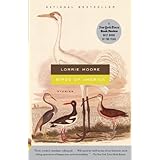
Book Review: Birds of America by Lorrie Moore
Title: Birds of America
Author: Lorrie Moore
Enjoyment Rating: some stories were 10/10, others were 3/10, overall 7/10
Source: Ordered new from Amazon
Referral: My creative writing professor recommended one of the stories
Books I've read this year: 117
As I've loudly proclaimed since I started this blog, short stories are not my thing. I do not like to write them, I do not like to read them, I do not like them Sam I Am. And I've resisted all the "Try them, try them, and you may/Try them and you may I say." Well, this semester I've had no choice but to try them since I'm taking a fiction seminar where we read and write short stories exclusively.
What is it that I don't like, exactly? I guess it's that I don't feel like there's often resolution to a short story-- I feel like it's more a venue for experimentation on the part of the author, which is all fine and good for the author, but often has mixed results for the reader. Some short stories in a collection will be fantastic, but others don't seem to work at all. I also like the chance to spend several days with an interesting character, and short stories are over too soon to develop a real relationship. What can I say? I'm a monogamist.
So, kicking and screaming, I've been eating my green eggs and ham reading short stories. On the first day of class, my Amazon addiction kicked in (a subject for another post), and I bought two of the collections that included stories that professor recommended. The first was this Lorrie Moore collection, and I bought it on the basis of the story "People Like that are the Only People Here: Canonical Babbling in Peed Onc." My professor introduced it in the context that it's a story where the author's life and her character's life are similar, so in a reader's mind it might blend some elements of fiction and nonfiction. For example, Moore was living in Madison, WI and had a child with kidney cancer, and her character is a writer living in Madison, and her story focuses on her son's kidney cancer. Furthermore, the character's husband tells her to take notes and write a story about the experience. It's a brilliant story, and I felt a strong emotional connection to the character, probably because of the things we went through with Isaac several years ago. Anyway, I'd buy the book again just on the basis of that story. The other stories are fairly typical for a short story collection-- some are awesome, others leave me scratching my head. But overall, I've discovered a voice I really like in Lorrie Moore, and I see myself in her characters, who are, in large part, overly educated Midwesterners.
Now I need to go order some of her novels.
Author: Lorrie Moore
Enjoyment Rating: some stories were 10/10, others were 3/10, overall 7/10
Source: Ordered new from Amazon
Referral: My creative writing professor recommended one of the stories
Books I've read this year: 117
As I've loudly proclaimed since I started this blog, short stories are not my thing. I do not like to write them, I do not like to read them, I do not like them Sam I Am. And I've resisted all the "Try them, try them, and you may/Try them and you may I say." Well, this semester I've had no choice but to try them since I'm taking a fiction seminar where we read and write short stories exclusively.
What is it that I don't like, exactly? I guess it's that I don't feel like there's often resolution to a short story-- I feel like it's more a venue for experimentation on the part of the author, which is all fine and good for the author, but often has mixed results for the reader. Some short stories in a collection will be fantastic, but others don't seem to work at all. I also like the chance to spend several days with an interesting character, and short stories are over too soon to develop a real relationship. What can I say? I'm a monogamist.
So, kicking and screaming, I've been
Now I need to go order some of her novels.
Thursday, September 29, 2011
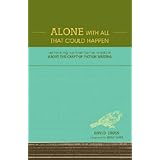
Book Review: Alone With All That Could Happen by David Jauss
Title: Alone With All That Could Happen: Rethinking Conventional Wisdom About the Craft of Fiction
Author: David Jauss
Enjoyment Rating: 6/10
Source: Hardcover purchased from Amazon
Referral: Required reading for my fiction seminar
Books I've read this year: 116
We busted through Alone With All That Could Happen in the first couple of weeks of my fiction seminar this semester. You know me-- if the book has a good story and interesting characters, I'm hooked; if not, it doesn't do much for me. For a "craft" book, this one is pretty good, but I'd never curl up with it for fun. Jauss is an interesting author because he lets his biases be known. He also occasionally points out problems in the craft of fiction, but doesn't really try to solve them (for example, he devotes a whole chapter to the problems of the term "point of view" because it can be used to indicate both who is speaking and how much of a character's mind is revealed, and he says that we really need new terms, but he doesn't try to define those new terms). He's the guy who says epiphanies are lazy and present tense should be used sparingly. I appreciated his voice as a writer, and I thought that one of the greatest strengths of the book is how he uses examples from stories to illustrate his points. I also really liked the chapter on how to put together a collection of short stories (how to order the stories) which is something I had never seen tackled in one of these "writing craft" books.
Author: David Jauss
Enjoyment Rating: 6/10
Source: Hardcover purchased from Amazon
Referral: Required reading for my fiction seminar
Books I've read this year: 116
We busted through Alone With All That Could Happen in the first couple of weeks of my fiction seminar this semester. You know me-- if the book has a good story and interesting characters, I'm hooked; if not, it doesn't do much for me. For a "craft" book, this one is pretty good, but I'd never curl up with it for fun. Jauss is an interesting author because he lets his biases be known. He also occasionally points out problems in the craft of fiction, but doesn't really try to solve them (for example, he devotes a whole chapter to the problems of the term "point of view" because it can be used to indicate both who is speaking and how much of a character's mind is revealed, and he says that we really need new terms, but he doesn't try to define those new terms). He's the guy who says epiphanies are lazy and present tense should be used sparingly. I appreciated his voice as a writer, and I thought that one of the greatest strengths of the book is how he uses examples from stories to illustrate his points. I also really liked the chapter on how to put together a collection of short stories (how to order the stories) which is something I had never seen tackled in one of these "writing craft" books.
Wednesday, March 16, 2011
Book #34: Nick and Norah's Infinite Playlist
Author: Rachel Cohn, David Levithan
Here's the fifth book in my five-book omnibus review for my Creative Writing Theory class. As I've said before, I chose to focus on novels told from multiple points of view. Nick and Norah's Infinite Playlist is significant because it's told from two points of view (Nick narrates the first chapter, then Norah picks up the story where he left off), and it's written by two separate authors. I'm interested in reading more about the writing process of the book. I assume that Levithan wrote the chapters from Nick's perspective and Cohn wrote the chapters from Norah's. It seems that they would have had to write the chapters in sequence with Levithan passing what he had written to Cohn. I wonder how this changed both the challenges of the writing process and spiced things up. I remember listening to an NPR story about a mystery novel co-written by several famous mystery writers, where each author would finish a chapter and then pass the project on to a friend. The authors joked about trying to muddy the waters for their friends down the writing line, making things incredibly complicated.
Anyway, I'm a little bit surprised at how seamless the book is. While Nick and Norah are definitely different characters, the overall style of the writing is similar enough that the transition from Nick to Norah doesn't feel jarring. I saw the film version of the book a few years ago, and I'm surprised (just like with Darkly Dreaming Dexter) at how much of Nick and Norah takes place in Nick and Norah's heads. The whole book takes place on the night that the two meet, and as they start to like each other, we get lots and lots about what they're thinking and feeling and how they're misinterpreting each others' actions. In the film version, I remember a lot more action and a lot less introspection.
Finally, I'm curious about how Nick and Norah would be classified and marketed in bookstores. Although the main characters are both high school seniors, and "straight-edge" (meaning that they don't smoke, drink, or do drugs), the book takes place in a series of (mostly gay) nightclubs where everyone around them is drunk and stoned, Norah has a serious pottymouth, and two chapters near the end are so lusty that I felt like I needed a cold shower after reading them.
Sunday, February 27, 2011
Book #22: On the Jellicoe Road
Author: Melina Marchetta
I read On the Jellicoe Road as part of my multiple narrator project because I knew it was a good example of using multiple narrators in a Young Adult piece. What I didn't know when I downloaded the audiobook is that it uses almost exactly the same technique I used in the first draft of the YA manuscript I wrote last semester. In both books, there are two stories that take place about 20 years apart. While the main thrust of the story takes place in the present, at the beginning of each chapter there's a snippet of the story from the parents' generation. My professor in the YA novel seminar didn't really like the technique in my book (I used segments from the mother's journal to open each chapter), but I've been reluctant to give it up. In On the Jellicoe Road I think the technique really works, and in future drafts of my manuscript I hope to figure out how to make the mother's story work better.
On the Jellicoe Road takes place in Australia, on the most beautiful road anyone has ever seen. Several years earlier, Taylor Markham's mother abandoned her at a 7-11 on Jellicoe Road, and she's spent her adolescence in a boarding school where Hannah, the house mother, looks in on her from time to time. Taylor feels a special connection with Hannah, but she's not really sure why. And when Taylor is elected head of the school, she's thrust into leading her housemates in a decades-long battle against the kids from the local high school and the kids from the military camp down the road. As the battle wages on, Taylor discovers that the hole in her life created by the absence of her parents can be filled with answers she finds on the Jellicoe Road and through her relationships with the other kids and with Hannah. The book moves a little bit slowly, and there are times where the plot seems a little too neatly tied together, and the denouement takes longer than it should, but overall, I really liked the book, and I finished it feeling that I had a better sense of how I'd apply the multiple narrator principle to my manuscript, which is a very good thing.
Monday, February 21, 2011
Book #16: As I Lay Dying
Author: William Faulkner
I read a lot of Faulkner in college and graduate school (the first time around) but somehow never managed to read As I Lay Dying. Since it's basically the seminal work where a story is told from the viewpoint of multiple narrators (well, except for The Canterbury Tales), I figured I needed to read it for my Creative Writing Theory class where I've chosen to study works of fiction with multiple narrators. It was kind of a no-brainer.
As I Lay Dying tells the story of the Bundren family. Addie Bundren always said that when she died, she wanted to be buried with her kin in Jefferson, a day's journey from the rural Yoknapatawpha County home where she's lived out her days in misery, raising five children. Addie kicks the bucket in the opening pages of the novel, during the rainiest rainy season Northern Mississippi has seen in a generation. Anse hasn't been much of a husband, but he decides that he'll honor Addie's wishes, even though the journey may be rough. Addie's five children accompany him on the journey: Cash, Darl, Jewel, Dewey Dell and Vardaman. All seven members of the Bundren family tell portions of the story, along with neighbors and others who help them along in their journey.
I feel a little bit like I cheated when reading As I Lay Dying. In order to allow me to get the reading done quickly, I ordered it from Audible and listened while I drove to and from school. This particular version of the story had a different narrator for each character, which made it a lot easier to tell the characters apart and didn't force me to rely on Faulkner's ability to differentiate between characters by words on a page. However, from what I could tell in the audiobook, it wouldn't have been too difficult for me to differentiate between the characters. There are a lot of things Faulkner does well in As I Lay Dying, and creating unique voices for each character is one of his strengths. Darl, Cash and Anse all had distinctive patterns of speech (particularly Darl's thoughtful, metaphorical meanderings, which were really interesting, but I had a hard time believing an uneducated farmer from rural Mississipi would be preoccupied with symbols and metaphors). However, his efforts with Vardamon were less successful. Vardamon is Addie's youngest son, a child when his mother dies, and it was extremely difficult for me to tell if Vardamon was an unusually skilled six-year-old or a mentally compromised twelve-year-old. In the chapter when he repeats "my mother is a fish" a dozen times, I wanted to send him to his room and tell him to shut up.
I learned a lot about how characters can move a single story forward, each telling their tangential part, without the story as a whole going off track. The momentum of As I Lay Dying always moved forward, even as the different narrators got caught up in their thoughts. I'm not sure there was as much action as I'd be accustomed to seeing in a more modern novel using the same techniques, so in some ways As I Lay Dying feels a bit like a scholarly exercise. But I was surprised and laughed out loud at the actions in the final chapter, so even though I wanted to wring the necks of individual characters along the journey, I realized by the end that I'd come to care about these people and their sometimes conflicting desires and goals.
Sunday, February 13, 2011
Book #12: Parrot and Olivier in America
Author: Peter Carey
I read Parrot and Olivier in America for my Creative Writing Theory class; we were asked to compile a list of five books that employed some kind of technique that we wanted to study further, and I chose books that presented multiple points of view. The novel, a 2010 National Book Award finalist by Australian author Peter Carey (he won for The True History of the Kelly Gang in 2001 and Oscar and Lucinda in 1988) is based on Carey's approximations of Alexis de Tocqueville's experiences in America in the first half of the nineteenth century.
Oliver de Garmont represents de Tocqueville, and Carey paints his first protagonist (can a book have two protagonists if they narrate alternating chapters of the narrative? I guess that's what I'd call them) as a coddled conceited brat, spirited out of France against his will because his mother worries that if he stays, he'll face the same threats of execution that befell the rest of her family a generation earlier. He's sent to America in order to study the prison system, but his family finances the expedition and his title of French Commissioner sounds fancy, but doesn't mean much.
John "Parrot" Larrit is de Garmont's manservant, scribe, and general protector, assigned by Maman and her friends to take care of the fils and make sure he doesn't get into too much trouble (like marrying an American girl). Larrit, an Englishman about 20 years older than de Garmont, initially balks at working with the spoiled younger man, who treats him badly. But once the pair (and Larrit's common-law wife and her mother) arrive in America, they realize that the conventions that bound them in the Old World don't apply in America anymore: while de Garmont falls in love with a commoner and starts to soften, Larrit, a servant all his adult life, finds happiness and fortune.
I listened to the unabridged audiobook of Parrot and Olivier, so it was easy for me to tell who was speaking (even though one person narrated both parts-- and did a fantastic job), but I think that Carey differentiates the voices of each character well enough that it wouldn't be too difficult to tell them apart anyway. Their difference in social class is evident in their diction-- Olivier speaks formally and Larrit uses lots of slang. However, the audience empathizes with both characters-- Olivier because he's been raised in a sterile environment, kept as a possession by his parents, and Larrit because he was first orphaned and then mistreated by his guardian. Carey does a beautiful job moving the novel forward chronologically while filling in the backstory through extended flashbacks. At the end of the novel, we're happy that both men seem to be on the road to a successful American life, but also may feel surprised by which man has a richer life in his adopted home.
Monday, February 7, 2011
Book #6: A Visit from the Goon Squad
Author: Jennifer Egan
Ah, I had such high hopes for A Visit from the Goon Squad. It was one of the best-reviewed books of 2010. I've read a lot of interesting books lately, including Julia Glass's The Widower's Tale and Alison Weir's Innocent Traitor, that employ multiple narrators, and I was eager to read Egan's tale about the music scene in New York. The story opens with Sasha, assistant to music producer Bennie Salazar, stealing a wallet from an unattended purse in a Manhattan restaurant bathroom. I was hooked, and wanted to hear more about Sasha, her job and her life in the city. But the Sasha's story ended, and suddenly we were with Bernie, several years earlier. From there, the narrative flits wildly, from Sasha to Bennie to a half dozen other characters, from the East Coast to the West Coast and back again, back and forth in time, from the 1970s to the 2020s.
Publisher's Weekly says that "Readers will be pleased to discover that the star-crossed marriage of lucid prose and expertly deployed postmodern switcheroos that helped shoot Egan to the top of the genre-bending new school is alive in well in this graceful yet wild novel" I appreciate the multiple voices, and think that Egan does an admirable job creating clearly defined characters. Sasha sounds nothing like Bennie, and the 18-year-old Sasha sounds different from the 32-year-old Sasha sounds different from the 45-year-old Sasha. Although I thought it sounded hokey when I heard that Egan included a PowerPoint presentation as part of the book, it actually turned out to be one of my favorite parts of the story, because Sasha's daughter and son were characters I could identify with (but that part of the story took place about a decade in the future, and I'm not convinced that using a technology that is part of today works well in a section of the book that takes place in the future, especially since technology changes so quickly now).
Ultimately, although I felt stupid when I was reading the story because it often took me a page or two to figure out who was talking (the character switches aren't clearly marked) and then another few pages to figure out the time period, the thing that made me really dislike A Visit from the Goon Squad was that the characters were so unlikeable. When I read Jonathan Franzen's Freedom earlier this year, it took me forever to finish the book because I couldn't identify with anyone and there was no one to root for in the story. In A Visit from the Goon Squad, I felt like Egan did a much better job with the "Oh look at me"-ness of postmodernism. The techniques are cool, but I never grew to like a single character-- not kleptomaniac Sasha, not cheating Bennie, not the old boyfriend who rats Sasha out, nobody. Reading the book felt like experiencing the emperor's new clothes. There was a whole lot of hype, and some genuinely cool techniques, but the book, as a whole fell short on an emotional level.
Wednesday, December 1, 2010
Book #119: This is What I Did
Author: Ann Dee Ellis
I really, really wanted to love This is What I Did. Ann Dee Ellis teaches Creative Writing at BYU and writes for Throwing Up Words, a blog that I really like about writing for the young adult audience. I did like the book, but I didn't love it as much as I was hoping to.
There are a lot of things I admire about the book-- I like the way that Ellis tackles a difficult subject (the main character, Logan, witnesses a vicious attack on two children by one of the kids' fathers, and he doesn't do anything about it, even when the son retaliates and appears to kill his dad), I like the secondary characters (like Laurel, one of the few people who isn't afraid of Logan at his new school), and I like the way that Logan has to work through the problems that are eating at him. I also like the way that Ellis incorporates things like email messages into her text.
If you look at the cover art for This is What I Did, you see a simple line drawing of a boy on a solid background. It's spare, and so is Ellis's prose. I can't figure out if I didn't like the spareness of the prose-- the way that everything Logan says or thinks feels like it's been wrestled out of him, or if it was just the way that the other kids were so cruel to Logan (he's bullied by the kids in his scout troop, the kids at school, and basically the kids everywhere). I do think it's a story worth reading, and one that I may give to my preteen boy, who I feel may end up dealing with more than his own share of bullies someday. I think he'll like the story, and I like it too, I just think I'd like it better if it were more richly detailed and fleshed out.
Book #118: I Just Lately Started Buying Wings
Author: Kim Dana Kupperman
I read I Just Lately Started Buying Wings for my creative nonfiction seminar, and Kim Kupperman came to my class to talk about her book and lead us through some writing exercises. She even read our essays and gave us some feedback.
I Just Lately Started Buying Wings is a series of essays about Kupperman's life, and many center on her relationships with her parents, who divorced shortly after she was born, and engaged in a decade-long custody battle over her. I think there are people who have interesting things happen to and are able to tell a good story because of those unusual life experiences, and there are other people who life relatively common lives and manage to bring life to mundane things (if I ever make it as a writer, I'll fall into the latter category-- I live an entirely boring, calm, and happy life). Kupperman has a story to tell-- the story of a mother who was plagued by mental and physical illnesses and didn't seem able to put aside her own selfishness in order to do what was best for her young daughter, the story of a father who married so many times and seemed ultimately concerned with winning, and the story of the daughter who grew up somewhat scathed from her experiences with these parents.
Kupperman tells her story beautifully. Although the book was meant as a series of essays, and there are essays that deal only tangentially with the central parent-child story, I felt most engaged with the book when reading the essays that dealt with this experience directly. The book wasn't a memoir, but it almost felt like it should have been.
Sunday, October 24, 2010
Book #114: Sh*t My Dad Says
Author: Justin Halpern
I should have gone to Stake Conference this morning. Maren has a raging case of pinkeye and an earache, and the other kids all complained of various (imagined?) maladies, so rather than drag all four of them for what would undoubtedly be two painful hours of struggle in the primary room (Eddie was working), I decided to stay at home in bed and read this book.
If you're squeamish about bad language, this isn't the book for you. It's a hilarious read, but the majority of the humor derives from Halpern's father, Sam, saying completely foul and inappropriate things to his son, in a totally loving way. That probably doesn't sound like it makes a lot of sense or that it could be funny, but trust me, it is.
Book #113: Glimpse
Author: Carol Lynch Williams
Of all the books I read for the Whitney Awards this year, Carol Lynch Williams's The Chosen One was my favorite. I loved the way it was a book intended for young readers, but it dealt with hard issues and didn't talk down to an audience. I loved that Kyra, the protagonist, was strong, sympathetic, and imperfect. I loved the way Williams captured the sense of place in that novel.
Carol Lynch Williams is coming to my Young Adult novel workshop on Tuesday, and since I loved The Chosen One so much, I decided to read Glimpse. All of the elements I appreciated in The Chosen One are also present in Glimpse. This isn't a book for readers who don't want to read about hard things-- the book opens with Hope's sister Liz attempting suicide, and we later learn that she tried to kill herself because the girls' mother, a prostitute, had been selling Liz to the men who came to the house.
Although the book is 496 pages long, I was able to read this book in a single sitting, in the bathtub, all before the water grew cold. The length is deceptive, since each page of the book looks like a poem, with two or three words on a line. I'm not sure why Williams chose this format, but it works well. She chose her words with such care that the story felt rich and fully drawn, despite the spareness of her prose. We've been talking in class about how most authors can cut their word count by 30 or 40%, and it seems like Williams was able to do that to an extreme level. I'm eager to hear her talk about her process of writing it on Tuesday.
Subscribe to:
Posts (Atom)