Title: Warbreaker
Author: Brandon Sanderson
If you look at Sanderson's 600+ page novel and feel nervous about jumping in, I'm here to say that even for a science fiction hater like me (and one reading under an ever-shorter deadline) Warbreaker was packed with the things all good books should come with-- interesting, well-drawn characters, a compelling plot, and ideas left to chew on once the reading is done. The king of Idris must send one of his daughters to marry the presumably evil god-king of Hallandren in order to avert a war. However, instead of sending Vivenna, who has prepared her whole life for the role, the king sends her younger sister Siri. Vivenna follows, and gets mixed up with mercenaries, and finds herself discovering that the rich colors of Hallendren make things appear different from what they really are.
Sanderson has a whole theory going on here about breath, how taking it decreases the life of the giver, and how it can be taken forcibly or freely given. The breath can then be used to animate inanimate (or dead) objects. I think a sci-fi lover would really get into all of that stuff. For me, it was the relationships between Siri and the god-king, between Vivenna and Warbreaker, and among the lesser gods of Hallandren, that made the story interesting.
Friday, April 2, 2010
Book #28: Servant of a Dark God (Whitney Book 28)
Title: Servant of a Dark God
Author: John Brown
I purposely left three books, Servant of a Dark God, Warbreaker, and The Undaunted, until the end of my reading for the Whitney Awards, and not because I wanted to reward myself with good books at the end. These were all big, huge books, and two of them, Servant of a Dark God and Warbreaker, are science fiction (and not just science fiction, but the Tolkien-esque "secondary creation" kind of science fiction that I avoid with all costs). So as I write this review, keep in mind that I was stepping way, way out of my comfort zone to read this book. It's something I never would have picked up if not for this contest, even though it was quite a coup for Brown to snag a contract from Tor, the premier sci-fi publisher, with his first novel.
It should also come as no surprise that I didn't love it, or even really like it. While I think part of that problem just comes with my aversion to this genre (it makes my head hurt to have to figure out all of the new vocabulary that comes with a book like this). While I expect to feel lost for a while when jumping into a book where the world is not our world but resembles it quite a bit, I never quite got over feeling lost while reading Servant of a Dark God. I usually try to distill the events in a book into one or two sentences, but that's pretty much impossible to do here. Suffice it to say that the characters in the book, especially young Talen, learn that things in their world aren't what they appear to be, and that good can masquerade as evil (and vice versa). The last hundred pages or so are pretty interesting, but after slogging through 350 to get to the good stuff, I just felt exhausted by the time I got to the end.
Author: John Brown
I purposely left three books, Servant of a Dark God, Warbreaker, and The Undaunted, until the end of my reading for the Whitney Awards, and not because I wanted to reward myself with good books at the end. These were all big, huge books, and two of them, Servant of a Dark God and Warbreaker, are science fiction (and not just science fiction, but the Tolkien-esque "secondary creation" kind of science fiction that I avoid with all costs). So as I write this review, keep in mind that I was stepping way, way out of my comfort zone to read this book. It's something I never would have picked up if not for this contest, even though it was quite a coup for Brown to snag a contract from Tor, the premier sci-fi publisher, with his first novel.
It should also come as no surprise that I didn't love it, or even really like it. While I think part of that problem just comes with my aversion to this genre (it makes my head hurt to have to figure out all of the new vocabulary that comes with a book like this). While I expect to feel lost for a while when jumping into a book where the world is not our world but resembles it quite a bit, I never quite got over feeling lost while reading Servant of a Dark God. I usually try to distill the events in a book into one or two sentences, but that's pretty much impossible to do here. Suffice it to say that the characters in the book, especially young Talen, learn that things in their world aren't what they appear to be, and that good can masquerade as evil (and vice versa). The last hundred pages or so are pretty interesting, but after slogging through 350 to get to the good stuff, I just felt exhausted by the time I got to the end.
Book #47: The Maze Runner (Whitney Book 27)
Title: The Maze Runner
Author: James Dashner
If I had to make up a recipe where the end result was The Maze Runner, I'd take one part Lord of the Flies, one part Ender's Game, one part Super Mario Bros, and one part The Hunger Games, shake them all up, and toss out anything that doesn't raise the heart rate. After taking a long elevator ride, Tom wakes up to a life where he remembers nothing about his past except his name, and he's living in a community of teenage boys who fear nothing more than being left at night outside the gates of the castle-like structure they inhabit. After Tom arrives, the rules begin to change. He heads out into the maze beyond the gates, and along with the other boys, tries to find a way to finally bring them all home.
The Maze Runner is a compelling book and an interesting read. I sat down and read it in basically one sitting, and I think I would have read it quickly even if the Whitney deadline hadn't been looming. It's a story that I think my own kids would bust through in a couple of years. But a story that you can't put down isn't always a good read, and I'm not sure if it was intentional or not on Dashner's part, but the story seemed somewhat lacking in emotional intensity and character development, likely because the characters themselves didn't have histories they could remember. I'll still read the next book in this series, but I think I'll approach it with somewhat lowered expectations.
Author: James Dashner
If I had to make up a recipe where the end result was The Maze Runner, I'd take one part Lord of the Flies, one part Ender's Game, one part Super Mario Bros, and one part The Hunger Games, shake them all up, and toss out anything that doesn't raise the heart rate. After taking a long elevator ride, Tom wakes up to a life where he remembers nothing about his past except his name, and he's living in a community of teenage boys who fear nothing more than being left at night outside the gates of the castle-like structure they inhabit. After Tom arrives, the rules begin to change. He heads out into the maze beyond the gates, and along with the other boys, tries to find a way to finally bring them all home.
The Maze Runner is a compelling book and an interesting read. I sat down and read it in basically one sitting, and I think I would have read it quickly even if the Whitney deadline hadn't been looming. It's a story that I think my own kids would bust through in a couple of years. But a story that you can't put down isn't always a good read, and I'm not sure if it was intentional or not on Dashner's part, but the story seemed somewhat lacking in emotional intensity and character development, likely because the characters themselves didn't have histories they could remember. I'll still read the next book in this series, but I think I'll approach it with somewhat lowered expectations.
Tuesday, March 23, 2010
Book #46: I am Not a Serial Killer (Whitney Book 26)
Title: I am Not a Serial Killer
Author: Dan Wells
I sat at McDonalds this afternoon, lost in reading I am Not a Serial Killer, while Isaac and Maren happily climbed through the bowels of the Playland. I usually let them play for ten minutes, fifteen tops, mostly because I get bored watching them. But today, with I am Not a Serial Killer in front of me, they played for more than an hour, and actually asked me if they could go home. I would have stayed an read for another hour if they'd been willing.
I am Not a Serial Killer is a really entertaining book. I think a lot of parents might look at the book and wonder if it's something they want their kids to be reading. After all, the words "Serial Killer" figure prominently in the title, and subtitle reads "A Sickly-Disturbing, Darkly-Comic Thriller." But I think that I am Not a Serial Killer is exactly the kind of book I'd hand to my fifteen-year-old son (If I had one) and tell him to have fun with it. It's the story of fifteen-year-old John Cleaver, who just happens to be named after two famous serial killers, and happens to lay claim to a triumvirate of traits shared by 95% of serial killers. He's the child of a mortician, and obsessed with death, and more specifically, serial killers. He's terrified that he's destined to become one, that the demon inside of him will somehow get out. Meanwhile, he discovers that he's not the only one in his small North Dakota down who wants to kill people.
Yes, there's quite a bit of blood and gore in this book (but, parents, no swearing, sex, or drugs), but there's also a lot of self-discovery and a lot of potential for readers to learn about empathy and learning to overcome our destructive and self-destructive impulses-- learning to turn our weaknesses into strengths. I also liked the single point-of-view, the action-packed nature of hunting down the "other" serial killer, and the relationship of John and his family. But most of all, I liked John's relationship with himself. I just finished watching all four seasons of Dexter, which I loved (a show to which this book will inevitably be compared, because both are about "good" people with sociopathic, serial killer tendencies) and I liked the way that the book handles John's desire to do good, despite the things he knows about himself and the things he's seen. The difference is that while Dexter is firmly adults-only entertainment, I am Not a Serial Killer works for a teenage audience. I'm now looking forward to the next two books in the story of John Cleaver, and I hope that the book does well when it's published in the US this spring (so far it's been released only in the UK).
Author: Dan Wells
I sat at McDonalds this afternoon, lost in reading I am Not a Serial Killer, while Isaac and Maren happily climbed through the bowels of the Playland. I usually let them play for ten minutes, fifteen tops, mostly because I get bored watching them. But today, with I am Not a Serial Killer in front of me, they played for more than an hour, and actually asked me if they could go home. I would have stayed an read for another hour if they'd been willing.
I am Not a Serial Killer is a really entertaining book. I think a lot of parents might look at the book and wonder if it's something they want their kids to be reading. After all, the words "Serial Killer" figure prominently in the title, and subtitle reads "A Sickly-Disturbing, Darkly-Comic Thriller." But I think that I am Not a Serial Killer is exactly the kind of book I'd hand to my fifteen-year-old son (If I had one) and tell him to have fun with it. It's the story of fifteen-year-old John Cleaver, who just happens to be named after two famous serial killers, and happens to lay claim to a triumvirate of traits shared by 95% of serial killers. He's the child of a mortician, and obsessed with death, and more specifically, serial killers. He's terrified that he's destined to become one, that the demon inside of him will somehow get out. Meanwhile, he discovers that he's not the only one in his small North Dakota down who wants to kill people.
Yes, there's quite a bit of blood and gore in this book (but, parents, no swearing, sex, or drugs), but there's also a lot of self-discovery and a lot of potential for readers to learn about empathy and learning to overcome our destructive and self-destructive impulses-- learning to turn our weaknesses into strengths. I also liked the single point-of-view, the action-packed nature of hunting down the "other" serial killer, and the relationship of John and his family. But most of all, I liked John's relationship with himself. I just finished watching all four seasons of Dexter, which I loved (a show to which this book will inevitably be compared, because both are about "good" people with sociopathic, serial killer tendencies) and I liked the way that the book handles John's desire to do good, despite the things he knows about himself and the things he's seen. The difference is that while Dexter is firmly adults-only entertainment, I am Not a Serial Killer works for a teenage audience. I'm now looking forward to the next two books in the story of John Cleaver, and I hope that the book does well when it's published in the US this spring (so far it's been released only in the UK).
Book #45: In the Company of Angels (Whitney Book 25)
Title: In the Company of Angels
Author: David Farland
Like many Mormons with pioneer heritage, my husband's parents love to tell the stories of their illustrious ancestors: the grandfather who lived with two wives in Salt Lake City into the 1950s, the uncle who should have won a Nobel Prize, the many-times great-grandfather whose hymns figure prominently in our hymnbook, the brothers (named Mormon and Moroni) who helped settle the town where my in-laws now live, the other many times-great-grandfather who used to have a church college named after him, the aunt who was married to a prophet. One of the most touching stories is of the grandma and grandpa who traveled to Utah with the Martin Handcart Company. After pulling their baby thousands of miles, she died shortly before the family reached Salt Lake City. Unwilling to leave her behind, exposed, on the frozen ground, they wrapped up her body, hid it in the handcart, and she's now buried in the Salt Lake City cemetery. I may be a convert, but after 20+ years of experience in the church, I know that in our cultural history the word handcart is synonymous with hardship.
In the Company of Angels documents the experience the approximately 400 members of the Willie Handcart Company had crossing the plains in the summer and fall of 1856 (they were traveling the same route as the Martin Handcart Company, but had a head start of about ten days). It was a hard journey, so understandably, this is a hard story to read, a story filled with pain, blood, disease, tears, sweat, snakes, treachery, death and lots and lots of ice and snow. Emily M (my partner in reading the Whitney books for Segullah) reviewed the book already for the Segullah blog, and I agree with what she's written. I finished the book last night, and I can't get the characters and the situation out of my mind. I think part of it is because Farland does a darn good job with his characters, but also because the story is part of our cultural history, and part of my (through marriage at least) family history. It's people willing to follow leaders despite those leaders' weaknesses, people willing to cross an ocean and then pull their belongings across a continent, people willing to pray when it seemed like all hope was lost, people willing to pack up their dead baby daughter so she could be laid to rest in Zion, these are the people whose blood is running through my children, and who represent some of the enduring traits of strength and faith and hard work that we value as a culture today.
I think anyone who lays claim to this cultural heritage and who values the freedoms and benefits we have as a people today wonders how they would have stood the test of traveling with a handcart company. Farland allows readers to experience the journey through the eyes of Baline, a young Danish immigrant, Captain Willie, the missionary chosen to lead the group, and Eliza Gadd, a non-Mormon Englishwoman traveling with her family of converts. They all experience heartache and loss and are all transformed by the experience. I appreciate that Farland didn't excuse Franklin Richards (who made the ultimate call to send the Saints out late in the season and ill-equipped and chose not to pitch in and help when he could have made a big difference in the journey's outcome), and also showed the inner struggles of Willie, who bore the day to day burden of carrying the company.
It's interesting reading a historical novel when you already know the history. As the Saint set out with hope in their hearts and smiles on their faces, I knew, as a reader, that disease and despair and death waited for them down the trail. So did Farland, but he didn't change the story. When I read books like this, I often imagine that it's somewhat similar to the experience Heavenly Father might have in relation to us. He knows us, he loves us, he helps us when we ask for it, but knowing what will happen to us based on the choices that we make doesn't mean that he'll step in and make sure those hard things don't happen.
Author: David Farland
Like many Mormons with pioneer heritage, my husband's parents love to tell the stories of their illustrious ancestors: the grandfather who lived with two wives in Salt Lake City into the 1950s, the uncle who should have won a Nobel Prize, the many-times great-grandfather whose hymns figure prominently in our hymnbook, the brothers (named Mormon and Moroni) who helped settle the town where my in-laws now live, the other many times-great-grandfather who used to have a church college named after him, the aunt who was married to a prophet. One of the most touching stories is of the grandma and grandpa who traveled to Utah with the Martin Handcart Company. After pulling their baby thousands of miles, she died shortly before the family reached Salt Lake City. Unwilling to leave her behind, exposed, on the frozen ground, they wrapped up her body, hid it in the handcart, and she's now buried in the Salt Lake City cemetery. I may be a convert, but after 20+ years of experience in the church, I know that in our cultural history the word handcart is synonymous with hardship.
In the Company of Angels documents the experience the approximately 400 members of the Willie Handcart Company had crossing the plains in the summer and fall of 1856 (they were traveling the same route as the Martin Handcart Company, but had a head start of about ten days). It was a hard journey, so understandably, this is a hard story to read, a story filled with pain, blood, disease, tears, sweat, snakes, treachery, death and lots and lots of ice and snow. Emily M (my partner in reading the Whitney books for Segullah) reviewed the book already for the Segullah blog, and I agree with what she's written. I finished the book last night, and I can't get the characters and the situation out of my mind. I think part of it is because Farland does a darn good job with his characters, but also because the story is part of our cultural history, and part of my (through marriage at least) family history. It's people willing to follow leaders despite those leaders' weaknesses, people willing to cross an ocean and then pull their belongings across a continent, people willing to pray when it seemed like all hope was lost, people willing to pack up their dead baby daughter so she could be laid to rest in Zion, these are the people whose blood is running through my children, and who represent some of the enduring traits of strength and faith and hard work that we value as a culture today.
I think anyone who lays claim to this cultural heritage and who values the freedoms and benefits we have as a people today wonders how they would have stood the test of traveling with a handcart company. Farland allows readers to experience the journey through the eyes of Baline, a young Danish immigrant, Captain Willie, the missionary chosen to lead the group, and Eliza Gadd, a non-Mormon Englishwoman traveling with her family of converts. They all experience heartache and loss and are all transformed by the experience. I appreciate that Farland didn't excuse Franklin Richards (who made the ultimate call to send the Saints out late in the season and ill-equipped and chose not to pitch in and help when he could have made a big difference in the journey's outcome), and also showed the inner struggles of Willie, who bore the day to day burden of carrying the company.
It's interesting reading a historical novel when you already know the history. As the Saint set out with hope in their hearts and smiles on their faces, I knew, as a reader, that disease and despair and death waited for them down the trail. So did Farland, but he didn't change the story. When I read books like this, I often imagine that it's somewhat similar to the experience Heavenly Father might have in relation to us. He knows us, he loves us, he helps us when we ask for it, but knowing what will happen to us based on the choices that we make doesn't mean that he'll step in and make sure those hard things don't happen.
Sunday, March 21, 2010
Moab Canyonlands Half Marathon Report
At 5:30 on Friday night, I still wasn't sure whether or not we'd be going to Moab to run the race. We'd had a busy week, and Bryce was still skiing, and Eddie was still at work, and I didn't know if it would be worth it to drive all the way out to Moab and then turn right around and drive back home. But everyone got home, we got on the road by six, and got the kids safely dropped off with their cousins an hour later, and drove in the dark, through the snow and past the police cars, down to Moab.
On Saturday morning we got up bright and early and dressed in all of our warmest layers to hop on the bus and wait for the race to start. I was staying with my running friend Marie, and a few of her other running friends, and we debated about what we should wear. I decided to dress warmly, with a sweatshirt and a vest to go in my sweat bag (you pick that up at the end), and a t-shirt, my favorite sweatshirt, a headband, tights and gloves to wear for the race itself.
We drove up the canyon (so pretty!) and waited a LONG time for the race to start. Most races start at 7 or 8am, but this one starts at 10, which is nice because we didn't have to wake up at 4am or stand around in the dark, but it makes it harder to gauge eating and drinking, and we ended up standing around and freezing our butts of for quite a while. It was COLD up there. I've now lived in Utah about nine months, and I was surprised at the number of people I ran into who I knew. There was Marie of course, but also my awesome running friend Julie (who came in 3rd woman overall!) and Maren's preschool teacher and Bryce's Primary teacher, and the husband of one of my blogging friends, and lots of other faces that looked familiar from other races I've done this year.
The race itself went well. I always want someone to talk to, and this time I couldn't find anyone. I thought I was going to run with two other guys, but we'd lost track of each other before the end of the first mile. I really needed to go to the bathroom by mile 3, so I found a campsite with a toilet and made a beeline for it. That mile was a little over 8-1/2 minutes, so I figure that my others averaged just under 7, since my overall pace was 7:04. And while I'd bundled up well, it got hot too, so I sadly bade goodbye to my favorite turquoise outer layer (I miss you!), and my cool reflective gloves, and the only headband that keeps my dang short hair out of my eyes.
Overall, I felt really strong during the race, especially during the uphills, which gives me some hope for Wasatch Back this year. It was a pretty course, which helped a lot, because I had no one to keep me going and Taylor Swift was just irritating me with all of her complaining about stupid boys.
I felt strong coming into the last two miles. I'd heard that they were tough because the terrain switched from canyon to city road, but I think my friends had adequately prepared me for the switch, so it wasn't too bad. I was focused. By the time the finish line came into view, I was ready to be done (it's funny how we mentally prepare for just that race and no more-- I run more than 13 miles almost every Saturday, but I felt like I couldn't go another step once I finished). I almost missed seeing Eddie because I was trying really hard to pass one more girl before I crossed the line. I ended up finishing in 1:33:02. My PR for a half is 1:32:39, but that was at Provo Canyon, which has a serious downhill, and I didn't take a bathroom break during that race. So I'm pleased. I came in 4th in my age group, and the 19th woman overall.
The only bummer of the weekend was that I couldn't shower after the race because the sewers in our condo were backed up. So I scrubbed myself down with a washcloth, threw on some clothes, and Eddie and I headed out to Arches and hiked to Delicate Arch. We were back in Springville with our kids in time to watch BYU lose to Kansas State, which was a rather sad ending to what was otherwise a great weekend.
On Saturday morning we got up bright and early and dressed in all of our warmest layers to hop on the bus and wait for the race to start. I was staying with my running friend Marie, and a few of her other running friends, and we debated about what we should wear. I decided to dress warmly, with a sweatshirt and a vest to go in my sweat bag (you pick that up at the end), and a t-shirt, my favorite sweatshirt, a headband, tights and gloves to wear for the race itself.
We drove up the canyon (so pretty!) and waited a LONG time for the race to start. Most races start at 7 or 8am, but this one starts at 10, which is nice because we didn't have to wake up at 4am or stand around in the dark, but it makes it harder to gauge eating and drinking, and we ended up standing around and freezing our butts of for quite a while. It was COLD up there. I've now lived in Utah about nine months, and I was surprised at the number of people I ran into who I knew. There was Marie of course, but also my awesome running friend Julie (who came in 3rd woman overall!) and Maren's preschool teacher and Bryce's Primary teacher, and the husband of one of my blogging friends, and lots of other faces that looked familiar from other races I've done this year.
The race itself went well. I always want someone to talk to, and this time I couldn't find anyone. I thought I was going to run with two other guys, but we'd lost track of each other before the end of the first mile. I really needed to go to the bathroom by mile 3, so I found a campsite with a toilet and made a beeline for it. That mile was a little over 8-1/2 minutes, so I figure that my others averaged just under 7, since my overall pace was 7:04. And while I'd bundled up well, it got hot too, so I sadly bade goodbye to my favorite turquoise outer layer (I miss you!), and my cool reflective gloves, and the only headband that keeps my dang short hair out of my eyes.
Overall, I felt really strong during the race, especially during the uphills, which gives me some hope for Wasatch Back this year. It was a pretty course, which helped a lot, because I had no one to keep me going and Taylor Swift was just irritating me with all of her complaining about stupid boys.
I felt strong coming into the last two miles. I'd heard that they were tough because the terrain switched from canyon to city road, but I think my friends had adequately prepared me for the switch, so it wasn't too bad. I was focused. By the time the finish line came into view, I was ready to be done (it's funny how we mentally prepare for just that race and no more-- I run more than 13 miles almost every Saturday, but I felt like I couldn't go another step once I finished). I almost missed seeing Eddie because I was trying really hard to pass one more girl before I crossed the line. I ended up finishing in 1:33:02. My PR for a half is 1:32:39, but that was at Provo Canyon, which has a serious downhill, and I didn't take a bathroom break during that race. So I'm pleased. I came in 4th in my age group, and the 19th woman overall.
The only bummer of the weekend was that I couldn't shower after the race because the sewers in our condo were backed up. So I scrubbed myself down with a washcloth, threw on some clothes, and Eddie and I headed out to Arches and hiked to Delicate Arch. We were back in Springville with our kids in time to watch BYU lose to Kansas State, which was a rather sad ending to what was otherwise a great weekend.
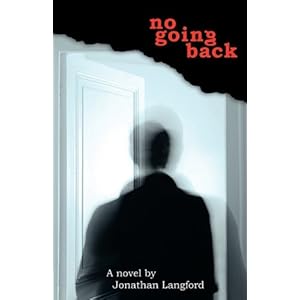
Book #44: No Going Back (Whitney Book 24)
Title: No Going Back
Author: Jonathan Langford
This is my off-the-cuff, "first impressions" review for No Going Back, as opposed to the more in-depth review that I'll write once I've finished the last six books (if the Whitneys were a marathon, I'd be at the "hitting the wall" point of reading now), so this is the best I can do until the last page is turned.
As I think of what it means to be a Mormon writer, the thing I keep coming back to is writing about religion and culture in a meaningful way. Yes, of course there can be writers who are Mormons who write about things other than their religious experiences, but I relish reading books by Mormon writers, writing about Mormon experiences.
According to that definition, No Going Back is a very Mormon book. Paul is fifteen, working toward his Eagle Scout award, a good kid, a seminary attendee, a faithful member of his teachers' quorum, a normal kind of guy who likes chips and salsa and Super Smash Bros Melee. He's also gay. Just before the beginning of his sophomore year, he comes out to his best friend, Chad, his bishop's son. Chad is surprised and freaked out by the revelation, which sets off a whole year of Paul trying to reconcile his desire to be a good member of the church, to be a boy who wants to go on a mission and raise a family, with the undeniable fact that he'll always be attracted to guys instead of girls. It's a hard year for Paul as he finds prejudice and gossip and opposition within both the church community and the gay community at his high school.
There were things about No Going Back that bugged me. The way that Paul sees the world around him understandably changes during the year chronicled in the book, and we also see a paradigm shift in the viewpoint of Richard, Paul's bishop and Chad's dad. When Paul comes to him to tell him that he's gay, Richard seems unsure of how to handle the news, hesitant about whether he's being too hard-line or going too soft. I liked the dialogue between Richard and Paul and their relationship, especially as it related to Chad. But there's a whole side story going on in the book where Sandy, Richard's wife, has a hard time accepting Richard's calling as the bishop and the time it requires him to be gone from the family. While I always tend to roll my eyes at the "and she never complained" saintism that's often attributed to the wives of our leaders, and I appreciated that Langford showed that Sandy felt resentful of the calling, it almost felt like that aspect of the story deserved its own place, instead of lumping it in with the main narrative. It didn't add to Paul's story at all and felt distracting. Furthermore, the book is set in 2003/2004 in Oregon, during which time a referendum about gay marriage was taking place in the state. For all of the intentional setting during that time period (instead of making the book just in the more nebulous "present time") it feels like Langford doesn't do enough to establish the effect of the campaigning and the voting on Paul's experience. I kept expecting something to happen between Paul and Sandy after Sandy decided to work on getting people to sign petitions against gay marriage, but it never happens. Langford also tends to focus a little bit too much on some of the "setting the scene" details that could have been left out. He mentions chips and salsa a lot, then names of specific video games more times than I can count, and goes on an extended talk about the merits of Creed vs. other bands of 2003 that I kept expecting to come back into the narrative somewhere but it didn't.
For all of the minor criticisms, I still really liked the book. In so many of the books I've read for the awards so far, the Mormon characters seem sanitized, as if they've undergone a good, hot scrubbing before being sent off from central casting. Langford's Mormons are the Mormons I know: they're crusty, they complain about their husbands' callings, they swear, they get depressed, they gossip; they're not trying to make a statement about who Mormons are or should be, they just are. I'm sure that some readers will look at the book, and if they're not put off by the idea of reading about a faithful gay Mormon teenager, then they'll be put off by the other characters and their faults. But I thought that was the best part of the book.
When I read No Going Back, I guess I was doing a little bit of worrying about how we come as Mormons come off in the novel too, but not because Chad has to bite his tongue so he doesn't say the f-word. Instead, I know that No Going Back is eventually going to be seen as a product of a time. It's a book that's relevant today, but I'm not sure how relevant it will be in ten or twenty or fifty years. I cringed when Richard talked to Charles, his father-in-law, about Paul's situation, because I was embarrassed to be associated with the thinly-veiled homophobia Charles spouted. Langford doesn't shrink from showing the potentially embarrassing and damaging things we do and say to each other in the church as a result of our church's stand on homosexuality. No Going Back touched a nerve with me, and I'm sure it will touch a nerve with all of its readers, no matter where they fall in their relationship to homosexuality and church policy. But sometimes touching a nerve is a good thing, as I think it is in the case of this novel.
Author: Jonathan Langford
This is my off-the-cuff, "first impressions" review for No Going Back, as opposed to the more in-depth review that I'll write once I've finished the last six books (if the Whitneys were a marathon, I'd be at the "hitting the wall" point of reading now), so this is the best I can do until the last page is turned.
As I think of what it means to be a Mormon writer, the thing I keep coming back to is writing about religion and culture in a meaningful way. Yes, of course there can be writers who are Mormons who write about things other than their religious experiences, but I relish reading books by Mormon writers, writing about Mormon experiences.
According to that definition, No Going Back is a very Mormon book. Paul is fifteen, working toward his Eagle Scout award, a good kid, a seminary attendee, a faithful member of his teachers' quorum, a normal kind of guy who likes chips and salsa and Super Smash Bros Melee. He's also gay. Just before the beginning of his sophomore year, he comes out to his best friend, Chad, his bishop's son. Chad is surprised and freaked out by the revelation, which sets off a whole year of Paul trying to reconcile his desire to be a good member of the church, to be a boy who wants to go on a mission and raise a family, with the undeniable fact that he'll always be attracted to guys instead of girls. It's a hard year for Paul as he finds prejudice and gossip and opposition within both the church community and the gay community at his high school.
There were things about No Going Back that bugged me. The way that Paul sees the world around him understandably changes during the year chronicled in the book, and we also see a paradigm shift in the viewpoint of Richard, Paul's bishop and Chad's dad. When Paul comes to him to tell him that he's gay, Richard seems unsure of how to handle the news, hesitant about whether he's being too hard-line or going too soft. I liked the dialogue between Richard and Paul and their relationship, especially as it related to Chad. But there's a whole side story going on in the book where Sandy, Richard's wife, has a hard time accepting Richard's calling as the bishop and the time it requires him to be gone from the family. While I always tend to roll my eyes at the "and she never complained" saintism that's often attributed to the wives of our leaders, and I appreciated that Langford showed that Sandy felt resentful of the calling, it almost felt like that aspect of the story deserved its own place, instead of lumping it in with the main narrative. It didn't add to Paul's story at all and felt distracting. Furthermore, the book is set in 2003/2004 in Oregon, during which time a referendum about gay marriage was taking place in the state. For all of the intentional setting during that time period (instead of making the book just in the more nebulous "present time") it feels like Langford doesn't do enough to establish the effect of the campaigning and the voting on Paul's experience. I kept expecting something to happen between Paul and Sandy after Sandy decided to work on getting people to sign petitions against gay marriage, but it never happens. Langford also tends to focus a little bit too much on some of the "setting the scene" details that could have been left out. He mentions chips and salsa a lot, then names of specific video games more times than I can count, and goes on an extended talk about the merits of Creed vs. other bands of 2003 that I kept expecting to come back into the narrative somewhere but it didn't.
For all of the minor criticisms, I still really liked the book. In so many of the books I've read for the awards so far, the Mormon characters seem sanitized, as if they've undergone a good, hot scrubbing before being sent off from central casting. Langford's Mormons are the Mormons I know: they're crusty, they complain about their husbands' callings, they swear, they get depressed, they gossip; they're not trying to make a statement about who Mormons are or should be, they just are. I'm sure that some readers will look at the book, and if they're not put off by the idea of reading about a faithful gay Mormon teenager, then they'll be put off by the other characters and their faults. But I thought that was the best part of the book.
When I read No Going Back, I guess I was doing a little bit of worrying about how we come as Mormons come off in the novel too, but not because Chad has to bite his tongue so he doesn't say the f-word. Instead, I know that No Going Back is eventually going to be seen as a product of a time. It's a book that's relevant today, but I'm not sure how relevant it will be in ten or twenty or fifty years. I cringed when Richard talked to Charles, his father-in-law, about Paul's situation, because I was embarrassed to be associated with the thinly-veiled homophobia Charles spouted. Langford doesn't shrink from showing the potentially embarrassing and damaging things we do and say to each other in the church as a result of our church's stand on homosexuality. No Going Back touched a nerve with me, and I'm sure it will touch a nerve with all of its readers, no matter where they fall in their relationship to homosexuality and church policy. But sometimes touching a nerve is a good thing, as I think it is in the case of this novel.
Friday, March 19, 2010
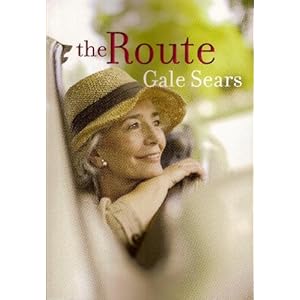
Book #43: The Route (Whitney Book 23)
Title: The Route
Author: Gale Sears
Continuing on the "judging a book by its cover" theme, if I were in the publishing industry and responsible for The Route, I know exactly the format I would have used: the "Mitch Albom/Richard Paul Evans" small-format hardcover book, which indicates that what is contained within the covers is easy to read, somewhat sappy and inspirational.
If I were a member of the Red Hat Society, or had to decide between living a life of leisure or a life of service, or planning to volunteer with Meals on Wheels, I think that The Route would be a worthwhile read. But it's a book that has a target audience, and I'm not it. While the story is sweet, and Sears imparts messages that are both philosophical and easy to swallow, there are also problems. I wanted more meat in the relationship with Carol and her son, fewer minor characters to keep track of (I think the book would have worked better with a sustained relationship with four or five characters rather than trying to get all of them in there-- it made it hard to keep track of who was who), and better proofreading (the name of one character was spelled three different ways on a single page!).
Author: Gale Sears
Continuing on the "judging a book by its cover" theme, if I were in the publishing industry and responsible for The Route, I know exactly the format I would have used: the "Mitch Albom/Richard Paul Evans" small-format hardcover book, which indicates that what is contained within the covers is easy to read, somewhat sappy and inspirational.
If I were a member of the Red Hat Society, or had to decide between living a life of leisure or a life of service, or planning to volunteer with Meals on Wheels, I think that The Route would be a worthwhile read. But it's a book that has a target audience, and I'm not it. While the story is sweet, and Sears imparts messages that are both philosophical and easy to swallow, there are also problems. I wanted more meat in the relationship with Carol and her son, fewer minor characters to keep track of (I think the book would have worked better with a sustained relationship with four or five characters rather than trying to get all of them in there-- it made it hard to keep track of who was who), and better proofreading (the name of one character was spelled three different ways on a single page!).
Book #42: Counting the Cost (Whitney Book 22)
Title: Counting the Cost
Author: Liz Adair
I know you're not supposed to judge a book from its cover, but since starting to read the Whitney Award nominees, I know that I've been doing just that. I look at the artwork, the fonts, and the quotes on the back cover. I look at the font size of the text and the quality of the paper. If the paper is rough and the cover artwork is cheesy, I tend to conclude that the book will be bad. Reading the first few chapters of Counting the Cost, I expected it to be bad. So I was surprised when it turned out to be, gosh, pretty darn good!
Hank Benham is a cowboy in his late twenties who has already been on the range in New Mexico and Arizona for more than half his life. He's solid and dependable-- the kind of man who will be a ranch foreman in a few more years. Ruth Reynolds, an Eastern socialite, arrives on the ranch with her abusive husband, who has been sent to the desert to push pencils. Ruth takes an immediate shine to Hank, and within a few months, the husband is dead, and Hank and Ruth are together, living in a tiny shack in the middle of nowhere in Arizona. But love and passion can only sustain itself for so long, and pretty soon Hank and Ruth have to figure out how to sustain a marriage of opposites.
Wow, I loved this book. The characters were so rich and complicated, and the book (once again, my genre issues come through) was more than just a romance where the couple gets married at the end and lives happily ever after. Instead, it was the story of a marriage of opposites attracted, of a couple who has to compromise their personal dreams for the good of the relationship. I know relationships like this. I've seen close at hand examples of women who haven't been happy with the way their husbands provide, and do their best to let the men know it. I've seen men who have given up the things they're passionate about to make a little extra money for the family.
My main criticism of the novel is that in the last third of the book, Hank seems a little too saintly and Ruth a little too devilish. The characters are complicated in the beginning, and come back to those honest and complicated roots in the end, but Adair tends to draw them a bit more broadly for a while. But that's a small price to pay for a book that makes the New Mexico desert feel real, with characters (even the supporting ones) who jump off the page, with lyrical and beautiful writing.
The book needs a cover that is worthy of what's inside.
Author: Liz Adair
I know you're not supposed to judge a book from its cover, but since starting to read the Whitney Award nominees, I know that I've been doing just that. I look at the artwork, the fonts, and the quotes on the back cover. I look at the font size of the text and the quality of the paper. If the paper is rough and the cover artwork is cheesy, I tend to conclude that the book will be bad. Reading the first few chapters of Counting the Cost, I expected it to be bad. So I was surprised when it turned out to be, gosh, pretty darn good!
Hank Benham is a cowboy in his late twenties who has already been on the range in New Mexico and Arizona for more than half his life. He's solid and dependable-- the kind of man who will be a ranch foreman in a few more years. Ruth Reynolds, an Eastern socialite, arrives on the ranch with her abusive husband, who has been sent to the desert to push pencils. Ruth takes an immediate shine to Hank, and within a few months, the husband is dead, and Hank and Ruth are together, living in a tiny shack in the middle of nowhere in Arizona. But love and passion can only sustain itself for so long, and pretty soon Hank and Ruth have to figure out how to sustain a marriage of opposites.
Wow, I loved this book. The characters were so rich and complicated, and the book (once again, my genre issues come through) was more than just a romance where the couple gets married at the end and lives happily ever after. Instead, it was the story of a marriage of opposites attracted, of a couple who has to compromise their personal dreams for the good of the relationship. I know relationships like this. I've seen close at hand examples of women who haven't been happy with the way their husbands provide, and do their best to let the men know it. I've seen men who have given up the things they're passionate about to make a little extra money for the family.
My main criticism of the novel is that in the last third of the book, Hank seems a little too saintly and Ruth a little too devilish. The characters are complicated in the beginning, and come back to those honest and complicated roots in the end, but Adair tends to draw them a bit more broadly for a while. But that's a small price to pay for a book that makes the New Mexico desert feel real, with characters (even the supporting ones) who jump off the page, with lyrical and beautiful writing.
The book needs a cover that is worthy of what's inside.
Wednesday, March 17, 2010
Moments in Motherhood: March Edition
I was talking with my friend Michelle the other day about the evolution of our blogs. Once upon a time, four or five years ago, I was a Mommyblogger. Nay, an aspiring Mommyblogger, sure that my wit and humor and intelligence and fantastic parenting would be discovered, and I'd be famous.
That didn't happen. And I'm really fine with it. Over the years, the blog has evolved, from Mommyblogging, to a place where I could dump all of my deep thoughts when I didn't have anyone else to talk to, to a place to write and brag about running, to a place to write about books. I'm sure that over the years, it will evolve again. That picture of my legs that my husband complains about every time he loads my blog will undoubtedly get swapped out for something else a few years down the road. That's just the way life works.
So even though I'm not really a Mommyblogger, I'm still a mom. Most of the time, I try to condense the things I would blog about for each of my kids into a 140-word mini-essay, and put it up on Twitter. But sometimes Twitter doesn't do the trick, and I know that even though some people come to the blog to read book reviews, and other come to ogle my legs, there are some who want to read about my offspring, so I'm going to make an effort to post a "Moments in Motherhood" post at least once a month, maybe more if I'm feeling inspired.
****
This morning was one of those "I'd give my kids the shirt off my back" moments of parenting, literally. It was 8 o' clock. I'd been bugging Bryce to get out of bed since his alarm went off 30 minutes earlier, and my shouts toward his bedroom were getting more frantic since he needed to leave for school in 15 minutes. He poked his head out of the bedroom and said, "Where's my green shirt?" What green shirt? His school has a uniform, and he's allowed to wear white, yellow, red and navy. Period. Apparently, in honor of St. Patty's Day, the teachers decided that rather than endure a day of kids pinching each other, they'd let the kids wear green.
Bryce doesn't have a green shirt. Or a green sweatshirt. He has a green sweater, but he said it was itchy. He begged me, "Mom, can you please run to the store and get me one?" (At 8:03am?) I was wearing a plain green sweatshirt, the kind that the dress code police would be unlikely to confiscate, so I took my sweatshirt off, handed it over, and he went to school happy. He probably smelled like a girl, but I guess he didn't care.
****
My kids are picky eaters. Whenever I'm stumped over what to make for dinner and ask the kids for suggestions, Annie always wants the same thing: pasta with parmesan cheese, broccoli, and garlic bread. It's a decent meal from my perspective because I can add some pesto for the adults, three of the kids like broccoli, and Bryce will choke down a piece of garlic bread.
A couple of months ago, the kids at Annie's school started rotating through the cafeteria as lunch servers. Up until this time, Annie brought her lunch every day, almost always a cheese sandwich and grape juice. Suddenly, she wanted to eat school lunch. One she finally mustered up the courage to ask for her secret number for lunch billing (which took a few weeks and many pep talks), the world of school lunch opened up to her. I know that it's popular to disparage school lunches, and it's true that some days she'll have things like chicken fried steak, gravy, and french fries for her midday meal, but I'm not complaining.
Before school lunch (BSL) Annie ate a few things-- fast food, pizza, lean grilled meat, breads, cheese and a small number of fruits and vegetables. Over the last month, her culinary horizons have exploded. She comes home talking about eating grapes and salad (salad!) from the nutrition bar (I'm sure it's drowned in ranch dressing, but it's salad!) and she loves every entree, even the salisbury steak. This week, instead of the normal request for tortellini and broccoli, she asked me to make chili-cheese scoops for dinner. Yeah, they were fritos and chili and with a sprinkling of cheddar, so not exactly the healthiest meal ever, but variety is the spice of life and I'm embracing it!
****
Maren has been potty-trained for six months. Kind of. Pee isn't a problem, but poop is a whole other story. We've tried bribing/guided imagery/threatening/coaching/cheering/demeaning but none if it works. She says she'll poop in the potty when she's four. It's not much of a problem because she only poops at home, but yeah, I change poopy underpants a couple of times a day. I'm telling you, you probably don't want to shake my hand.
A week or so ago, she pooped in the potty. She was ridiculously excited. We cheered. We Tweeted. We called the grandparents. We went to Toys R Us to buy her "I pooped in the potty Dora." She hasn't repeated the feat since. Now I'm out of bribes, and she still smells like a nursing home.
****
It's now three months since Christmas and Isaac is still sleeping in the tent he received from Grannie every single night. It takes up all of the available floor space in the bedroom he and Bryce share, and I'm starting to think that I need to do a better job of analyzing all of the potential downsides to toys that I suggest people buy my kids for Christmas before I send out the recommendations.

That didn't happen. And I'm really fine with it. Over the years, the blog has evolved, from Mommyblogging, to a place where I could dump all of my deep thoughts when I didn't have anyone else to talk to, to a place to write and brag about running, to a place to write about books. I'm sure that over the years, it will evolve again. That picture of my legs that my husband complains about every time he loads my blog will undoubtedly get swapped out for something else a few years down the road. That's just the way life works.
So even though I'm not really a Mommyblogger, I'm still a mom. Most of the time, I try to condense the things I would blog about for each of my kids into a 140-word mini-essay, and put it up on Twitter. But sometimes Twitter doesn't do the trick, and I know that even though some people come to the blog to read book reviews, and other come to ogle my legs, there are some who want to read about my offspring, so I'm going to make an effort to post a "Moments in Motherhood" post at least once a month, maybe more if I'm feeling inspired.
****
This morning was one of those "I'd give my kids the shirt off my back" moments of parenting, literally. It was 8 o' clock. I'd been bugging Bryce to get out of bed since his alarm went off 30 minutes earlier, and my shouts toward his bedroom were getting more frantic since he needed to leave for school in 15 minutes. He poked his head out of the bedroom and said, "Where's my green shirt?" What green shirt? His school has a uniform, and he's allowed to wear white, yellow, red and navy. Period. Apparently, in honor of St. Patty's Day, the teachers decided that rather than endure a day of kids pinching each other, they'd let the kids wear green.
Bryce doesn't have a green shirt. Or a green sweatshirt. He has a green sweater, but he said it was itchy. He begged me, "Mom, can you please run to the store and get me one?" (At 8:03am?) I was wearing a plain green sweatshirt, the kind that the dress code police would be unlikely to confiscate, so I took my sweatshirt off, handed it over, and he went to school happy. He probably smelled like a girl, but I guess he didn't care.
****
My kids are picky eaters. Whenever I'm stumped over what to make for dinner and ask the kids for suggestions, Annie always wants the same thing: pasta with parmesan cheese, broccoli, and garlic bread. It's a decent meal from my perspective because I can add some pesto for the adults, three of the kids like broccoli, and Bryce will choke down a piece of garlic bread.
A couple of months ago, the kids at Annie's school started rotating through the cafeteria as lunch servers. Up until this time, Annie brought her lunch every day, almost always a cheese sandwich and grape juice. Suddenly, she wanted to eat school lunch. One she finally mustered up the courage to ask for her secret number for lunch billing (which took a few weeks and many pep talks), the world of school lunch opened up to her. I know that it's popular to disparage school lunches, and it's true that some days she'll have things like chicken fried steak, gravy, and french fries for her midday meal, but I'm not complaining.
Before school lunch (BSL) Annie ate a few things-- fast food, pizza, lean grilled meat, breads, cheese and a small number of fruits and vegetables. Over the last month, her culinary horizons have exploded. She comes home talking about eating grapes and salad (salad!) from the nutrition bar (I'm sure it's drowned in ranch dressing, but it's salad!) and she loves every entree, even the salisbury steak. This week, instead of the normal request for tortellini and broccoli, she asked me to make chili-cheese scoops for dinner. Yeah, they were fritos and chili and with a sprinkling of cheddar, so not exactly the healthiest meal ever, but variety is the spice of life and I'm embracing it!
****
Maren has been potty-trained for six months. Kind of. Pee isn't a problem, but poop is a whole other story. We've tried bribing/guided imagery/threatening/coaching/cheering/demeaning but none if it works. She says she'll poop in the potty when she's four. It's not much of a problem because she only poops at home, but yeah, I change poopy underpants a couple of times a day. I'm telling you, you probably don't want to shake my hand.
A week or so ago, she pooped in the potty. She was ridiculously excited. We cheered. We Tweeted. We called the grandparents. We went to Toys R Us to buy her "I pooped in the potty Dora." She hasn't repeated the feat since. Now I'm out of bribes, and she still smells like a nursing home.
****
It's now three months since Christmas and Isaac is still sleeping in the tent he received from Grannie every single night. It takes up all of the available floor space in the bedroom he and Bryce share, and I'm starting to think that I need to do a better job of analyzing all of the potential downsides to toys that I suggest people buy my kids for Christmas before I send out the recommendations.
Subscribe to:
Posts (Atom)