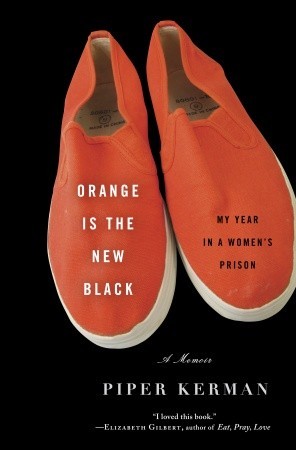
Title: Orange is the New Black: My Year in a Women's Prison
Author: Piper Kerman
Enjoyment Rating: ****
Source: Audible
Content Alert: Swearing, references to sex and drug use
I binge watched the first season of Orange is the New Black on Netflix last year, taking in two or three episodes during epic laundry folding sessions. The series was fascinating-- I especially enjoyed how the show's creators zoomed into the lives of individual characters during the various episodes, because it helped me develop empathy for them.
And if I felt a sense of empathy from watching the television show, that feeling was only deepened when I read Kerman's memoir. While the tv show is sensationalized (as all television shows are-- the future in-laws snipe, the fiance is jealous, the relationship with the ex-girlfriend reignites in shower scene after shower scene), the book made me feel like I could have been Piper if we'd made different choices. We look similar, come from similar socioeconomic backgrounds about an hour away from each other, and have similar outlooks on life. And if I had been presented with the same situation that eventually landed Piper in prison, I can't say for sure that I wouldn't have fallen prey to peer pressure like she did.
What Kerman does a magical job with is extending that similarity one step further: if I can see myself in Piper's shoes, and she comes to see herself in the shoes of every other prisoner at Danbury Federal Correctional Institution, then I'm really not all that different from those women, either. Kerman does a great job telling the story of her year, and learning lessons both about paying for the crime she committed and about the things she had in common with the people around her, and eventually turns her narrative into a call for certain corrections within the prison system. It's an important and heartfelt book, and, like most books, so much better than the filmed adaptation (although I still plan to binge on season two one of these days).
Tuesday, August 5, 2014
Monday, August 4, 2014
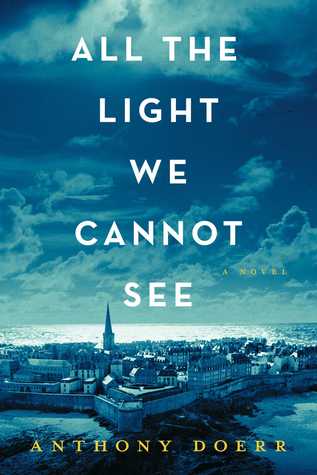
Book Review: All the Light We Cannot See by Anthony Doerr
Title: All the Light We Cannot See
Author: Anthony Doerr
Enjoyment Rating: ****
Source: Library Copy
Content Alert: some violence and swearing
A couple of months ago, I heard Anthony Doerr interviewed on RadioWest about All the Light We Cannot See. I had been sort of on the fence about reading the novel, since I feel like I've reached a saturation point with World War II novels with young female protagonists, but after I listened to him talk about his process (the book took ten years to write) and about some of the subtler things in the novel (the way light plays such a prominent part in the narrative, for example), I decided to read it.
The story centers on two characters. Marie-Laure is the blind daughter of the chief locksmith of the Museum of Natural History in Paris. When the Germans come to occupy Paris, the pair takes refuge with an eccentric old uncle in Brittany, and they bring along with them what might be one of the greatest treasures the museum holds-- an enormous diamond reputed to be cursed. Werner is German orphan who is unusually bright and fascinated by radios. He escapes the fate of most of the boys in town (the mines) by attending a Nazi youth academy, and eventually they capitalize his aptitude for fixing and building radios by assigning him to track Resistance radio signals. Eventually, and briefly, the two stories come together, and then, all too soon, their time together ends.
I think it's fascinating to hear an author's perspective on a novel. If I had read the book without hearing Doerr talk about it, I don't think I would have enjoyed it nearly as much. It's a ruminative book, one that feels like it took ten years to write. Every word is considered and measured. And while it's a war story, it doesn't feel action-packed. But I found myself falling in love with Marie-Laure, as Doerr explained her, and there was a palpable sense of the spaces she inhabited in Brittany. I didn't feel that the Werner story was quite as compelling, but the modern-day resolution was absolutely lovely. I think All the Light We Cannot See was definitely the most beautiful book I've read this summer, and Marie-Laure is a character who will stay with me for a long time.
Author: Anthony Doerr
Enjoyment Rating: ****
Source: Library Copy
Content Alert: some violence and swearing
A couple of months ago, I heard Anthony Doerr interviewed on RadioWest about All the Light We Cannot See. I had been sort of on the fence about reading the novel, since I feel like I've reached a saturation point with World War II novels with young female protagonists, but after I listened to him talk about his process (the book took ten years to write) and about some of the subtler things in the novel (the way light plays such a prominent part in the narrative, for example), I decided to read it.
The story centers on two characters. Marie-Laure is the blind daughter of the chief locksmith of the Museum of Natural History in Paris. When the Germans come to occupy Paris, the pair takes refuge with an eccentric old uncle in Brittany, and they bring along with them what might be one of the greatest treasures the museum holds-- an enormous diamond reputed to be cursed. Werner is German orphan who is unusually bright and fascinated by radios. He escapes the fate of most of the boys in town (the mines) by attending a Nazi youth academy, and eventually they capitalize his aptitude for fixing and building radios by assigning him to track Resistance radio signals. Eventually, and briefly, the two stories come together, and then, all too soon, their time together ends.
I think it's fascinating to hear an author's perspective on a novel. If I had read the book without hearing Doerr talk about it, I don't think I would have enjoyed it nearly as much. It's a ruminative book, one that feels like it took ten years to write. Every word is considered and measured. And while it's a war story, it doesn't feel action-packed. But I found myself falling in love with Marie-Laure, as Doerr explained her, and there was a palpable sense of the spaces she inhabited in Brittany. I didn't feel that the Werner story was quite as compelling, but the modern-day resolution was absolutely lovely. I think All the Light We Cannot See was definitely the most beautiful book I've read this summer, and Marie-Laure is a character who will stay with me for a long time.
Monday, July 28, 2014
A vacation doesn't mean a vacation from running
| Virgin River at dawn |
We spent last week on the Oregon Coast. We spent our days playing in the tide pools, exploring lighthouses, flying kites, and eating ice cream. And before the rest of the family rose from their beds, I went for a run on the beach.
For many people, a vacation is a time to take a break from the rituals of everyday life. For me, as a mom, I love having some time off from cooking and making beds, but one ritual I try to stick with is exercise.
I have a couple of rules of thumb when it comes to exercising on vacation:
1) Get out there. My very favorite part of going on vacation is exploring a city on foot. And going on an early morning run gives me a chance to
![]() |
| Not a tourist in sight |
![]() |
| Sunrise at Ghirardelli Square |
Of course, sometimes this approach backfires. Last summer, we spent a few days at Sundance, and I went on an early morning trail run on some of the hiking trails. I picked one I thought was relatively easy for the family to explore later in the day, and the kids spent at least two hours cursing me, as I'd misjudged the distance on our "easy" hike. I also thought it was perfectly acceptable to take my seven-year-old on a walk from Times Square to the Guggenheim and back. She wasn't quite so sure, and needed some ice cream to give her strength about halfway back to the hotel.
2) Just get it in. While I love to get out and explore a new place, there are times when hitting the hotel gym is more practical. When Annie and I
![]() |
| 6am, Golden Gate Bridge |
travel to China, I am way too chicken to run on the streets (the pollution, the language barrier, and the likelihood that I might get lost all make the gym look like an extremely attractive option). Once, while marathon training during a cruise, I did an eighteen mile run on a cruise ship treadmill.
Last week, I was too lazy to venture out one morning when it was pouring, and found myself doing speed work on a treadmill that afternoon (in a very, very hot room with no fans where none of the windows would open) while the rest of the family had some down time at the rental house. When we were in Miami, I mixed up my normal running routine by taking some of the fabulous classes at the Fontainebleau, and Annie and I
| 112 step cool down |
treadmill gets boring. When we went to Alaska on a cruise a few years ago, people on our ship nicknamed her the "walking lady" because she spent so much time walking the decks. While the gym can get crowded and an unfamiliar machine always takes some getting used to, it's definitely better than nothing, and even if I get kicked off a machine before I get my regular eight miles in, it's still worth it to do as much as I can.
3) Go with the flow when it doesn't happen. At home, I don't miss runs. I get twitchy and cranky if I can't run before the kids wake up, and 99% of the time, I will get a workout in sometime during the day, even if it means I have to stop a hundred times to break up fights or I have someone
| Grand Canyon Rim Trail |
impossible to get a workout in. When we went to New England in June, I only ran one day. My friend Leslie, who was hosting us, lives in a town where all of the roads are narrow and twisty, and we were usually getting out to explore early, and Ed wasn't with me to keep the babies, and all of those things made early morning runs more effort than they were worth. On Saturdays, I usually do longer runs. This Saturday, we got in the car at 5am, and finally pulled into the driveway at 8pm, and there's no way I was going
![]() |
| Sunrise over Miami Beach |
can be flexible, and I do my best not to lament the loss of my run, or to skip out on ice cream and wear a long face when everyone else is indulging.
Exercising on vacation can be tricky, but for a regular runner like me, I know that I feel better when I make the effort to work out. And on the days when I can explore a new place, it often turns out to be the highlight of a vacation.
Tuesday, July 1, 2014
Book Review: The Painter by Peter Heller
Title: The Painter
Author: Peter Heller
Enjoyment Rating: ****
Source: Library Copy
Content Alert: Violence, a sex scene, some strong language
For the first time in his life, Jim Stegner seems to have found a bit of peace. He grew up rough in a family of loggers in the Pacific Northwest, and found unlikely success as a painter. He did time for shooting a man in a bar fight, divorced the love of his life and the good friend who followed her as his wife, and still hasn't recovered from his teenage daughter's death. But now his work is selling well, he's not drinking, and his cabin in Colorado is a place where he can work and fish. Then he comes across a man who's beating a horse, and the old Jim temper flares, and he soon finds himself running for his life and risking others along the way.
There's plenty of action and drama in The Painter, but it's ultimately the story of Jim Stegner's character and of his ghosts. The writing is lovely and poetic, and the story is gritty and powerful, and I was completely engrossed reading about his process of creating art. Jim is a fisherman and a painter, and I found that both of these occupations worked as metaphors for the writing in the novel. It's patient and unhurried, and a reader must be patient and unhurried to enjoy the story. I'm glad I took the time The Painter deserved.
Author: Peter Heller
Enjoyment Rating: ****
Source: Library Copy
Content Alert: Violence, a sex scene, some strong language
For the first time in his life, Jim Stegner seems to have found a bit of peace. He grew up rough in a family of loggers in the Pacific Northwest, and found unlikely success as a painter. He did time for shooting a man in a bar fight, divorced the love of his life and the good friend who followed her as his wife, and still hasn't recovered from his teenage daughter's death. But now his work is selling well, he's not drinking, and his cabin in Colorado is a place where he can work and fish. Then he comes across a man who's beating a horse, and the old Jim temper flares, and he soon finds himself running for his life and risking others along the way.
There's plenty of action and drama in The Painter, but it's ultimately the story of Jim Stegner's character and of his ghosts. The writing is lovely and poetic, and the story is gritty and powerful, and I was completely engrossed reading about his process of creating art. Jim is a fisherman and a painter, and I found that both of these occupations worked as metaphors for the writing in the novel. It's patient and unhurried, and a reader must be patient and unhurried to enjoy the story. I'm glad I took the time The Painter deserved.
Monday, June 30, 2014
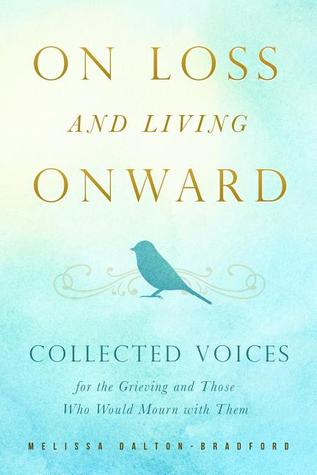
Book Review: On Loss and Living Onward by Melissa Dalton-Bradford
Title: On Loss and Living Onward: Collected Voices for the Grieving and Those Who Would Mourn With Them
Author: Melissa Dalton-Bradford
Enjoyment Rating: *****
Source: Digital Copy
When it was nearing time for me to leave for college, I started counting the days. As the day of departure grew near, and I got more and more excited, I was a little shocked to see my mom in mourning. It wasn't until I was working in college admissions that I realized that this was a thing-- that parents had a hard time letting go of their college-age children. When it was time for Melissa Dalton-Bradford's oldest son, Parker, to go away to college, she must have been going through some of these emotions. But her mourning for losing her son to college turned tragic when he died in a swimming accident during freshman orientation. Dalton-Bradford, who uses her skill as a poet to beautifully craft this memoir, uses this experience of losing Parker as the grounding narrative of On Loss and Living Onward, with stories about her own experience anchoring each of the sections of the book, but she also includes essays from others, along with quotes from famous (and not so famous) people who are intimately familiar with loss.
While I can see that On Loss and Living Onward would be very beneficial for people who are grieving a loved one, I read it as someone who does not know the pain of loss. For readers like me, it's an excellent primer, an insight into grief and loss, emotions none of us will escape if we're lucky to live long enough. Dalton-Bradford deftly shares her own story and instructs her readership. I feel like I now have a better sense of knowing how to mourn with those that mourn.
Author: Melissa Dalton-Bradford
Enjoyment Rating: *****
Source: Digital Copy
When it was nearing time for me to leave for college, I started counting the days. As the day of departure grew near, and I got more and more excited, I was a little shocked to see my mom in mourning. It wasn't until I was working in college admissions that I realized that this was a thing-- that parents had a hard time letting go of their college-age children. When it was time for Melissa Dalton-Bradford's oldest son, Parker, to go away to college, she must have been going through some of these emotions. But her mourning for losing her son to college turned tragic when he died in a swimming accident during freshman orientation. Dalton-Bradford, who uses her skill as a poet to beautifully craft this memoir, uses this experience of losing Parker as the grounding narrative of On Loss and Living Onward, with stories about her own experience anchoring each of the sections of the book, but she also includes essays from others, along with quotes from famous (and not so famous) people who are intimately familiar with loss.
While I can see that On Loss and Living Onward would be very beneficial for people who are grieving a loved one, I read it as someone who does not know the pain of loss. For readers like me, it's an excellent primer, an insight into grief and loss, emotions none of us will escape if we're lucky to live long enough. Dalton-Bradford deftly shares her own story and instructs her readership. I feel like I now have a better sense of knowing how to mourn with those that mourn.
Sunday, June 29, 2014
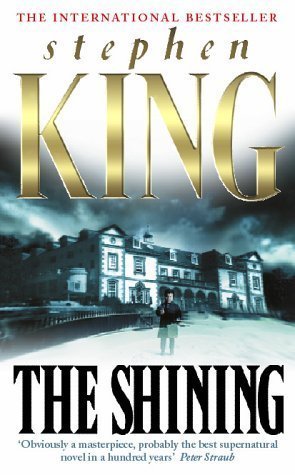
Book Review: The Shining by Stephen King
Title: The Shining
Author: Stephen King
Enjoyment Rating: *** or ****
Source: Kindle
Content Alert: Violence, language
Jack Torrance, an alcoholic, a failed writer and a recently fired teacher finds himself with so few career options that he moves his wife and five-year-old son, Danny, to the mountains of Colorado, where the family will live all by themselves at the Overlook Hotel, a sort of Biltmore in the mountains, twenty miles by snowmobile from the nearest town. Of course the place is haunted, and Danny, who has "the shining" can see all of the ghosts that inhabit the place, who want to take Jack over and claim the family as permanent guests of the hotel.
If I had to associate a single work of fiction with Stephen King, it would probably be The Shining (or maybe Carrie, or The Shawshank Redemption). And after reading and loving Doctor Sleep, I knew I had to read the prequel. I just finished writing my review for Night Music by Jojo Moyes, which was published yesterday, and as I was reading that novel the thing that struck me the most was how she has grown and developed as a writer since her early days. I was introduced to some of her later work first, and in comparison, her early work seems weak (although I probably wouldn't have seen it that way if I had read Night Music first). Now Stephen King is arguably the greatest living American author, and The Shining is one of his best-loved novels, but since I was introduced to King through his more mature work (11-22-63 and Doctor Sleep), it's evident how much his writing has improved in the nearly 40 years since The Shining was published. There were sentences that were overwritten, and places where the action went on so long that I found myself skimming. I'm still glad I read the book, but I find it heartening to see great progress in even our greatest writers. It seems to demonstrate what I vaguely remember King saying (and am too lazy to go look up) in his book on writing, that it's writing every day and working hard that makes a writer, not genius.
Author: Stephen King
Enjoyment Rating: *** or ****
Source: Kindle
Content Alert: Violence, language
Jack Torrance, an alcoholic, a failed writer and a recently fired teacher finds himself with so few career options that he moves his wife and five-year-old son, Danny, to the mountains of Colorado, where the family will live all by themselves at the Overlook Hotel, a sort of Biltmore in the mountains, twenty miles by snowmobile from the nearest town. Of course the place is haunted, and Danny, who has "the shining" can see all of the ghosts that inhabit the place, who want to take Jack over and claim the family as permanent guests of the hotel.
If I had to associate a single work of fiction with Stephen King, it would probably be The Shining (or maybe Carrie, or The Shawshank Redemption). And after reading and loving Doctor Sleep, I knew I had to read the prequel. I just finished writing my review for Night Music by Jojo Moyes, which was published yesterday, and as I was reading that novel the thing that struck me the most was how she has grown and developed as a writer since her early days. I was introduced to some of her later work first, and in comparison, her early work seems weak (although I probably wouldn't have seen it that way if I had read Night Music first). Now Stephen King is arguably the greatest living American author, and The Shining is one of his best-loved novels, but since I was introduced to King through his more mature work (11-22-63 and Doctor Sleep), it's evident how much his writing has improved in the nearly 40 years since The Shining was published. There were sentences that were overwritten, and places where the action went on so long that I found myself skimming. I'm still glad I read the book, but I find it heartening to see great progress in even our greatest writers. It seems to demonstrate what I vaguely remember King saying (and am too lazy to go look up) in his book on writing, that it's writing every day and working hard that makes a writer, not genius.
Saturday, June 28, 2014
Book Review: Night Music by Jojo Moyes
Title: Night Music
Author: Jojo Moyes
Enjoyment Rating: ***
Source: Audible
Content Alert: A (pretty tame) sex scene
When Isabel's husband died in a car accident nine months earlier, it sent her into retreat. She hasn't paid a bill or paid much attention to her two suffering children. Instead, she has spent most of the year crying and playing her violin. She's on the verge of losing her London home, her son has stopped speaking, and her daughter has grown old beyond her years when she receives word that she's inherited a house in the English countryside from a distant relative, and it seems the answer to all of her problems. So she packs the kids up and moves to the house, completely unaware of the disaster she will face, both by the state of the manor home, and by vengeful Matt McCarthy, the only contractor in town, who expected that he would be the one inheriting the home.
I have read a few of Moyes's more recent novels and have found them complex and delightful, while Night Music was fairly predictable and not as well-written. It was a compelling story, and I loved to hate McCarthy, and had more complicated feelings for some of the other characters in the story. The ending was satisfying, but not completely surprising, and I appreciated watching Isabel and her family heal and grow stronger over the course of the novel.
Author: Jojo Moyes
Enjoyment Rating: ***
Source: Audible
Content Alert: A (pretty tame) sex scene
When Isabel's husband died in a car accident nine months earlier, it sent her into retreat. She hasn't paid a bill or paid much attention to her two suffering children. Instead, she has spent most of the year crying and playing her violin. She's on the verge of losing her London home, her son has stopped speaking, and her daughter has grown old beyond her years when she receives word that she's inherited a house in the English countryside from a distant relative, and it seems the answer to all of her problems. So she packs the kids up and moves to the house, completely unaware of the disaster she will face, both by the state of the manor home, and by vengeful Matt McCarthy, the only contractor in town, who expected that he would be the one inheriting the home.
I have read a few of Moyes's more recent novels and have found them complex and delightful, while Night Music was fairly predictable and not as well-written. It was a compelling story, and I loved to hate McCarthy, and had more complicated feelings for some of the other characters in the story. The ending was satisfying, but not completely surprising, and I appreciated watching Isabel and her family heal and grow stronger over the course of the novel.
Friday, June 27, 2014
Book Review: Police by Jo Nesbo
Title: Police (Harry Hole #10)
Author: Jo Nesbo
Enjoyment Rating: ****
Source: Audible
Content Alert: Violence, Sex, Sexual Assault, Swearing
Whenever I see that a new Harry Hole book is released, I'm always ridiculously excited, even though I know that going for a ride with Harry is going to be dangerous, dirty, and difficult. Hole is an addict whose alcoholism dulls his genius as a police detective, and at the end of the previous novel, he had just been shot in the head. When Police opens, Hole is nowhere to be seen, except possibly in a hospital bed that is guarded around the clock, and the guards don't even know the patient's identity.
In Harry's absence, his team delves into solving a series of murders in which the killer offs detectives who worked on unsolved crimes. The murders are grisly, and force is understandably fearful for their lives, and the dirty police chief (a former rival to Harry) seems somehow involved. When tragedy hits Harry's former team, they must take drastic measures.
While most of Nesbo's books seem to run together in my mind, this one felt more distinctive and better in many ways (which is saying something since I generally enjoy his books). It also has an extremely satisfying ending for fans of the series, which is all I will say about that.
In most cases, I would say that listening to an audiobook enhances my experience with a text, but in the case of Nesbo's book (and most novels in translation), I find that I get tripped up by names and places when I don't see them in print. If you're like I am in this regard, it might be useful to read this novel.
Author: Jo Nesbo
Enjoyment Rating: ****
Source: Audible
Content Alert: Violence, Sex, Sexual Assault, Swearing
Whenever I see that a new Harry Hole book is released, I'm always ridiculously excited, even though I know that going for a ride with Harry is going to be dangerous, dirty, and difficult. Hole is an addict whose alcoholism dulls his genius as a police detective, and at the end of the previous novel, he had just been shot in the head. When Police opens, Hole is nowhere to be seen, except possibly in a hospital bed that is guarded around the clock, and the guards don't even know the patient's identity.
In Harry's absence, his team delves into solving a series of murders in which the killer offs detectives who worked on unsolved crimes. The murders are grisly, and force is understandably fearful for their lives, and the dirty police chief (a former rival to Harry) seems somehow involved. When tragedy hits Harry's former team, they must take drastic measures.
While most of Nesbo's books seem to run together in my mind, this one felt more distinctive and better in many ways (which is saying something since I generally enjoy his books). It also has an extremely satisfying ending for fans of the series, which is all I will say about that.
In most cases, I would say that listening to an audiobook enhances my experience with a text, but in the case of Nesbo's book (and most novels in translation), I find that I get tripped up by names and places when I don't see them in print. If you're like I am in this regard, it might be useful to read this novel.
Thursday, June 26, 2014
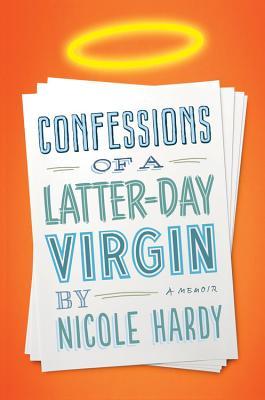
Book Review: Confessions of a Latter-day Virgin by Nicole Hardy
Title: Confessions of a Latter-day Virgin: A Memoir
Author: Nicole Hardy
Enjoyment Rating: ***
Source: Kindle
Content Alert: some mild descriptions of sexual encounters, some swearing
It's been a couple of months since I read Confessions of a Latter-day Virgin, so I hope that my recollection is accurate. In other words, take any specifics in this review with a rather large grain of salt.
In the opening pages of Confessions of a Latter-day Virgin, Nicole Hardy is a thirtysomething Mormon woman, talking with her mom as she unpacks her belongings into a new condo. Over the course of the discussion, she says "shit," and I was like, "Awesome, a good Mormon girl who isn't afraid to swear in print. This is going to be my kind of book."
And while the book was funny, and well-written, and readable in a way that few memoirs written by MFAs usually are, I found that it didn't meet my expectations. This isn't a criticism of the story-- it's just that as a Mormon woman who got married before the ink on my diploma was dry, and as a Mormon girl who saw herself as a future mother above all things, Hardy's story was poignant and foreign and very eye-opening.
In the church, we are so quick to judge others, to second guess their motives and desires (like Hardy's desire not to be a mother), to pass people by in the hall that don't look like us or act like us or go to playgroup with us. We hear so much about being sensitive to single people in a church where being part of a couple is central to the doctrine, but I don't know what it feels like to be an adult member of the church who isn't part of a married couple. So I'm incredibly grateful to Hardy for writing honestly, and not bitterly, about that struggle, and also for being honest and vulnerable and open about her choice to explore her sexuality and leave the church when it wasn't what worked for her. The only thing that does disappoint me? That as a former Mormon, the being brave enough to swear in print thing kinda doesn't count.
Author: Nicole Hardy
Enjoyment Rating: ***
Source: Kindle
Content Alert: some mild descriptions of sexual encounters, some swearing
It's been a couple of months since I read Confessions of a Latter-day Virgin, so I hope that my recollection is accurate. In other words, take any specifics in this review with a rather large grain of salt.
In the opening pages of Confessions of a Latter-day Virgin, Nicole Hardy is a thirtysomething Mormon woman, talking with her mom as she unpacks her belongings into a new condo. Over the course of the discussion, she says "shit," and I was like, "Awesome, a good Mormon girl who isn't afraid to swear in print. This is going to be my kind of book."
And while the book was funny, and well-written, and readable in a way that few memoirs written by MFAs usually are, I found that it didn't meet my expectations. This isn't a criticism of the story-- it's just that as a Mormon woman who got married before the ink on my diploma was dry, and as a Mormon girl who saw herself as a future mother above all things, Hardy's story was poignant and foreign and very eye-opening.
In the church, we are so quick to judge others, to second guess their motives and desires (like Hardy's desire not to be a mother), to pass people by in the hall that don't look like us or act like us or go to playgroup with us. We hear so much about being sensitive to single people in a church where being part of a couple is central to the doctrine, but I don't know what it feels like to be an adult member of the church who isn't part of a married couple. So I'm incredibly grateful to Hardy for writing honestly, and not bitterly, about that struggle, and also for being honest and vulnerable and open about her choice to explore her sexuality and leave the church when it wasn't what worked for her. The only thing that does disappoint me? That as a former Mormon, the being brave enough to swear in print thing kinda doesn't count.
Wednesday, June 25, 2014
Book Review: The Weight of Silence by Heather Gudenkauf
Title: The Weight of Silence
Author: Heather Gudenkauf
Enjoyment Rating: ***
Source: Audible
Content Alert: lots of violence, child sex abuse
The Weight of Silence is another book that was being offered as one of the Audible deals of the day, and I decided to buy it despite not knowing much about it (this must have been during the time when I was ignoring all of my favorite podcasts, allowing them to keep downloading until they filled the memory of my iPhone and I was left with over 120 podcasts on my to-listen list-- I'm slowly digging out, but I still have more than 80 TED talks to wade through). Anyway, Calli Clark is seven, and she hasn't spoken for three years on the morning she disappears from the quiet street on which she lives in a quiet Iowa town. Calli knows the woods that surround their town, so her mother Antonia isn't initially worried, but Calli's best friend Petra is also missing, and the secrets of the girls, their families, and other people in the town come to light for readers as the story unfolds.
The Weight of Silence is a hard book to listen to. As a mom, my greatest worry is that something traumatic will happen to one of my children, and this book is a fictionalization of my fear. Add in an abusive, alcoholic father, several other characters with questionable backstories, and some terrible things happening in the woods, and it becomes something that's hard to listen to. However, it's a compelling story-- once I got started I had a hard time turning it off. I needed to hear the resolution to the story, which is not an altogether happy one.
Author: Heather Gudenkauf
Enjoyment Rating: ***
Source: Audible
Content Alert: lots of violence, child sex abuse
The Weight of Silence is another book that was being offered as one of the Audible deals of the day, and I decided to buy it despite not knowing much about it (this must have been during the time when I was ignoring all of my favorite podcasts, allowing them to keep downloading until they filled the memory of my iPhone and I was left with over 120 podcasts on my to-listen list-- I'm slowly digging out, but I still have more than 80 TED talks to wade through). Anyway, Calli Clark is seven, and she hasn't spoken for three years on the morning she disappears from the quiet street on which she lives in a quiet Iowa town. Calli knows the woods that surround their town, so her mother Antonia isn't initially worried, but Calli's best friend Petra is also missing, and the secrets of the girls, their families, and other people in the town come to light for readers as the story unfolds.
The Weight of Silence is a hard book to listen to. As a mom, my greatest worry is that something traumatic will happen to one of my children, and this book is a fictionalization of my fear. Add in an abusive, alcoholic father, several other characters with questionable backstories, and some terrible things happening in the woods, and it becomes something that's hard to listen to. However, it's a compelling story-- once I got started I had a hard time turning it off. I needed to hear the resolution to the story, which is not an altogether happy one.
Subscribe to:
Posts (Atom)