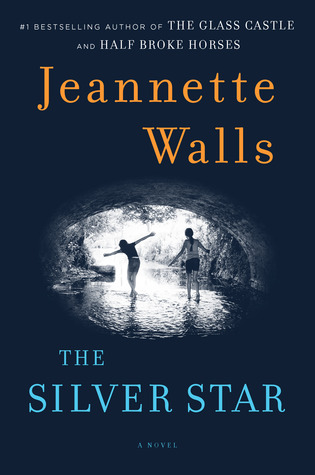
Title: The Silver Star
Author: Jeannette Walls
Enjoyment Rating: ***
Source: Audible
This book would be rated: PG-13 for language, adult situations
Twelve-year-old Bean and her fifteen-year-old sister Liz come home from school one day in June 1970 to find their house in rural California empty. Their mother, Charlotte, has taken off to "find herself," and has left the girls with enough money to buy themselves chicken pot pies for a long time. Charlotte has left the girls on their own pretty often in the past-- driving down to LA for a gig or an audition and staying away for a week at a time. But this time things are different, after several weeks, Charlotte hasn't returned, and people in town have started to notice.
So the girls, who have been taught to avoid talking to cops or people from social services at all costs, buy bus tickets bound for Virginia, where their Uncle Tinsley lives in a mansion. They haven't seen Tinsley in years, because Charlotte hates her home town and everything it stands for.
Tinsley, a reclusive widower, is surprised (not in a good way) to see the girls, but soon warms up to their presence. And Bean flourishes in the small town, making friends, finding extended family, and spreading her wings. The resourceful girls (against Tinsley's wishes) find jobs, and Liz, who had always seemed to strong to Bean, starts to struggle.
Readers of The Glass Castle will recognize similar themes from Walls's memoir in the novel. The girls are neglected by their mother, and it's unclear if she's truly mentally ill (and if Liz is headed the same direction) or just flighty, opinionated, lazy, and overwhelmed by the responsibility of caring for her daughters. The story, which overtly references To Kill a Mockingbird has the air of that novel as well. Bean becomes aware of issues of race and power, and the book includes a legal aspect as well. While the story was interesting and Bean was a compelling character, it didn't have the power or the depth of The Glass Castle.
Wednesday, July 31, 2013
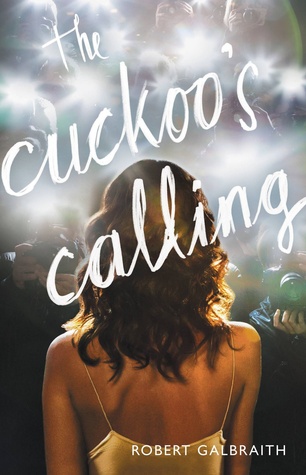
Book Review: The Cuckoo's Calling by Robert Galbraith (JK Rowling)
Title: The Cuckoo's Calling
Author: Robert Galbraith (JK Rowling)
Enjoyment Rating: ****
Source: Audible
This book would be rated: R for lots of bad language, sexual situations
Okay, I'll admit it. Although this is a book I would have enjoyed if it had been written by Robert Galbraith, I doubt that I would have gone out and bought it immediately after hearing about it if I didn't already know that Robert Galbraith was actually JK Rowling. But I would say that it's Rowling much more in the vein of The Casual Vacancy than of Harry Potter. The book is rough and raw, and there's probably a four-letter word on every page. But if that kind of stuff doesn't bother you as a reader, it's also a totally engrossing story.
Lula Landry was a twenty-three-year-old supermodel who was found dead in the road outside of her London home. Landry's death was ruled a suicide, but her brother, John Bristow, seems determined to have the death ruled a murder, so he hires private detective Cormoran Strike (down on his luck, a former war hero and amputee-- we meet him the day his fiancee has thrown him out of her house) to solve the crime. We're drawn into Lula's life-- the privileged upbringing with her adoptive parents, the squalor of her early years with her biological mother, her drug-addicted boyfriend, other supermodels, and the friends she made in rehab. Rowling does a fantastic job creating the world in which Landry inhabited, and she also creates, in Strike and his assistant Robin, characters who readers want to see again.
There are a few things I'd love to talk about with people who have read the novel. I seem to have missed an essential element for why the case was brought about in the first place, and listening to books on my iPhone makes it hard to go back and skim through to find the detail I missed. Also, I was a little bit uncomfortable, as an adoptive parent, about the way adoptive relationships and particularly adoptive children are portrayed in the novel. That said, I hope that Robert Galbraith is hard at work on the next novel.
Author: Robert Galbraith (JK Rowling)
Enjoyment Rating: ****
Source: Audible
This book would be rated: R for lots of bad language, sexual situations
Okay, I'll admit it. Although this is a book I would have enjoyed if it had been written by Robert Galbraith, I doubt that I would have gone out and bought it immediately after hearing about it if I didn't already know that Robert Galbraith was actually JK Rowling. But I would say that it's Rowling much more in the vein of The Casual Vacancy than of Harry Potter. The book is rough and raw, and there's probably a four-letter word on every page. But if that kind of stuff doesn't bother you as a reader, it's also a totally engrossing story.
Lula Landry was a twenty-three-year-old supermodel who was found dead in the road outside of her London home. Landry's death was ruled a suicide, but her brother, John Bristow, seems determined to have the death ruled a murder, so he hires private detective Cormoran Strike (down on his luck, a former war hero and amputee-- we meet him the day his fiancee has thrown him out of her house) to solve the crime. We're drawn into Lula's life-- the privileged upbringing with her adoptive parents, the squalor of her early years with her biological mother, her drug-addicted boyfriend, other supermodels, and the friends she made in rehab. Rowling does a fantastic job creating the world in which Landry inhabited, and she also creates, in Strike and his assistant Robin, characters who readers want to see again.
There are a few things I'd love to talk about with people who have read the novel. I seem to have missed an essential element for why the case was brought about in the first place, and listening to books on my iPhone makes it hard to go back and skim through to find the detail I missed. Also, I was a little bit uncomfortable, as an adoptive parent, about the way adoptive relationships and particularly adoptive children are portrayed in the novel. That said, I hope that Robert Galbraith is hard at work on the next novel.
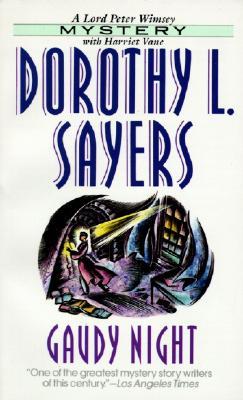
Book Review: Gaudy Night by Dorothy Sayers
Title: Gaudy Night
Author: Dorothy Sayers
Enjoyment Rating: ***
Source: Kindle for iPad
This book would be rated: PG
I've read several of Sayers's Lord Peter Wimsey novels in the past, and always enjoyed them-- I love the way she combines a great story with insightful social commentary. So I was expecting a lot from Gaudy Night, in which Wimsey's love, Harriet Vane, returns to her college in Oxford for a reunion and gets involved with figuring out who is sending poison pen letters to members of the community. If I were teaching a class on women's studies, I would seriously consider including this novel because of what it says about women in academia in the 1930s. It's a book I really think I would love if I read it under different circumstances.
However, I have an electronic copy of the book and decided to read it on vacation. Maren had overtaken my iPad for a serious Good Luck Charlie marathon, so I read the book on my phone. The language is fairly formal and feels a little bit antiquated, and the characters kept getting mixed up in my mind, so I ended up skimming a fair bit, especially once I figured out who the culprit was relatively early in the novel. It's interesting that there's no murder in Gaudy Night. I wonder if that is part of the reason why it didn't have the same gravitas as many other mysteries.
Author: Dorothy Sayers
Enjoyment Rating: ***
Source: Kindle for iPad
This book would be rated: PG
I've read several of Sayers's Lord Peter Wimsey novels in the past, and always enjoyed them-- I love the way she combines a great story with insightful social commentary. So I was expecting a lot from Gaudy Night, in which Wimsey's love, Harriet Vane, returns to her college in Oxford for a reunion and gets involved with figuring out who is sending poison pen letters to members of the community. If I were teaching a class on women's studies, I would seriously consider including this novel because of what it says about women in academia in the 1930s. It's a book I really think I would love if I read it under different circumstances.
However, I have an electronic copy of the book and decided to read it on vacation. Maren had overtaken my iPad for a serious Good Luck Charlie marathon, so I read the book on my phone. The language is fairly formal and feels a little bit antiquated, and the characters kept getting mixed up in my mind, so I ended up skimming a fair bit, especially once I figured out who the culprit was relatively early in the novel. It's interesting that there's no murder in Gaudy Night. I wonder if that is part of the reason why it didn't have the same gravitas as many other mysteries.
Tuesday, July 30, 2013
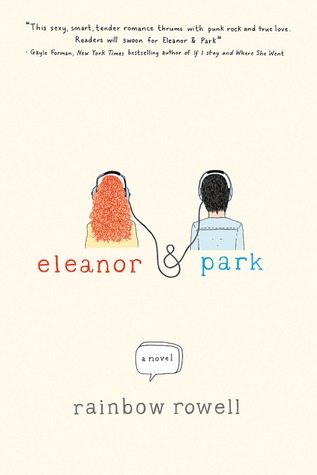
Book Review: Eleanor and Park by Rainbow Rowell
Title: Eleanor and Park
Author: Rainbow Rowell
Enjoyment Rating: *****
Source: Audible
This book would be rated: PG-13 or R-- the language is R, but the story is sweetly PG-13.
Last summer I read John Green's The Fault in Our Stars when we were on our epic driving trip, and loved it so much that I made Ed read it, and then I came home and read all of his other books, none of which was as satisfying as The Fault in Our Stars, but all of which were pretty decent in their own right. It was probably my favorite read of the summer.
This year, I started listening to Eleanor and Park one day when I was headed out for a run, and I found it nearly impossible to turn it off and engage in real life when I came home. It usually takes me at least a week to finish an audiobook, but I think I knocked this one out in two days. Like John Green, Rainbow Rowell's novel is an incredibly readable story about a boy and a girl who start as not even friends, then become friends, and then more. Eleanor is the new girl at Park's high school in Omaha (can I tell you how much I loved that the book was set in Omaha!) in the 1980s. She's chubby and wears all the wrong kinds of clothes, and has flaming red hair. When she steps on the school bus for her first day, no one will let her sit with them, but Park, slight, half Korean and into punk music, eventually gives up part of his seat. He freezes her out for weeks, but then he notices that she's reading his comic books over his shoulder.
I've read a few reviews that say that the book is basically just a love story, but I found the book to be more. Eleanor is new to the school because she has returned, after a year of living with her mom's friend, to her mother and abusive (physically and possibly also sexually) stepfather's house to share a tiny bedroom with her four younger siblings. She dresses funny because she has no money for normal clothes, no opportunity to even pretend to blend in. She washes her hair with dish soap or pet shampoo, and survives on ramen noodles and thin soups, even though her stepfather eats steak every night. Park's life with his mom and dad and brother looks idyllic to Eleanor, but he feels like he doesn't measure up to his dad's expectations, and that most people in Omaha don't have any idea what it feels like to be Asian.
While the story is great, I felt like listening to this book added a whole other dimension to the experience. The narration is fantastic-- probably the best I've encountered in all of the books I've listened to. And set against the cultural backdrop of 1980s punk music, Eleanor and Park was a thoroughly enteraining read.
Author: Rainbow Rowell
Enjoyment Rating: *****
Source: Audible
This book would be rated: PG-13 or R-- the language is R, but the story is sweetly PG-13.
Last summer I read John Green's The Fault in Our Stars when we were on our epic driving trip, and loved it so much that I made Ed read it, and then I came home and read all of his other books, none of which was as satisfying as The Fault in Our Stars, but all of which were pretty decent in their own right. It was probably my favorite read of the summer.
This year, I started listening to Eleanor and Park one day when I was headed out for a run, and I found it nearly impossible to turn it off and engage in real life when I came home. It usually takes me at least a week to finish an audiobook, but I think I knocked this one out in two days. Like John Green, Rainbow Rowell's novel is an incredibly readable story about a boy and a girl who start as not even friends, then become friends, and then more. Eleanor is the new girl at Park's high school in Omaha (can I tell you how much I loved that the book was set in Omaha!) in the 1980s. She's chubby and wears all the wrong kinds of clothes, and has flaming red hair. When she steps on the school bus for her first day, no one will let her sit with them, but Park, slight, half Korean and into punk music, eventually gives up part of his seat. He freezes her out for weeks, but then he notices that she's reading his comic books over his shoulder.
I've read a few reviews that say that the book is basically just a love story, but I found the book to be more. Eleanor is new to the school because she has returned, after a year of living with her mom's friend, to her mother and abusive (physically and possibly also sexually) stepfather's house to share a tiny bedroom with her four younger siblings. She dresses funny because she has no money for normal clothes, no opportunity to even pretend to blend in. She washes her hair with dish soap or pet shampoo, and survives on ramen noodles and thin soups, even though her stepfather eats steak every night. Park's life with his mom and dad and brother looks idyllic to Eleanor, but he feels like he doesn't measure up to his dad's expectations, and that most people in Omaha don't have any idea what it feels like to be Asian.
While the story is great, I felt like listening to this book added a whole other dimension to the experience. The narration is fantastic-- probably the best I've encountered in all of the books I've listened to. And set against the cultural backdrop of 1980s punk music, Eleanor and Park was a thoroughly enteraining read.
Monday, July 29, 2013
Book Review: The Interestings by Meg Wolitzer
Title: The Interestings
Author: Meg Wolitzer
Enjoyment Rating: ****
Source: Personal Copy
This book would be rated: PG-13
It's been a few weeks since I finished reading The Interestings, and sometimes I appreciate a little distance before I start writing a review. This summer, I've listened to a lot of short, engrossing, action-packed books, but the books I've actually read have been longer, more sprawling, and more about internal conflict. The Interestings definitely falls into this category. The book centers on a group of teenagers who meet at camp in the early 1970s and then follows their lives up to the present day. That first summer is transformative for Julie, who starts out as a shy and gawky kid from the suburbs, whose father recently died. But these other kids, Ash and her brother Goodman, Jonah, and Ethan, all city kids, most of them with lots of money, like her for who she is. Julie quickly becomes Jules, she and Ash become best friends. Ethan loves her, but as much as Jules thinks he's fantastic and a genius, she's also a little bit repulsed by him. But she hangs onto that love to sustain her.
Over the next decade, Goodman is accused of rape and flees the country, Jonah realizes that he's gay, and Ash and Ethan marry each other. Soon the couple finds enormous success, which becomes a source of conflict for Jules, who marries a nice guy but never achieves much financial success. But Jules still loves Ethan and Ash, so she struggles to keep her jealousies in check.
I'm surprised I've never come across Meg Wolitzer's novels before. They remind me of some of the other great novelists writing now-- the Elizabeth Strouts and Jonathan Franzens. While some readers might say that not much actually happens over the course of the novel, that wasn't what made the book interesting to me as a reader. It was the details Wolitzer included about life in New York, and Jules's thoughts and conversations that kept me reading, and that now keep me thinking about the book, even weeks later.
Author: Meg Wolitzer
Enjoyment Rating: ****
Source: Personal Copy
This book would be rated: PG-13
It's been a few weeks since I finished reading The Interestings, and sometimes I appreciate a little distance before I start writing a review. This summer, I've listened to a lot of short, engrossing, action-packed books, but the books I've actually read have been longer, more sprawling, and more about internal conflict. The Interestings definitely falls into this category. The book centers on a group of teenagers who meet at camp in the early 1970s and then follows their lives up to the present day. That first summer is transformative for Julie, who starts out as a shy and gawky kid from the suburbs, whose father recently died. But these other kids, Ash and her brother Goodman, Jonah, and Ethan, all city kids, most of them with lots of money, like her for who she is. Julie quickly becomes Jules, she and Ash become best friends. Ethan loves her, but as much as Jules thinks he's fantastic and a genius, she's also a little bit repulsed by him. But she hangs onto that love to sustain her.
Over the next decade, Goodman is accused of rape and flees the country, Jonah realizes that he's gay, and Ash and Ethan marry each other. Soon the couple finds enormous success, which becomes a source of conflict for Jules, who marries a nice guy but never achieves much financial success. But Jules still loves Ethan and Ash, so she struggles to keep her jealousies in check.
I'm surprised I've never come across Meg Wolitzer's novels before. They remind me of some of the other great novelists writing now-- the Elizabeth Strouts and Jonathan Franzens. While some readers might say that not much actually happens over the course of the novel, that wasn't what made the book interesting to me as a reader. It was the details Wolitzer included about life in New York, and Jules's thoughts and conversations that kept me reading, and that now keep me thinking about the book, even weeks later.
Thursday, July 18, 2013
Four months
![]() |
| Photos by Trisha Terry |
Four months home means knowing where the lollipops are hidden.
Four months home means Rose is now your very best friend in the world.
Four months home means at least a dozen English words.
Four months home means sleeping through the night (almost every night), and going to bed on your own.
Four months home means pointing to every face in the new family pictures and getting really excited to see your own.
Four months home means two surgeries and six casts (five leg, one arm) down, three surgeries and three more casts left to go.
Four months home means only one week (the first week) when you didn't spend most of the day in a brace or a cast.
Four months home means expressing preference for straws instead of sippy cups. And Mom's diet coke over anything else.
Four months home means peaches. Lots and lots of peaches.
Four months home means playing in the dishwasher.
Four months home means knowing what comes next in every scene of Monsters, Inc, Despicable Me, and Tangled.
Four months home means knowing the Gangnam Style dance.
Four months home means a pound a month of weight gain.
Four months home means you're still pretty skinny.
Four months home means chasing chickens in the yard.
Four months home means not much patience for the Ergo.
Four months home means loving nursery.
Four months home means splashing in the pool.
Four months home means cuddling with mom and tickle fights with dad.
Four months home means knowing that this home is your home, and this family is your family.
Four months home means it's been almost a whole year since we first saw your face.
Four months home, and we love you more with each passing day.
Wednesday, July 17, 2013
Book Review: The Ocean at the End of the Lane by Neil Gaiman
Title: The Ocean at the End of the Lane
Author: Neil Gaiman
Enjoyment Rating: ***
Source: Audible
This book would be rated: PG-13 for scary situations
A man returns to his hometown in the English countryside for a funeral and decides to visit his childhood home. While there, he feels strangely compelled to stop by the farm where one of his neighbors lived. His memories of this neighbor child are hazy, but the thinks her name may have been Lettie (or was it Lottie?) Hempstock and that she may have moved to Australia (unless it was somewhere else).
Once the narrator arrives at the farm, and meets Lettie's grandmother (how could she possibly be alive after all this time?) memories start flooding back. First he remembers that they called the pond in the backyard an "ocean." Then he remembers the terrifying adventure they had the spring he was eleven years old, when otherworldy creatures found their way into the children's lives, and it was up to them to save the world.
Over the last few weeks, I've listened to three books in a row with young protagonists which don't feel like YA novels. When I first started listening to The Ocean at the End of the Lane and was introduced to the main character (unnamed throughout the novel), I expected a Gaiman story along the lines of The Graveyard Book, but instead found a story more along the lines of American Gods (okay, those are the only Neil Gaiman books I'd read before this one). In other words, the book is dark and terrifying at times, not sweetly scary.
While I enjoyed the story, and particularly enjoyed the afterword (I don't think I've ever written those words before), I did find it a little hard to follow sometimes. Maybe it's because I listened to the climax of the book while doing speedwork (with the oxygen diverting from my brain to my lungs). I think Gaiman is a great reader, but I did find minutes passing when I wasn't totally checked into the story. That's probably more my fault as a reader than Gaiman's fault as an author or narrator, but it still affected my enjoyment of the novel as a whole.
Author: Neil Gaiman
Enjoyment Rating: ***
Source: Audible
This book would be rated: PG-13 for scary situations
A man returns to his hometown in the English countryside for a funeral and decides to visit his childhood home. While there, he feels strangely compelled to stop by the farm where one of his neighbors lived. His memories of this neighbor child are hazy, but the thinks her name may have been Lettie (or was it Lottie?) Hempstock and that she may have moved to Australia (unless it was somewhere else).
Once the narrator arrives at the farm, and meets Lettie's grandmother (how could she possibly be alive after all this time?) memories start flooding back. First he remembers that they called the pond in the backyard an "ocean." Then he remembers the terrifying adventure they had the spring he was eleven years old, when otherworldy creatures found their way into the children's lives, and it was up to them to save the world.
Over the last few weeks, I've listened to three books in a row with young protagonists which don't feel like YA novels. When I first started listening to The Ocean at the End of the Lane and was introduced to the main character (unnamed throughout the novel), I expected a Gaiman story along the lines of The Graveyard Book, but instead found a story more along the lines of American Gods (okay, those are the only Neil Gaiman books I'd read before this one). In other words, the book is dark and terrifying at times, not sweetly scary.
While I enjoyed the story, and particularly enjoyed the afterword (I don't think I've ever written those words before), I did find it a little hard to follow sometimes. Maybe it's because I listened to the climax of the book while doing speedwork (with the oxygen diverting from my brain to my lungs). I think Gaiman is a great reader, but I did find minutes passing when I wasn't totally checked into the story. That's probably more my fault as a reader than Gaiman's fault as an author or narrator, but it still affected my enjoyment of the novel as a whole.
Saturday, July 13, 2013
One more reason to love July
I
like July. Not because the kids are out of school or because the days
are hot and long and sunny.
Actually, I'm not much of a fan of either of those things.
I like July because it's quiet at my house, even with six kids around all day long.
Why is it quiet? Because basketball ended in June and football won't start until August.
I should have known I was in trouble the first time I went to Sunday dinner at my future-in-laws' house. Their family room is connected to the dining room, and the guys were all flipping back and forth between several football games. When it came time for dinner, we gathered around the table and muted the game for the prayer. As soon as the food was blessed, the volume was turned back on before any of the dishes were passed.
I figured it was a fluke. It must be a really important game they were watching.
A few weeks later, we went to the BYU-Utah football game at Cougar Stadium. As the Cougars struggled, my love set his jaw and clenched his fists. When the Utes tore down our goalposts, he looked like he wanted to murder someone.
I figured that, too, was a fluke. Maybe he was just in a bad mood that day.
It wasn't a fluke. But I was in love, and I figured that once he found something more diverting to occupy his time (me), my sweetheart would mellow from a rabid sports fan into a guy like my dad.
My dad cheered for all of the Cleveland teams, the Jets and Giants equally, the Nicks, and always the Mets over the Yankees. But whenever there was anything important going on in the house, the TV or the radio was turned off, and he'd catch up on the game later by listening to sports radio in the car. He knew a lot about sports, and had opinions about sports, but watching every second of every single game was not a priority.
My missionary begged for sports updates in his letters from home. My groom sent his brothers out of our wedding reception to get updates on the Jazz playoff game. In 2002, we watched the Opening Ceremonies of the Olympics while I was in labor with our second child. In 2004, we watched Game 3 of the American League Championship (the last game the Yankees won) while I was in labor with our third child, and spent the next night watching Game 4, when the Red Sox turned the tide and won every game for the rest of the season. Since I am not a sports fan, I have very spotty sports knowledge-- I know absolutely nothing about really basic things (like offsides rules in hockey and soccer), but lots and lots about arcane details (especially if there's a 30 on 30 documentary about the subject). We plan our vacations, his work schedule, and my races around the BYU football schedule. Our kids all shoot baskets in the back yard, whether they want to or not. Last year, when we were in China adopting our daughter, my husband spent one night sitting the bathroom of our hotel room to listen to the BYU Men's Basketball team play in the NCAA tournament. Twenty years after that first Sunday dinner, we're still muting the television for the prayer.
Football season feels all-encompassing; I celebrate when the Super Bowl ends no matter who is playing. But when football ends, basketball and hockey are in full swing. It's not until the last NBA playoff game is done in June the house falls silent again (golf, tennis, and baseball are quiet sports, relatively speaking). My husband jokes that he likes every sport except NASCAR and bowling, but I find that joke a little too true to be funny.
I have lots of friends who gloat the fact that their husbands don't like sports, or at least not as much as mine does. But although I am not a fan of the sound of a football stadium in my family room five nights a week for five months, I don't want to change my husband, to stomp out this passion in his life. I love that he and his dad and brothers call each other all the time to "talk about the game," and that he gets together with his parents almost every week for BYU football and basketball games, which also make for perfect dates with the kids. But even more than that, I think it's important to respect, and even encourage the things he loves, just like he gives me a lot of latitude to run 20 miles on a Saturday morning, start a graduate program when I had four small children, and to sit next to him on the couch on a Saturday night, tapping out a blog post... while he watches soccer on TV.
Actually, I'm not much of a fan of either of those things.
I like July because it's quiet at my house, even with six kids around all day long.
Why is it quiet? Because basketball ended in June and football won't start until August.
I should have known I was in trouble the first time I went to Sunday dinner at my future-in-laws' house. Their family room is connected to the dining room, and the guys were all flipping back and forth between several football games. When it came time for dinner, we gathered around the table and muted the game for the prayer. As soon as the food was blessed, the volume was turned back on before any of the dishes were passed.
I figured it was a fluke. It must be a really important game they were watching.
A few weeks later, we went to the BYU-Utah football game at Cougar Stadium. As the Cougars struggled, my love set his jaw and clenched his fists. When the Utes tore down our goalposts, he looked like he wanted to murder someone.
I figured that, too, was a fluke. Maybe he was just in a bad mood that day.
It wasn't a fluke. But I was in love, and I figured that once he found something more diverting to occupy his time (me), my sweetheart would mellow from a rabid sports fan into a guy like my dad.
My dad cheered for all of the Cleveland teams, the Jets and Giants equally, the Nicks, and always the Mets over the Yankees. But whenever there was anything important going on in the house, the TV or the radio was turned off, and he'd catch up on the game later by listening to sports radio in the car. He knew a lot about sports, and had opinions about sports, but watching every second of every single game was not a priority.
My missionary begged for sports updates in his letters from home. My groom sent his brothers out of our wedding reception to get updates on the Jazz playoff game. In 2002, we watched the Opening Ceremonies of the Olympics while I was in labor with our second child. In 2004, we watched Game 3 of the American League Championship (the last game the Yankees won) while I was in labor with our third child, and spent the next night watching Game 4, when the Red Sox turned the tide and won every game for the rest of the season. Since I am not a sports fan, I have very spotty sports knowledge-- I know absolutely nothing about really basic things (like offsides rules in hockey and soccer), but lots and lots about arcane details (especially if there's a 30 on 30 documentary about the subject). We plan our vacations, his work schedule, and my races around the BYU football schedule. Our kids all shoot baskets in the back yard, whether they want to or not. Last year, when we were in China adopting our daughter, my husband spent one night sitting the bathroom of our hotel room to listen to the BYU Men's Basketball team play in the NCAA tournament. Twenty years after that first Sunday dinner, we're still muting the television for the prayer.
Football season feels all-encompassing; I celebrate when the Super Bowl ends no matter who is playing. But when football ends, basketball and hockey are in full swing. It's not until the last NBA playoff game is done in June the house falls silent again (golf, tennis, and baseball are quiet sports, relatively speaking). My husband jokes that he likes every sport except NASCAR and bowling, but I find that joke a little too true to be funny.
I have lots of friends who gloat the fact that their husbands don't like sports, or at least not as much as mine does. But although I am not a fan of the sound of a football stadium in my family room five nights a week for five months, I don't want to change my husband, to stomp out this passion in his life. I love that he and his dad and brothers call each other all the time to "talk about the game," and that he gets together with his parents almost every week for BYU football and basketball games, which also make for perfect dates with the kids. But even more than that, I think it's important to respect, and even encourage the things he loves, just like he gives me a lot of latitude to run 20 miles on a Saturday morning, start a graduate program when I had four small children, and to sit next to him on the couch on a Saturday night, tapping out a blog post... while he watches soccer on TV.
Thursday, July 11, 2013
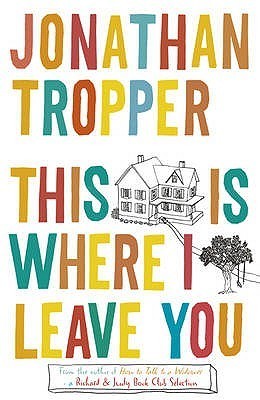
Book Review: This is Where I Leave You by Jonathan Tropper
Title: This is Where I Leave You
Author: Jonathan Tropper
Enjoyment Rating: **
Source: Audible
This book would be rated: R for language, sex, adultery and general misanthropy
Judd Foxman's life is in a shambles. Just a few weeks earlier, he came home to surprise his wife on her birthday and instead got a surprise of his own-- his wife in bed with his boss. Now jobless and wifeless and living in someone's decrepit basement, Judd gets the news that his father has died, and to make matters worse, his dying wish was that the entire family come home and sit shiva for a week. As he's pulling out of town, Jen, the cheating wife shows up and tells him she's pregnant. It seems like life couldn't get much worse.
For most people, spending a week with their parents and siblings might feel like a vacation. But the Foxmans are not most people. Judd's father was extremely blunt. His mother believes in oversharing. And all of the siblings are messed up in their own ways. Over the course of the week, they hop beds, throw punches, and swear a blue streak. While the book was well-written, and Judd's struggle with his concept of himself is really interesting, the book was a bit of a slog. No one in the Foxman home is happy, and it's not just because Dad is dead. These are privileged people who should have everything going for them, but somehow they can't see it. Eventually, it seems like Judd might get a glimpse and start to grow up just a little bit.
Author: Jonathan Tropper
Enjoyment Rating: **
Source: Audible
This book would be rated: R for language, sex, adultery and general misanthropy
Judd Foxman's life is in a shambles. Just a few weeks earlier, he came home to surprise his wife on her birthday and instead got a surprise of his own-- his wife in bed with his boss. Now jobless and wifeless and living in someone's decrepit basement, Judd gets the news that his father has died, and to make matters worse, his dying wish was that the entire family come home and sit shiva for a week. As he's pulling out of town, Jen, the cheating wife shows up and tells him she's pregnant. It seems like life couldn't get much worse.
For most people, spending a week with their parents and siblings might feel like a vacation. But the Foxmans are not most people. Judd's father was extremely blunt. His mother believes in oversharing. And all of the siblings are messed up in their own ways. Over the course of the week, they hop beds, throw punches, and swear a blue streak. While the book was well-written, and Judd's struggle with his concept of himself is really interesting, the book was a bit of a slog. No one in the Foxman home is happy, and it's not just because Dad is dead. These are privileged people who should have everything going for them, but somehow they can't see it. Eventually, it seems like Judd might get a glimpse and start to grow up just a little bit.
Wednesday, July 10, 2013
Book Review: The Sisterhood by Helen Bryan
Title: The Sisterhood
Author: Helen Bryan
Enjoyment Rating: ***
Source: Kindle for iPad
This book would be rated: PG-13 for adult situations
In the 1980s, an American couple arrives in South America to adopt a baby girl from a convent. In addition to their daughter, the nuns give the couple a book and a medal from the convent, explaining that they have a feeling that they need to be with the girl. Twenty years later, the girl, Menina, is in college. Trying to get away from a bad relationship with a boy, she heads off to Spain to work on her college thesis in art history, gets lost, and ends up at a convent in the Spanish countryside, where she finds not only Velazquez paintings (that's who she's come to Spain to study!) but also the same swallows on the book and medal she got when she was adopted.
From there, the story jumps back more than 500 years, to the story of the nuns who originally inhabited the convent. These nuns have taken in the illegitimate daughters of the gentry for centuries, and now, as the Spanish Inquisition gets underway, they're under suspicion of harboring Jews and Muslims. Believing they will be killed, they send a group off to start a secret new convent in the Canary Islands, and they're never heard from again. This ancient story is rich and detailed and interesting. The modern story is less so, and I'm unsure if the wild coincidences are a weakness in the plot or if they're there to highlight the multitude of ways in which Menina's story and the story of these nuns in Spain is inextricably linked.
Author: Helen Bryan
Enjoyment Rating: ***
Source: Kindle for iPad
This book would be rated: PG-13 for adult situations
In the 1980s, an American couple arrives in South America to adopt a baby girl from a convent. In addition to their daughter, the nuns give the couple a book and a medal from the convent, explaining that they have a feeling that they need to be with the girl. Twenty years later, the girl, Menina, is in college. Trying to get away from a bad relationship with a boy, she heads off to Spain to work on her college thesis in art history, gets lost, and ends up at a convent in the Spanish countryside, where she finds not only Velazquez paintings (that's who she's come to Spain to study!) but also the same swallows on the book and medal she got when she was adopted.
From there, the story jumps back more than 500 years, to the story of the nuns who originally inhabited the convent. These nuns have taken in the illegitimate daughters of the gentry for centuries, and now, as the Spanish Inquisition gets underway, they're under suspicion of harboring Jews and Muslims. Believing they will be killed, they send a group off to start a secret new convent in the Canary Islands, and they're never heard from again. This ancient story is rich and detailed and interesting. The modern story is less so, and I'm unsure if the wild coincidences are a weakness in the plot or if they're there to highlight the multitude of ways in which Menina's story and the story of these nuns in Spain is inextricably linked.
Subscribe to:
Posts (Atom)