Showing posts with label essays. Show all posts

Wednesday, February 25, 2015

Book Review: Hemingway on a Bike by Eric Freeze

Title: Hemingway on a Bike
Author: Eric Freeze
Enjoyment Rating: *****
Source: Digital Copy

We all know that Ernest Hemingway aspired to be the most masculine man of the twentieth century. When I think of Hemingway, I think of those Dos Equis commercials about the most interesting man in the world. Hemingway threw himself headlong into bullfighting, deep sea fishing, large game hunting, drinking, womanizing, and generally being larger than life. Think of him as  an AJ Jacobs who oozes machismo. Essayist Eric Freeze seems takes inspiration from a vision he has of Ernest Hemingway riding a road bike through Paris, but his essays meander through themes of spirituality, masculinity, francophilia, parenting, home repair, and popular culture.

This is a fantastic collection of essays-- one that seems to work as a cohesive whole (I read the book in one sitting) since it feels vaguely chronological (even if it's not), but I would imagine that a more leisurely reading would be even more fruitful. The collection as a whole is sweet, quick-paced, and a little daring. I think Hemingway would approve.

Sunday, February 22, 2015

Book Review: Field Notes on Language and Kinship by Tyler Chadwick

Title: Field Notes on Language and Kinship
Author: Tyler Chadwick
Enjoyment Rating: ****
Source: Paper copy

I've been writing reviews for days now, and I've saved my review of Field Notes on Language and Kinship until the end, primarily because I'm not sure how to classify it. In the book, Chadwick responds to, or is inspired by, many of the poems in Fire in the Pasture, the poetry anthology he edited. This is a really creative book, with essays, poems, literary criticism, and thoughts on life thrown in the mix. And by "thrown in," I think I mean, "carefully considered." This book is such a delightful mix of things, and it shows how one work of art can work to inspire readers to create others.

Friday, June 28, 2013

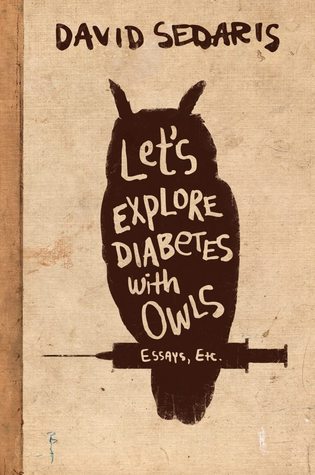
Book Review: Let's Explore Diabetes with Owls by David Sedaris

Title: Let's Explore Diabetes with Owls: Essays, Etc.
Author: David Sedaris
Enjoyment Rating: ****
Source: Personal Copy
This book would be rated: R

A few months ago, Ed and I sneaked away one Sunday night to go to a David Sedaris reading. It was the week that Let's Explore Diabetes with Owls came out, and I hadn't read any of the essays yet-- I knew that just reading them on their own wouldn't compare with hearing Sedaris reading them to me (Yes, just me. If you were there, you must have been eavesdropping). He totally did the book justice-- his dog poems were hilarious, the story about the colonoscopy had me crying, and his political rants on health care even seemed sweet. I figured that there wouldn't be anything worth reading when I sat down and finished the rest of the essays.

But I was wrong. The other night, Ed came into the bedroom, and I was convulsing. I think he thought there was something wrong, but I just couldn't catch my breath, I was laughing so hard. I tried to read the section to him, and it took three tries before I could actually read him the story. And while funny is good, the biggest lasting impression I have of the book is how Sedaris has a fantastic work ethic when it comes to writing. I like to fancy myself a writer, but I don't write every day (unless you count Facebook status updates). And while I'd love to write every day, I'm really good at making excuses for why I don't do it, when I manage to do things like run and read my scriptures every day. And do the laundry. You know, the important things. So while I was expecting just a fun read, I also got a lesson on what it would take for me to be a better writer. Have I started writing every day? Not yet-- but there's always tomorrow.

Saturday, July 30, 2011

Book #91: Barrel Fever

Barrel Fever: Stories and EssaysTitle: Barrel Fever: Stories and Essays
Author: David Sedaris

I've read a lot of David Sedaris, and although I didn't love his most recent book (the animal one), I'd probably still say that I'm a fan of his work. But if anything would turn me into an anti-Sedarisite, it would be Barrel Fever. The work is short on the essays (I love me a Sedaris essay) and long on the short stories. I'm probably outing myself as a provincial and a prude, but the stories were pretty vulgar and frankly didn't always make a lot of sense. If this is "real Sedaris," then I guess I'm a fan of "Sedaris lite." I ended up skimming or entirely skipping quite a few of the stories. There were one or two nice essays thrown in, but by and large, this is one I think all but the most die-hard readers can safely skip. 

Wednesday, June 15, 2011

Book #74: Ex Libris

Ex Libris: Confessions of a Common ReaderTitle: Ex Libris: Confessions of a Common Reader
Author: Anne Fadiman

If I had to choose three words to describe myself to grace my tombstone (a la Thomas Jefferson), "reader" would definitely be one of the three. I do a lot of things (writing, running, baking, raising kids) but I'm probably more defined by the fact that I read 100+ books a year than by anything else. So naturally I'm intrigued by any book where the author defines herself as a bibliophile in the title (and even more when that author is Anne Fadiman, who wrote the wonderful book The Spirit Catches You and You Fall Down). I've read similar books by other authors (this reminds me a lot of Anna Quindlen's How Reading Changed My Life, although I'd say that Ex Libris is more erudite (the title is even in Latin). Anyway, the book is a series of about a twenty short essays that Fadiman wrote over half a dozen years about her love of reading and of books. In the first essay, she writes about the agonizing process that she and her husband undertook to combine their books (ten years after they met-- they had a child together before they made their libraries as one).

Reading Ex Libris made me realize that there are thousands of books, good, "important" books that every educated reader should know (for example, I've never read one of Updike's "Rabbit" books) that I'll never read. I felt the same kind of pain I do when walking into a Barnes and Noble-- so many books, so little time. I even feel a twinge of "I'll never conquer it all" when I look at the pile on my nightstand (but it doesn't prevent me from reading crap, you know). Despite finishing Ex Libris with an additional score of books on my reading list, and a bit of an inferiority complex, one of the things I loved most about Ex Libris is how the essays are not just about how she loves reading, but how her love for her family is demonstrated through her love of books. She touches on just about everyone close to her-- parents, sibling, children, and most especially, her dear husband George, and I felt that including these personal stories in the essays made the work about a lot more than just words on pages stuffed on shelves.

Sunday, October 24, 2010

Book #112: Leaping: Revelations and Epiphanies

Leaping: Revelations & EpiphaniesTitle: Leaping: Revelations and Epiphanies
Author: Brian Doyle

Essayist Brian Doyle is coming to BYU this week and he'll be visiting my Creative Nonfiction graduate seminar. In preparation for his visit, our class read Leaping: Revelations and Epiphanies, a collection of musings, mainly on faith and fatherhood, but also (strangely enough) about 9/11.

One thing that I admire about Doyle's work (aside from his marvelous prose) is the way that he manages to write about his faith. He's a devout Catholic, and his religion infuses most of what he writes. In that way, he's similar to many of the Mormon writers I've encountered, who feel that they can't write essays about subjects that are close to their hearts without talking about religion. While Leaping was published by Loyola Press (Loyola is a Catholic University) and is now out of print, it doesn't feel that it was written for an exclusively Catholic audience. As a Mormon trying to write, I feel torn between writing for a Mormon audience, talking about things like Fast and Testimony meeting and Youth Conference without needing to explain them, and writing for a wider audience, where many of the small details about my culture will require explanation. I like that Doyle doesn't make excuses for being a man of faith, and seems to feel that his faith adds to his humanism rather than detracting from it.

I wish I could keep myself from harping on this, but the way Doyle doesn't use commas between lists of adjectives drives me crazy. If I were a more generous spirit I'd learn to understand his motivations, or at least appreciate his differences.

Book #111: Squirrel Seeks Chipmunk

Squirrel Seeks Chipmunk: A Modest BestiaryTitle: Squirrel Seeks Chipmunk
Author: David Sedaris

When I heard that a new collection of David Sedaris essays was scheduled for publication, I preordered it from Amazon immediately. It wasn't until the book arrived and I started reading it that I realized that it was not a series of stories from Sedaris's own life, but a collection of fables about animals. Think Aesop, only dirtier.

I've always had an irrational prejudice against stories where there are talking animals (I blame it on my ninth-grade English teacher, who made us read Watership Down one miserable summer), so I wasn't excited to discover that this was a book about talking animals. Ugh.

But I'd paid for the book, I might as well read it, right? It's a relatively short book beautifully illustrated by Ian Falconer (of Olivia and The New Yorker fame). And it's not terrible. Actually, it's pretty funny, with anthropomorphized animals doing all of the horrible and evil things usually only humans are capable of. But at $22 for 175 small pages with big type and even bigger margins, the book feels pretty pricey for what you actually get. Next time I hear that a book by Sedaris is coming out, I'll check and see if it's about animals-- if it is, I'll reserve it at the library, but I'd still pay full price for a book of his essays.

Tuesday, July 27, 2010

Book #84: What of the Night

What of the Night?Title: What of the Night
Author: Stephen Carter

I've read several of the essays in Stephen Carter's collection What of the Night in Sunstone, and once I realized that they were, for the most part, previously published essays, I wasn't sure that I would enjoy rereading them (although I liked them the first time). But I was surprised and pleased to see that although the essays likely were not written with a collection in mind, the ordering of the essays, although not strictly chronological, tied them together in a way that made them seem richer by being together. I feel that I got a better picture of Carter as a man and a writer and a thinker by reading them together than I did when I read each one separately. As a new MFA student, I was also heartened to read about Carter's own assertion that he went to school to learn how to write because it wasn't something that came naturally to him. It gives me hope that I, too, will one day be able to call myself a writer.

Monday, May 10, 2010

Book #59: The Partly Cloudy Patriot

The Partly Cloudy Patriot
Title: The Partly Cloudy Patriot
Author: Sarah Vowell

Sarah Vowell's The Partly Cloudy Patriot was my third foray into listening to audiobooks. So far, I've chosen to listen to books that are essays or memoirs, read by the author. After reading Partly Cloudy, I think I'm going to take a break from these kinds of books for a while and delve into fiction. I like the act of listening to audiobooks a lot more than I thought I would. My mom has been a big audiobook listener for years, and I've always had a snotty attitude about them, that "listening" to a book wasn't the same thing as "reading" a book and that anyone who could read a book should read instead of listening, just as a matter of principle. As with many things, I'll grant to my mom that she's right, at least where audiobooks are concerned, and now that I have an Audible account, I'm pretty sure that I'll keep on listening. It makes folding laundry and driving to and from school and running on the days of the week after I've blown through my podcasts much more enjoyable. I don't even hate ironing anymore (I can now see the correlation between my mom's love of ironing and her love of audibooks). If I could just figure out how to download books from the library (my library does limited-time audiobook downloads, but I haven't invested the time in figuring them out yet), I would be a very happy girl. Oh, and if I could find something to carry around my iPhone while I run or walk around the house (I always seem to be without pockets) that would make me even happier. The only downside is that the concha of my ears have been sore lately from my headphones getting caught on door handles and ripped forcefully from my ears.

Anyway, enough of that. I probably would have liked The Partly Cloudy Patriot a lot if I'd read it in 2003 when it came out. Even in 2005, it may have seemed relevant. When I ordered The Partly Cloudy Patriot, I thought I was ordering Vowell's new book, The Wordy Shipmates. But I messed up. Partly Cloudy is a bunch of essays related to Vowell's self-identification as a Patriot, and what patriotism means to her. There are amusing essays about Bill Clinton and Al Gore and a road trip to North Dakota and traveling to cry hot, silent tears of rage at the first inauguration of George W. Bush. The stories were interesting and well-told, but they seemed really out of date. It's funny, because the book was published only seven years ago, but the world moves fast these days, and it felt like a story from a generation ago. I'd recommend it more as a piece of history than as a piece of current events.

Friday, April 2, 2010

Book #51: Eating the Dinosaur

Title: Eating the Dinosaur
Author: Chuck Klosterman

Eddie and I bought this audiobook to listen to when we were driving around Hawaii. Even though I've read basically all of Klosterman's nonfiction books, they're not the kinds of books I'd normally imagine myself enjoying. For one thing, he writes almost exclusively about rock music, about which I know very little (my most hated question when I was dating was "what kind of music do you listen to?" because I never felt like I knew enough about music to answer that in an intelligent way) and sports, about which I care even less. Yet Klosterman accompanied us up to Haleakala and down to Hana and around Diamond Head, talking about Nirvana and Ralph Sampson and football's passing game.

While I may not be all that interested in many of Klosterman's pet subjects, I have long been interested in Klosterman himself. So the act of listening to him read his own book was more fun for me than what he actually wrote. I had a friend in college who was really smart, and liked to philosophize. I'm not too dumb, but I'm not especially philosophical, and I always felt exhausted after spending an evening with him and his salon. After listening to Eating the Dinosaur, I felt sort of the same way about Klosterman. Do people really spend that much time thinking about Ted Kaczynski and relating his manifesto to the internet? Klosterman does, although not all that successfully. He is most successful when he talks about things I'm interested in (of course), like Mad Men and advertising. But I also felt like I was learning a few things along the way, like the fact that Courtney Love drove a Lexus and Mike Leach was a maverick long before he locked some ESPN anchor's kid in the broom closet.

Sunday, January 31, 2010

Book #13: What the Dog Saw

Title: What the Dog Saw: And Other Adventures
Author: Malcolm Gladwell

If you really, really like Malcolm Gladwell's articles from The New Yorker, you'd probably love the chapters of What the Dog Saw, because the chapters are Malcolm Gladwell's articles from The New Yorker. Maybe he's a recycling enthusiast, maybe he doesn't think he got paid enough for his work the first time around, maybe his book publishers were putting the screws on him to put out a new book, or maybe he just considers What the Dog Saw a kind of greatest hits album. Regardless, all of the material was previously published in The New Yorker. The book is 400+ pages (considerably longer than a typical Gladwell book), and even though I'm not a regular reader of the magazine anymore (I used to subscribe, but finally decided it wasn't doing much more than decorating my magazine basket), I'd read about 1/3 of the articles included in the book before I actually sat down with the book.

It's funny, because I don't necessarily think of Gladwell as having a genre as a writer, other than possibly "interesting people" but in the articles that ended up in What the Dog Saw, he tended to write a lot about the military and business subjects, particularly Enron (and after living in Houston, I'm awfully tired of hearing about Enron). I liked the book, but I picked it up (and gave it to my mother-in-law for Christmas) thinking it was original material, so I was a little bit disappointed to be getting used goods. I also missed the (often somewhat loose) narrative focus of books like Outliers and Blink. Still, Malcolm Gladwell's used goods are every bit as entertaining as most authors' new goods, so it's worth a read, especially if you're not a frequent reader of The New Yorker.

Tuesday, July 28, 2009

Book #46: The Opposite of Fate

Title: The Opposite of Fate: Memories of a Writing Life
Author: Amy Tan

I remember back in college learning about different kinds of literary criticism. We talked about biographical criticism, and my professor wrote it off, saying that it was hackneyed. But I'm regular reader of People magazine (even Star from time to time!) and I love knowing all of the interesting details about my favorite authors' lives. So Amy Tan's The Opposite of Fate was a treat in many ways; it's a collection of writings Tan has done over the last several decades about her own life, about writing, and about various reactions to her books. It heartily satisfied the voyeur in me. I learned that Tan has an affinity for cats, that she's had more strange stuff happen in her life than I could ever dream (nightmare?) about happening in mine, that she had a complicated but rewarding relationship with her mother (something I had gleaned from her writing). But she also talked about having scholars find symbolism in her books that she never intended, about her belief in ghosts (and rituals for ridding her apartment from them), and great writing tips. I loved how she went into detail about starting her career as a fiction author at the advanced age of 37, which gives me hope that some day I may be able to write something longer than a blog post. Perhaps the most interesting part of the book came from her introduction to a collection of the best American short stories, for which she served as the editor. She talked about how she read each story from start to finish. If she fell asleep in bed while reading, she'd start over from the beginning the next day. If the phone rang, she'd start from the beginning when she hung up. Now that's a lot of starting from the beginning. I get interrupted at least a thousand times a day (ten times at least while writing just this post). Maybe the key to being a good fiction writer beginning in one's thirties is not to have four kids....

Sunday, June 28, 2009

Book #36: The New Kings of Nonfiction

Title: The New Kings of Nonfiction
Editor: Ira Glass

I have a crush on Ira Glass. For years, it was small crush, a radio crush. I just really liked listening to the This American Life podcasts each week and decided Ira was cool. Then Eddie bought me both the This American Life DVDs and New Kings of Nonfiction (which I'd tried unsuccessfully to reserve at the library in Texas) for Mother's Day (because there's nothing better than a husband who appreciates and even encourages his wife's harmless crushes). I watched the DVDs first and they are AMAZING! If you haven't seen them, they are worth a Showtime subscription. Barring that, they're definitely worth the $27 you'd pay for them at amazon (which is just enough to get free shipping! score!). Glass comes across as slightly nerdier than I'd pictured him from his radio voice, but after ten hours of watching him, my crush was reaching dangerous proportions. I was even considering email love notes to Chicago Public Radio (ok, not really, but I was still swooning).

Then I read The New Kings of Nonfiction. You see, for the last year I've been writing and editing for Segullah, so nonfiction is right up my alley. I was looking forward to some new and groundbreaking nonfiction. I'd already read a few of the essays. And the other essays were just so, well, male. I guess it's no coincidence that the book is called The New KINGS of Nonfiction, because 12 of the 14 essays were written by men. And they were about very male topics: poker, trading stocks, being a lunatic soccer fan, bulls, wars, etc... Even the articles written by women were about things guys would like: one was about what an American ten-year-old male looks like and the other was about working as a hostess at an ultracool NYC bar. So I'd built up in my mind over the last few years this image of Glass as a sensitive metrosexual kind of guy, and the macho themes of the book totally blew that image out of the water. And now I'm not sure what I think about him.

I'll say this though, Malcolm Gladwell's essay "Six Degrees of Lois Weisberg" is golden. The book is worth picking up even if you only read that.

Wednesday, January 7, 2009

Book #1: Outliers

Title: Outliers: The Story of Success
Author: Malcolm Gladwell

I really, really like Malcolm Gladwell. His writing always draws me in. When I see an article in the New Yorker that he has written, I always make sure that I read it (even if it looks way too long). So it should come as no surprise that I took to Outliers like a duck to water. Eddie would tell you that I kept saying "I can't wait for you to read this" as I was reading. In the first section of the book we learn the best time of year to be born to be a Canadian hockey player, how much work goes into becoming a musical virtuoso, and the best year to be born to be titan of Industry or a software mogul. That part of the book is vintage Gladwell-- if you've read Blink or The Tipping Point, you know the drill.

The second half of the book is a little bit less closely tied to the title. He calls this section "Legacy" and I guess it's supposed to show what happens after outliers outlie. There are chapters on infighting in rural Appalachia, Korean plane crashes, and Gladwell's own personal story. They're all interesting, but it's a little harder to see them as part of the same story as the first half of the book.

Saturday, January 3, 2009

Book #83: When You Are Engulfed in Flames

Title: When You Are Engulfed in Flames
Author: David Sedaris

I sort of doubt that most Mormons will really "get" David Sedaris. I'll admit that sometimes I don't get him (but I like him a lot). Most good Mormons will probably put down his books after it becomes evident (by the second or third page) that both the language and the subject matter might have you teetering close to the edge. Even though I know it's bad for me, I like living on the edge (bwahahaha), at least as far as my books go.

When You Are Engulfed in Flames is 2/3 traditional Sedaris-- hilarious essays drawn from Sedaris's life (which is so much more interesting and weird than mine is-- so unfair!) and 1/3 chronicle of his attempt to quit smoking. As usual, the stories are funny (even more so if you imagine his voice reading them in your head as you plod through) and the characters seem impossibly bold and bizarre (in a good way, I guess). Eddie and I both read When You Are Engulfed in Flames and I immediately wanted to take out some of his other stuff, and Eddie said he needed to take a break from Sedaris for a while.

If you want a glimpse of what you might find in the book, check out Sedaris reading a short passage on David Letterman a few years ago. Thanks, Stadium Pal!

Friday, October 10, 2008

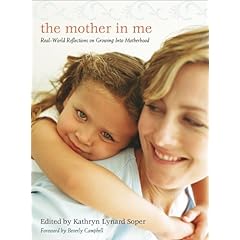
Book #73: The Mother in Me


Title: The Mother in Me: Real-World Reflections on Growing into Motherhood
Editor: Kathryn Lynard Soper

A collection of essays and poems about the process of becoming a mother, and the change of identity that goes along with it.

Ok, first of all a disclaimer: The essays and poems in The Mother in Me were written by women associated with the literary magazine Segullah, and as the Assistant Features Editor, I already had lots of respect for the authors.

But I have lots more now. In the beginning the women of Segullah made me want to be a better writer. Then they made me want to be a better Christian. Now they're making me want to be a better mother. I can't tell you how much I wish someone had put this book in my hands seven years ago, when I had a one-year-old who made me feel like a total failure and I was pregnant and wondering what the heck I was doing bringing another child into the world when I couldn't handle the one I already had. I felt so alone-- I chose to be a SAHM, left a good job and a satisfying academic career in order to do what was best for my kids, and I felt like just about anyone would do a better job of raising this kid than I was doing. I assumed that everyone else had it all together and I was the only one who felt like I couldn't hack it. Now I know I wasn't alone. Every new mom should read this book. Every mom in the trenches should read this book. Every mom who can already breathe a sigh of relief from the intensity of raising babies and preschoolers should read this book (if just to feel grateful that the stage has passed). So basically everyone should read this book. So follow this link (or this one) and buy it. Please. Because one of my essays is going to be included in the upcoming second volume, so I also have a personal stake in hoping this one does well.

Sunday, August 10, 2008

Book #54: Dress Your Children in Corduroy and Denim


Title: Dress Your Family in Corduroy and Denim
Author: David Sedaris

David Sedaris writes about his childhood in North Carolina.

This book is hysterical. I'm not one for laughing out loud while I read, but I promise that I was upstairs in bed, giggling to myself, practically the whole time I read the book. If you haven't picked it up yet-- read it. I've now got a whole bunch of other Sedaris books on my to-read list. I think the key when you read is to actually imagine him reading it, in his ever-so-distinctive voice.

Friday, March 28, 2008

Book #26: Chuck Klosterman IV


Title: Chuck Klosterman IV
Author: Chuck Klosterman (duh)

A compilation of interviews, columns and a part of a novel by Chuck Klosterman.

I like Chuck Klosterman. I think he's funny. He's a great writer. I've enjoyed most of his other books. But this one is a little weird. The first part, the part with the interviews and articles, is great. I learned more than I ever wanted to know about Billy Joel and Val Kilmer and Britney Spears and Steve Nash. It was fun. The columns (mainly reprints of stuff Klosterman had already published in Esquire) were fun too, although not as educational. The novel, well, the novel was just plain weird.

Sunday, August 5, 2007

Book #56: Sex, Drugs and Cocoa Puffs

Sex, Drugs, and Cocoa Puffs: A Low Culture Manifesto


Title: Sex, Drugs, and Cocoa Puffs*: A Low Culture Manifesto (Now with a New Middle)


Author: Chuck Klosterman


You may remember that I read another Chuck Klosterman book a few months ago. He's such a weird, quirky, engaging writer that I came back for more, despite the fact that I get only about 75% of his cultural references and sometimes find the guy annoying. And Sex, Drugs, and Cocoa Puffs was more classic Klosterman: both fun and sort of pedantic.


My MA is in American Culture Studies, and Klosterman's book is a series of essays that I would have loved to have read in grad school. Each chapter compares several seemingly disparate aspects of American Culture (Toby Keith v. Moby), but it's written in the kind of fun, lighthearted way I never got to enjoy in grad school. If I were to teach an Intro to American Studies class, this book would definitely be on my syllabus.


--originally published 8/15/06

Book #30: Killing Yourself to Live: 85% of a True Story

Killing Yourself to Live : 85% of a True Story


Title: Killing Yourself to Live: 85% of a True Story


Author: Chuck Klosterman


Killing Yourself to Live is a book that came into my hands in a very roundabout way. Eddie loves to read ESPN's Page 2 and mentioned once in passing that he really liked Chuck Klosterman's columns. Since Eddie never wants anything and is one of the hardest people in the world to shop for, I tucked the name "Chuck Klosterman" in the back of my mind and when the next holiday rolled around (I think it was Valentine's Day), I looked him up on half.com and bought this book, which happened to be the cheapest of Klosterman's titles at that moment. A few days ago, when I had exhausted my books from the library and couldn't bring myself to read anymore of Cinderella Man, I decided to give this book a whirl.


In the summer of 2003, Klosterman, who was a music critic (?) for Spin magazine at the time, was sent by his editor on a cross-country journey to write about places where famous musicians bit the dust. In the course of the book, among other places, Klosterman goes to the field in Iowa where Buddy Holly's plane crash, the stops at streetcorner where one of the Allman brothers (can't remember which one) crashed his motorcycle, tours Graceland, and visits the garden (formerly a greenhouse) where Kurt Cobain killed himself (?).


But of course, he does more than just visit the dying places of musicians. He has 600 cds in the back of his Ford Taurus, and his readers get enthusiastic details on practically every song he listens to along the way. We also learn about his current and former sort-of girlfriends, and how to freebase marajuana. If you liked Dave Eggers's memoir A Heartbreaking Work of Staggering Genius (I did, sort of), you'll likely like this book too. Klosterman takes his laptop on the trip along with him and basically pounds out a chapter of the book each night, corresponding to what he did over the course of the day. Sometimes it's boring, sometimes it's wild, but it's pretty enteraining, even though it wore on me after a while.


The main thing that I kept puzzling over as I read the book is Klosterman himself. He's a couple of years older than I am, grew up in a tiny town in North Dakota, where he played high school football and loved Kiss and Led Zepplin,  and after college became a newspaper columnist and music critic. Eventually he moved to New York, and on the book jacket, he looks like a nerdy New York music lover (funky glasses, black t-shirt, brooding expression). But then you look at him more closely and notice the pretty decent arm muscles, which sort of throw me off. He's always talking about smoking pot and drinking a lot, yet he runs. He claims that he has listened to all but one of his collection of 3000 cds, but he's still interested enough in sports to be a columnist for ESPN. The book doesn't do much to sort out the complexities either-- Klosterman really does seem as contradictory and un-sterotypical in his writing as he does in the picture on the back of the book.


--originally published 5/16/06